
$80B wiped from cryptocurrency markets following new Iran military strikes by US
Total cryptocurrency market valuation has plunged to levels not witnessed since the middle of April following a second round of US strikes against Iran within a three-day period, occurring as diplomatic efforts continue.

Digital currency markets have experienced approximately $80 billion in valuation losses throughout the last 24-hour period, with the downturn intensifying following reports that the US executed another round of military operations against Iran.
Late Wednesday evening, the US military launched additional strikes targeting a military facility in Iran and destroyed four Iranian attack drones, according to a US official who informed Reuters that these drones represented a threat in the vicinity of the Strait of Hormuz.
The official characterized the operations as "measured, purely defensive, and intended to maintain the ceasefire." According to reports, Iran's Islamic Revolutionary Guard Corps issued a statement claiming it responded by launching an attack on a US airbase located in Kuwait.
These military operations occurred while negotiations were underway to conclude the conflict that initiated on Feb. 28 with attacks by the US and Israel. During a White House cabinet meeting on Wednesday, US President Donald Trump expressed that he was "not satisfied" with an agreement with Iran and suggested the possibility of additional military operations.
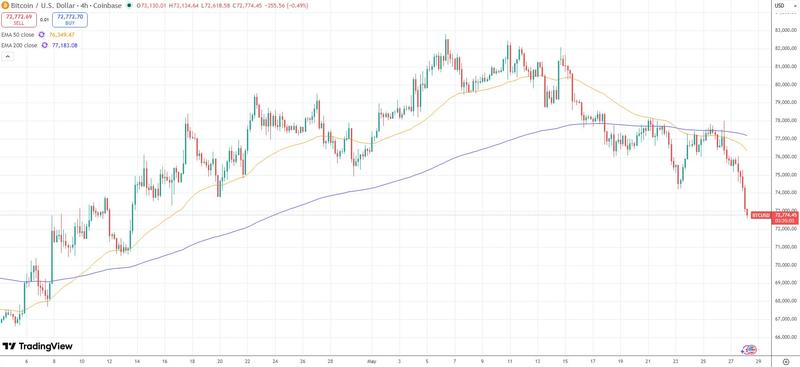
Following the US military strikes, cryptocurrency markets declined to their weakest position since the middle of April, reversing earlier gains this week that occurred after Trump suggested that a peace agreement would be reached imminently.
Bitcoin has declined 3.5% throughout the day, dropping to $72,646 on Coinbase, representing its weakest price point since April 13.
Speaking with Cointelegraph on Thursday, LVRG Research director Nick Ruck explained that markets experienced selling pressure as investors factored in elevated geopolitical risks, possible disruptions to oil supplies, and a shift toward safer assets.
"Bitcoin and Ethereum, despite their long-term narrative as hedges, continue to behave more like high-beta risk assets during periods of uncertainty," he said.
"Traders are now monitoring escalation risks in the Middle East, and any effects on inflation and Fed policy as crypto liquidity quickly thins, and leveraged positions get flushed out."
Ether (ETH) similarly declined following reports of the strikes, breaking through the psychologically significant $2,000 threshold, falling more than 4% to $1,976 as of the time of writing. The digital asset is trading at its weakest level since the final days of March.
Crude oil markets also responded with a 3.5% surge as WTI exceeded $92 while Brent reached $98 per barrel.