
Revolut to combine stablecoin offerings with FDIC protection in upcoming US banking venture: Report
According to Reuters, the fintech giant Revolut intends to incorporate stablecoin services into its planned American banking operations as the race for federal banking licenses intensifies among crypto and fintech firms.

The financial technology firm Revolut is preparing to provide stablecoin services as part of its upcoming United States banking operations, according to a Wednesday report from Reuters that cited statements from Cetin Duransoy, the company's chief executive for the US market.
In his remarks to the news agency, Duransoy explained that the banking platform, slated for launch next year, will provide customers with access to accounts protected by FDIC insurance, the ability to hold deposits in multiple currencies, equity trading capabilities, and digital asset services. According to Duransoy, the company's initial focus will be on serving retail consumers and commercial clients who require international banking solutions, particularly those who deal with various global currencies.
In March, Revolut submitted an application for a national bank charter in the United States, a move that would enable the firm to provide banking products with federal insurance protection across the entire country while operating under a unified federal regulatory structure.
This application represented a strategic shift from the company's previous approach of purchasing an existing American bank to facilitate its market expansion. Duransoy came aboard at Revolut during that same month with the mandate to spearhead the company's expansion efforts across the United States.
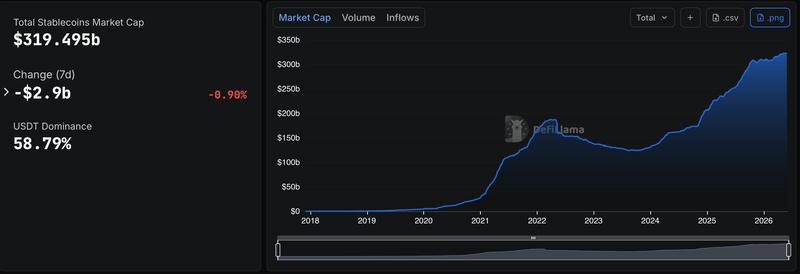
The company is seeking to establish a presence in the American stablecoin marketplace, which has expanded to approximately $319.5 billion in total value, representing significant growth from roughly $247 billion recorded one year earlier, based on information from DefiLlama data.
Established in 2015, Revolut provides digital banking solutions, payment services, investment products, and cryptocurrency offerings to a customer base exceeding 75 million people worldwide, based on information available on its official website. In markets outside the United States, the company's clients currently have the capability to utilize their banking cards for conducting transactions using USDT and USDC Stablecoins.
Financial services companies show significant appetite for stablecoin products
The strategic direction being pursued by Revolut emerges alongside numerous recent stablecoin product introductions by banking institutions, financial technology enterprises, and payment service providers as dollar-pegged digital tokens gain increasing traction in the payments and banking sectors.
In December, the digital banking platform SoFi unveiled SoFiUSD, a stablecoin pegged to the dollar that provides customers with the ability to conduct transactions across the Ethereum and Solana blockchain networks using the company's smartphone application.
During the previous week, Falcon Finance rolled out the stablecoin fUSD utilizing Anchorage Digital's regulated token issuance infrastructure. This digital asset maintains its value through backing by cash holdings, repurchase agreements, and securities issued by the United States government with short maturity periods, and has been designed specifically for institutional market participants and corporate treasury functions.
On Tuesday, MoneyGram unveiled MGUSD in collaboration with Bridge, which operates as Stripe's stablecoin infrastructure platform. This token, which runs on the Stellar blockchain network, has been incorporated into the MoneyGram mobile application and allows users to store and move dollar-denominated funds.
This wave of activity has occurred in parallel with an extensive effort by financial technology firms and cryptocurrency businesses to secure federal banking authorizations throughout the United States. During this year, Nubank and Crypto.com were granted conditional approval to establish national banking operations, while Circle, Ripple, BitGo, Fidelity Digital Assets and Paxos obtained comparable approvals from the Office of the Comptroller of the Currency during late 2025.