
Crypto transactions in Eastern Europe drop 7.9% while Ukraine attracts $12B in stablecoin inflows
A new Chainalysis analysis reveals Eastern Europe experienced the sharpest regional downturn in cryptocurrency transactions, even as Ukraine continued receiving substantial cross-border stablecoin payments throughout the conflict.
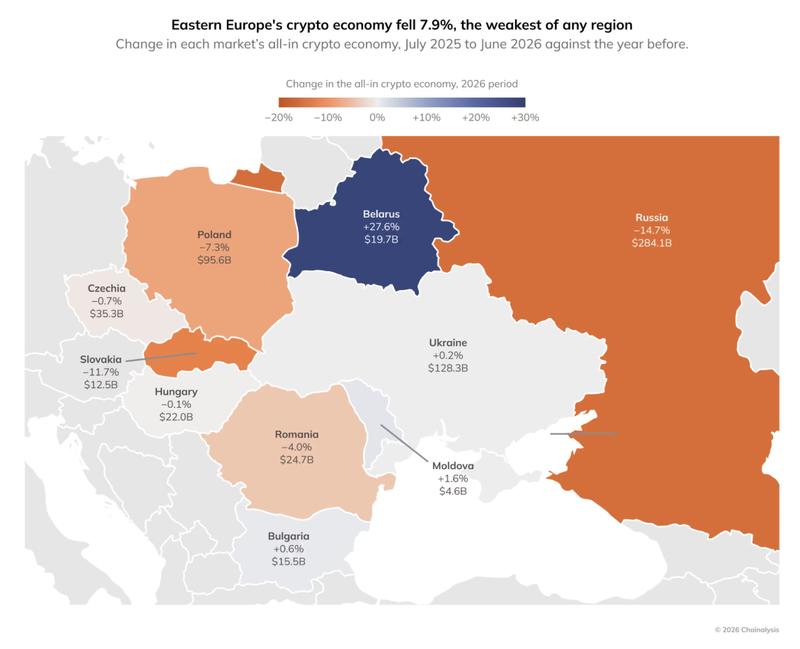
Among all regions monitored by Chainalysis during the twelve-month period ending June 2026, Eastern Europe experienced the most significant contraction in cryptocurrency transaction volumes, declining by 7.9% despite an uptick in the value of retail-level transfers, as detailed in a report released on Tuesday.
Cryptocurrency economic activity in the region contracted from $697.1 billion to $642.1 billion compared to the previous year, while global activity witnessed a more modest 1.6% decrease, the analysis indicates. Activity in Russia, representing approximately 44% of the regional volume, dropped 14.7% to reach $284.1 billion during this timeframe. Conversely, Belarus experienced 27.6% expansion, with Bulgaria, Moldova and Ukraine also posting modest gains.
Transfers valued at $10,000 or above to cryptocurrency platforms declined 17.4%, dropping from $591.5 billion down to $488.6 billion, the report details.
Conversely, the value of smaller-denomination transfers to cryptocurrency platforms climbed 8.3%. Such retail-level transactions represented 13.1% of total value directed to crypto platforms throughout Eastern Europe, marking the highest proportion among all regions analyzed and surpassing the worldwide average of 10.1%.
Polish crypto ATM activity grows
Cryptocurrency automated teller machine usage similarly expanded throughout Eastern Europe, with transaction volumes approximately doubling from $17.3 million up to $33.9 million. Poland experienced a 120% surge in ATM-based transactions even while centralized exchange activity fell 5%, with stablecoins comprising approximately 90% of its ATM transaction volume.
Chainalysis quantifies the cryptocurrency economy through measuring inflows to cryptocurrency platforms, domestic wallet-to-wallet transactions and cross-border transfers to individual wallets. These numbers are calculated in US dollars, meaning cryptocurrency price fluctuations can influence the aggregate figures, according to the firm's analytical methodology.
Ukraine receives billions in stablecoins
Notwithstanding the wider regional contraction, Ukraine continued serving as a significant recipient of stablecoin transfers, taking in $12 billion through cross-border wallet-to-wallet transactions. Within that total, $2.41 billion consisted of retail-level transfers under $10,000, Chainalysis data shows.
The analysis also revealed that nations hosting larger Ukrainian populations, encompassing both pre-conflict diaspora communities and refugees who relocated following Russia's comprehensive military invasion in February 2022, typically transmitted greater volumes of stablecoins to Ukraine. Within the 36 nations examined throughout Europe and North America, Canada emerged as the primary origin point for retail-level, remittance-style transfers, totaling $359 million.
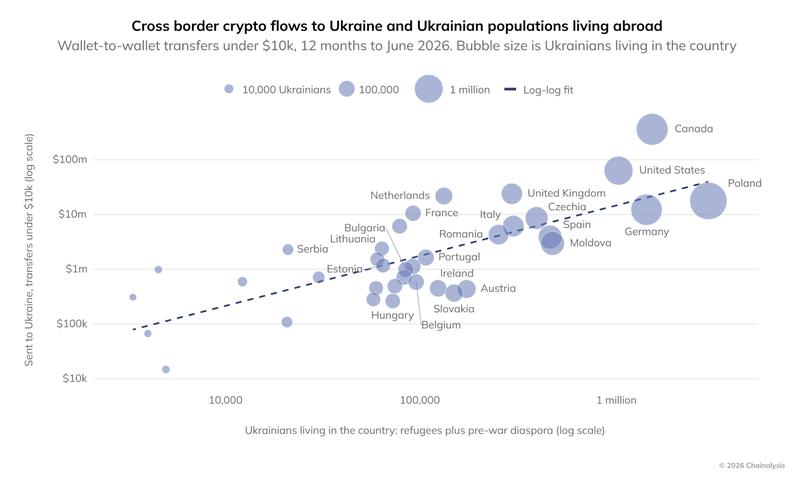
A representative from Chainalysis informed Cointelegraph that these cross-border transaction flows predominantly consisted of stablecoins pegged to the US dollar, though the company declined to offer a detailed breakdown by specific token.