
BPI: Iran recognizes Bitcoin as strategic reserve while USDt leads oil payment transactions
Iran selected Bitcoin for oil toll payments based on its resistance to seizure, though dollar-pegged stablecoins remain the primary crypto payment method utilized to date.
According to Sam Lyman, head of research at the Bitcoin Policy Institute (BPI), a digital asset advocacy organization, Iran's decision to designate Bitcoin (BTC) as an accepted payment option for vessels transiting the Strait of Hormuz underscores the cryptocurrency's position as a neutral strategic asset.
In his conversation with Cointelegraph, Lyman explained that the Iranian government's choice of BTC among the acceptable toll payment methods stems from the cryptocurrency's resistance to censorship. He stated:
"This is one of the most significant situations where Bitcoin is very clearly a strategic asset. The reason why Iran wants to use Bitcoin for these transactions is that no one can freeze Bitcoin. No one can shut down the Bitcoin network."
The Islamic Republic is collecting oil transit tolls in three forms: Chinese yuan, stablecoins pegged to the US dollar, and BTC. That said, Lyman noted there exists "no onchain evidence" showing any toll has actually been paid in BTC to this point, further explaining that the "majority" of cryptocurrency transactions conducted by Iran are denominated in stablecoins tied to the US dollar.
According to Lyman's discussion with Cointelegraph, the declaration from Iran's government underscores the importance of US policymakers acknowledging and designating Bitcoin as a strategic asset, instead of adopting an adversarial regulatory approach toward it or completely rejecting digital assets as a category.
Stablecoin confiscation is just a cost of doing business
Lyman explained that "Iran has had a digital asset strategy for several years, going back to about 2018, and the majority of transactions that take place there are with USDt," (USDT). USDt represents a stablecoin pegged to the dollar that is issued by Tether, the company.
Despite stablecoin issuers possessing the capability to freeze user wallets, the government of Iran continues utilizing stablecoins, according to Lyman. "I think they're rolling the dice," Lyman shared with Cointelegraph.
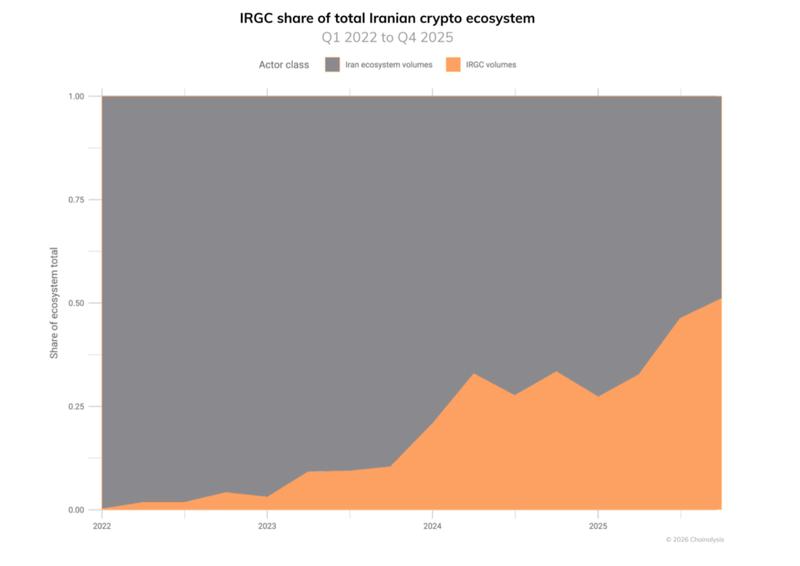
According to his analysis, the government of Iran has successfully transferred approximately $3 billion worth of cryptocurrencies starting in 2022, with the "majority" of that total value being in stablecoins.
Yet according to Lyman's information, the US Treasury Department only managed to freeze approximately $600 million worth of these assets.
"They were able to move $3 billion, and only have $600 million frozen. They were still able to move about $2.4 billion. So, I think that's why stablecoins are still a go-to for the regime," he said.