Data Reveals Accumulation Wallets Capture 67K BTC While Miner Selling Pressure Diminishes
Recent blockchain analytics indicate accumulation wallet inflows surpassing 67,000 BTC, as Bitcoin miner outflows decline to their lowest point since 2024.

Long-term holder appetite for Bitcoin (BTC) surged by 48.5% throughout the preceding seven-day period. This uptick in accumulation occurred alongside a pronounced reduction in selling activity from Bitcoin mining operations, with the Miners' Position Index (MPI) falling to depths not observed since 2024.
These trends underscore a market phase characterized by persistent Bitcoin absorption from long-term market participants, while distribution pressure from mining entities continues its downward trajectory.
Long-term accumulation rises while mining distribution subsides
Analytics from CryptoQuant reveal that inflows to accumulator addresses elevated total holdings to approximately 205,000 BTC by March 30, climbing from 138,000 BTC recorded on March 23. This uptick arrives after a pullback from March highs near 210,000 BTC, signaling a fresh wave of acquisition from long-term holders.
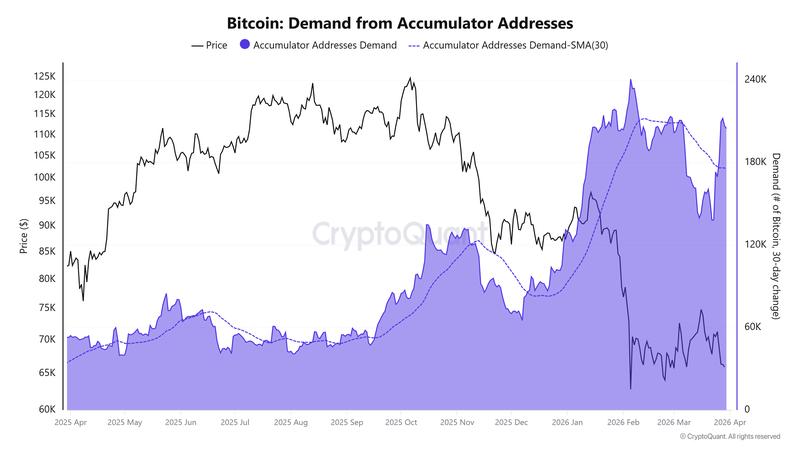
This accumulation of BTC intensified throughout the latest price correction, demonstrating an active intake of circulating supply.
Simultaneously, the conduct of Bitcoin mining operations has undergone a notable transformation. Crypto analytics expert Nino pointed out that the 30-day moving average for the Miners' Position Index (MPI) has fallen to -1.042, representing levels last witnessed during 2024 lows.
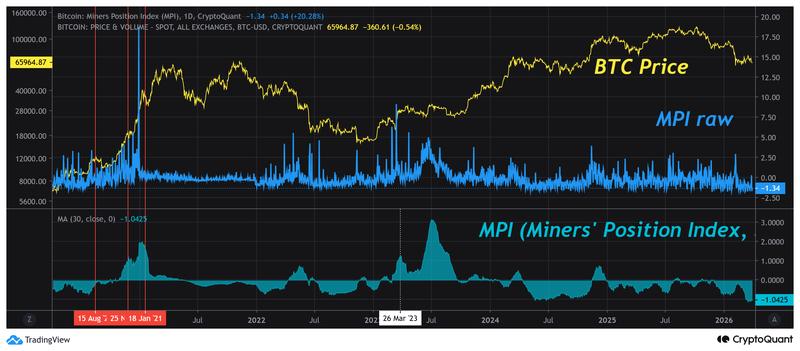
The MPI metric calculates the proportion of aggregate miner outflow relative to its one-year average. Decreased values suggest diminished distribution activity compared to historical benchmarks. This development signifies that fewer coins are being released into circulation by mining operations, thereby reducing immediate downward pressure on prices.
The combination of expanding accumulator holdings and diminished miner distribution constrains the volume of Bitcoin entering available markets. This configuration suggests a market environment where long-term investors are acquiring assets while mining entities reduce their selling activity.
Exchange flow metrics indicate weakening near-term appetite
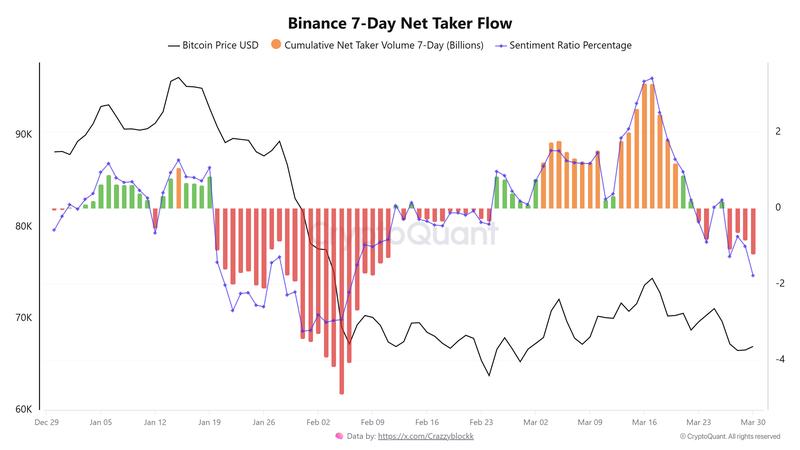
Near-term positioning dynamics on trading platforms display a contrasting trend. The seven-day net taker flow on Binance declined to negative $1.2 billion on Monday, corresponding with recent bearish price movement. In comparison, this identical metric registered a positive $3.28 billion flow on March 15. This reversal demonstrates an escalation in aggressive distribution pressure throughout derivatives trading venues.
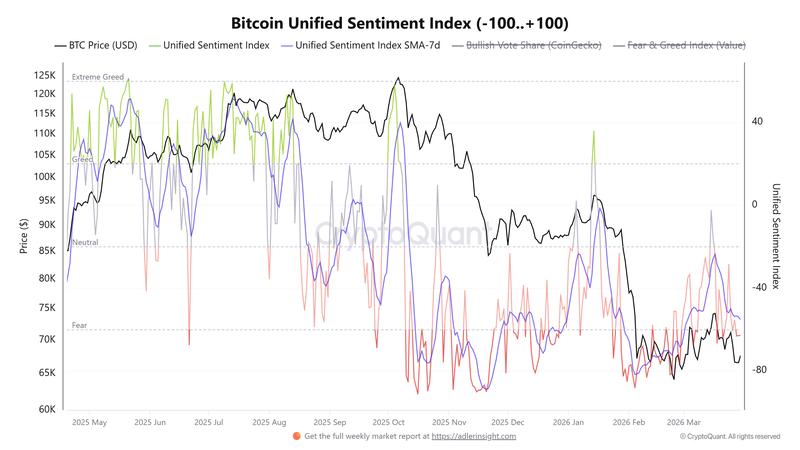
Market sentiment metrics corroborate this transition. The Bitcoin Unified Sentiment Index currently registers beneath the -50 threshold at -62.9%, contrasting with a nearly neutral measurement of -2.42 on March 15. This composite index aggregates derivatives positioning, volatility metrics and trading volume indicators to assess prevailing directional sentiment. Readings falling below zero indicate persistent seller dominance throughout recent trading periods.
Despite the distribution pressure observable across exchange platforms, the sentiment index's migration toward neutral territory represents a departure from previous extremes. Market anxiety has subsided while conviction among participants on either side remains constrained, resulting in trading activity that remains tightly correlated with liquidity movements within the present range spanning $75,000 to $60,000.