
Canada Integrates Cryptocurrency Into 'Fundamental' Financial Framework Despite Ongoing Risk Concerns
Over the last year, Canada's cryptocurrency sector has undergone significant regulatory transformation, with federal authorities adopting a precautionary, regulation-focused strategy to manage emerging risks.

Digital currencies and distributed ledger technology have progressively integrated into Canada's fundamental financial infrastructure throughout the previous twelve months.
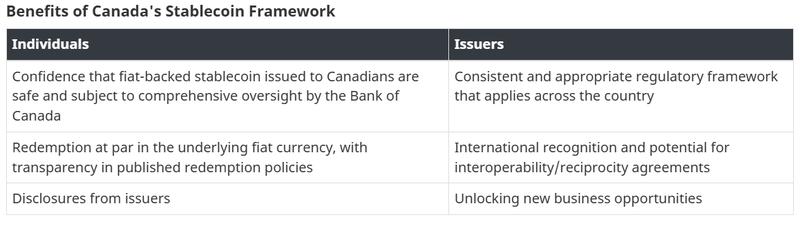
Last November marked the introduction of regulations governing stablecoins through the Canada Stablecoin Act. Presented as a component of the federal budget, this legislation grants regulatory authority over stablecoins to the Bank of Canada.
Additionally, lawmakers are completing modifications to legislation governing cryptocurrency asset funds, encompassing provisions for cold storage solutions and custodial services.
These regulatory developments underscore a practical yet regulation-centric stance toward digital assets, an approach that industry watchers have grown accustomed to anticipating from the administration led by Prime Minister Mark Carney.
Enhanced oversight and emerging crypto standards elevate industry requirements
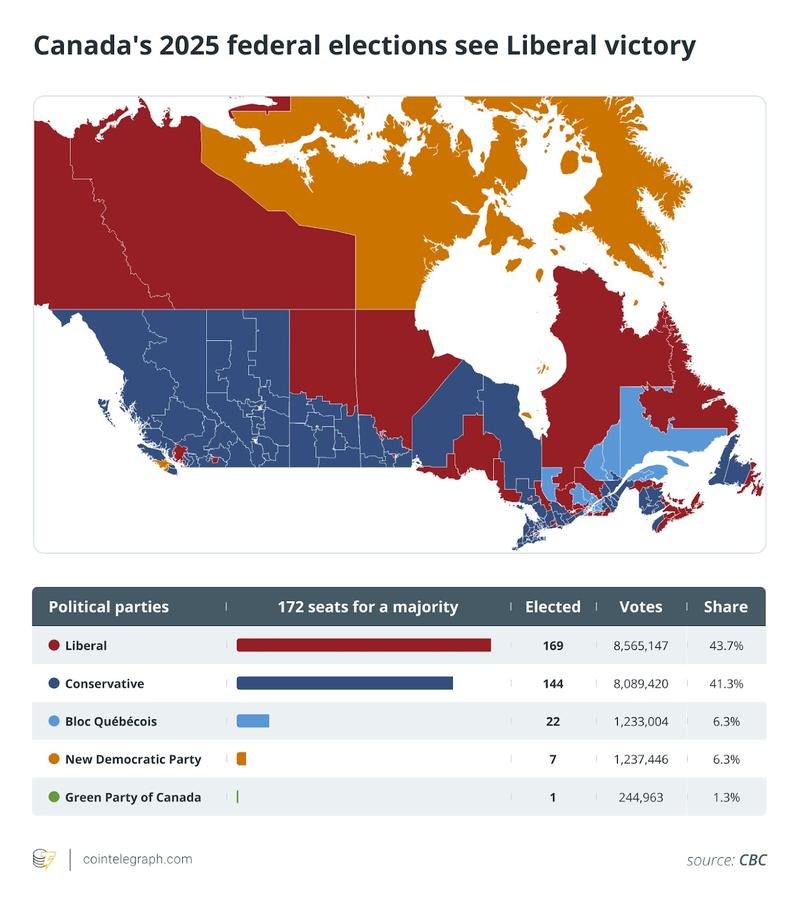
Following Canadian Prime Minister Mark Carney's assumption of office in the previous year, those monitoring the industry anticipated a measured approach to cryptocurrency regulation in Canada.
Carney had historically voiced reservations regarding cryptocurrencies. During his tenure as Governor of the Bank of England, he remarked that
Cryptocurrencies act as money, at best, only for some people and to a limited extent, and even then only in parallel with the traditional currencies of the users. The short answer is they are failing.
Nevertheless, he advocated for regulatory oversight of the cryptocurrency sector, and indicated that the foundational technologies possessed the potential to
improve financial stability; support more innovative, efficient and reliable payment services as well as have wider applications.
During May 2025, Morva Rohani, executive director of the Canadian Web3 Council, stated,
With Mark Carney at the helm of the Liberal Party, we anticipate a pragmatic but regulation-first approach to crypto and stablecoins.
This emphasis on establishing regulatory frameworks has resulted in heightened oversight and elevated compliance standards throughout Canada's cryptocurrency sector.
Naveen Maher, chief compliance officer at Canadian cryptocurrency exchange operator WonderFi, observed that the Canadian Securities Administrators (CSA) had eliminated the "restricted dealer" registration classification. This designation was initially established for specialized entities that did not conform to conventional dealer classifications, including cryptocurrency trading platforms. Currently they must obtain full investor dealer status through the CSA, and secure membership in the Canadian Investment Regulatory Organization (CIRO), a nonprofit, nationwide self-regulatory body.
This transformation prompted industry consolidation.
That's a significant shift and it's removed several players who were sitting in that interim status with a hope that the rules wouldn't tighten further,said Maher.
WonderFi "made the call early to get fully registered under CIRO" through its trading platform Coinsquare. This decision demanded substantial investment and compliance efforts, but presently enables the company to conduct operations "under the highest available regulatory standard in Canada."
The firms that delayed that transition are now looking at a much steeper climb,Maher said.
Regulatory authorities are additionally completing revisions to National Instrument 81-102, Canada's principal regulation governing investment funds and mutual funds, including those incorporating cryptocurrency assets.
These rules raise the bar across the industry and favor established firms like ours, who already have the infrastructure to absorb them,Maher said.
The federal government is simultaneously advancing implementation of the Crypto Assets Reporting Framework developed by the Organisation for Economic Co-operation and Development. While implementation has been postponed until Jan.1, 2027, according to Maher,
It will impose annual reporting obligations on every crypto service provider operating [...] For other smaller or offshore players, this may be a real issue.
Rohani informed Cointelegraph this past Friday that regulatory bodies are enforcing registration mandates with increased visibility. This Monday, the Financial Transactions and Reports Analysis Centre (FINTRAC) of Canada revoked money services businesses (MSB) registrations from 47 cryptocurrency enterprises.
Industry reaction has been that this is a counterparty risk moment, if your partners are not fully compliant, your own operations are exposed,she said.
Divergent priorities persist between crypto industry and regulatory authorities
While compliance standards for cryptocurrency in Canada have increasingly aligned with regulations governing traditional financial sectors, policymakers and the blockchain sector maintain divergent perspectives on specific matters.
From the governmental perspective, stablecoins represented the primary concern, according to Maher.
Once the US moved on stablecoin legislation, Ottawa followed. After stablecoins, everything else points in the same direction, which is bringing crypto into the traditional financial system, on regulators' timeline,she said.
Rohani indicated that
Canada is beginning to treat parts of crypto as closer to the core financial system rather than purely peripheral, but the primary lens is still risk management.
The legislation addressing stablecoins emerged from this risk-focused perspective.
This shift is being driven by Carney in response to rapid developments in the US, particularly frameworks like the GENIUS Act, which are viewed as a geopolitical risk.
Additionally, governmental priorities are
focused on stability, consumer protection, and ensuring that new digital instruments do not introduce systemic risk,said Rohani.
In contrast, industry participants are pursuing more "clear, workable" regulatory guidelines addressing stablecoins, custodial arrangements and the tokenization of assets.
According to Maher, the cryptocurrency industry requires regulatory harmonization.
Right now, you have FINTRAC, the CSA, CIRO, the CRA [Canada Revenue Agency], and provincial regulators all touching different parts of the same business. The coordination is improving but it's still fragmented.
She additionally highlighted concerns regarding product accessibility. She noted that Canadians lack the ability to hold cryptocurrency assets in their registered retirement savings plans or their tax-free savings accounts "in any straightforward way."
Certain policymakers maintain reservations about cryptocurrency
Back in 2018, Carney stated that the "underlying technologies" supporting cryptocurrency "are exciting." This conceptual separation between blockchain infrastructure and cryptocurrency assets persists and remains evident in the Canadian government's regulatory methodology.
Rohai indicated,
There is still a clear distinction. Policymakers are more comfortable with blockchain as infrastructure.This perspective is demonstrated through Project Samara, where Export Development Canada issued a $100 million Canadian dollar bond on Hyperledger.
Among policymakers, there
remain cautious on crypto assets themselves, which are still viewed primarily through a risk and investor protection lens.
Maher suggested that the distinction between blockchain and cryptocurrency is "not subtle," noting that Carney demonstrates a clear preference for central bank digital currencies rather than decentralized digital assets.
This view shapes the administration's posture which is comfortable with digital assets as a regulated investment category and considerably less comfortable with anything which sits outside that box,she said.
Financial instruments which "map cleanly on the existing frameworks" like Bitcoin exchange-traded funds progress forward.
DeFi, self-custody, on-chain settlement sits in a different category, and the industry is aware of it.