
US Banking Sector Drives Stablecoin Transaction Volumes to $891B, Marking Fourfold Surge: Analysis
Recent analysis reveals explosive expansion in stablecoin payment activity, with blockchain addresses holding stablecoins reaching 293 million and transfer volumes surging even as total market capitalization stays relatively stagnant.

During the third quarter of 2026, stablecoins facilitated transfers exceeding $400 million per hour in adjusted transfer volume, with total quarterly transaction activity hitting $891 billion—representing more than a fourfold increase since the beginning of 2023, based on fresh analysis commissioned by Coinbase.
Analysis revealed that 73% of screened transfer volume in stablecoins took place beyond traditional US banking operational hours, encompassing nighttime periods, weekends and holiday timeframes.
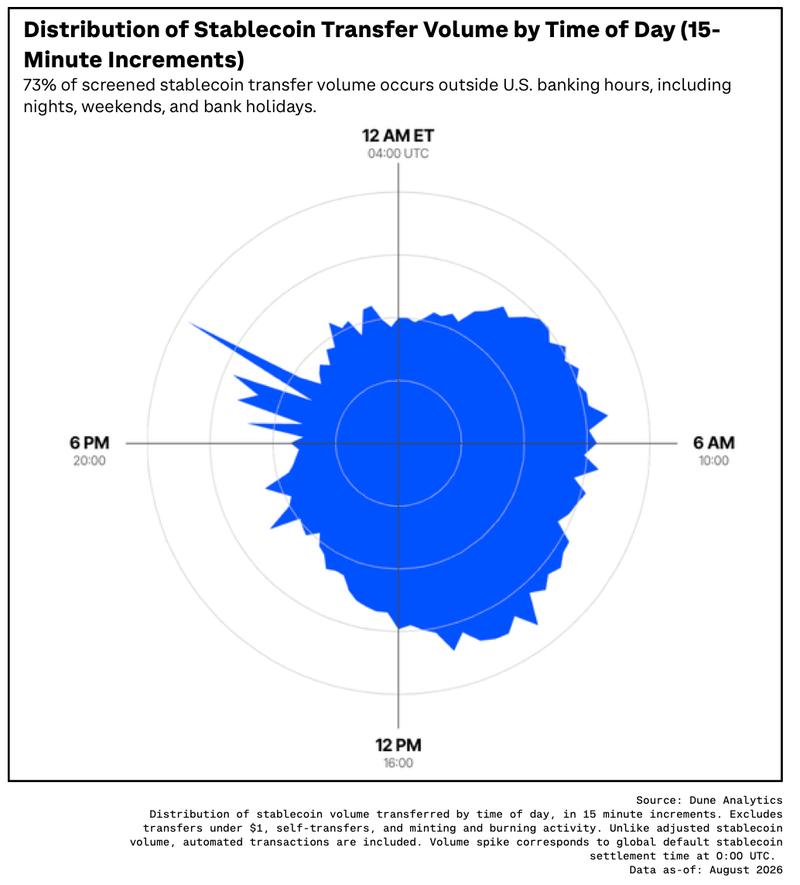
Among America's 10 largest banking institutions, seven have experimented with stablecoins or tokenized deposit products for payment settlement purposes, while the proportion of mid-sized enterprises engaged in international commerce that are utilizing or testing stablecoins has climbed to 30%, up significantly from 10% in 2024. Meanwhile, business-to-business transaction volume experienced a 36% increase compared to the previous year.
The Block Research conducted the study, which documented 293 million blockchain addresses containing stablecoins, a figure that surpasses the total number of payment cards distributed by American Express and Discover combined, although investigators emphasized that blockchain addresses cannot be equated directly with unique individual users.
The analysis further calculated that transitioning 80% of global international transactions to stablecoin-based networks has the potential to contribute $155 billion to worldwide GDP on an annual basis and liberate approximately $3 trillion in capital currently maintained by banking institutions to facilitate cross-border payment operations.
These financial projections derive from theoretical adoption models rather than documented economic impacts. Investigators additionally recognized that extensive stablecoin implementation could diminish traditional bank lending activities, which might counterbalance certain advantages associated with accelerated and more cost-effective payment mechanisms.
Consumer polling reveals increasing appetite for cryptocurrency offerings at banking institutions
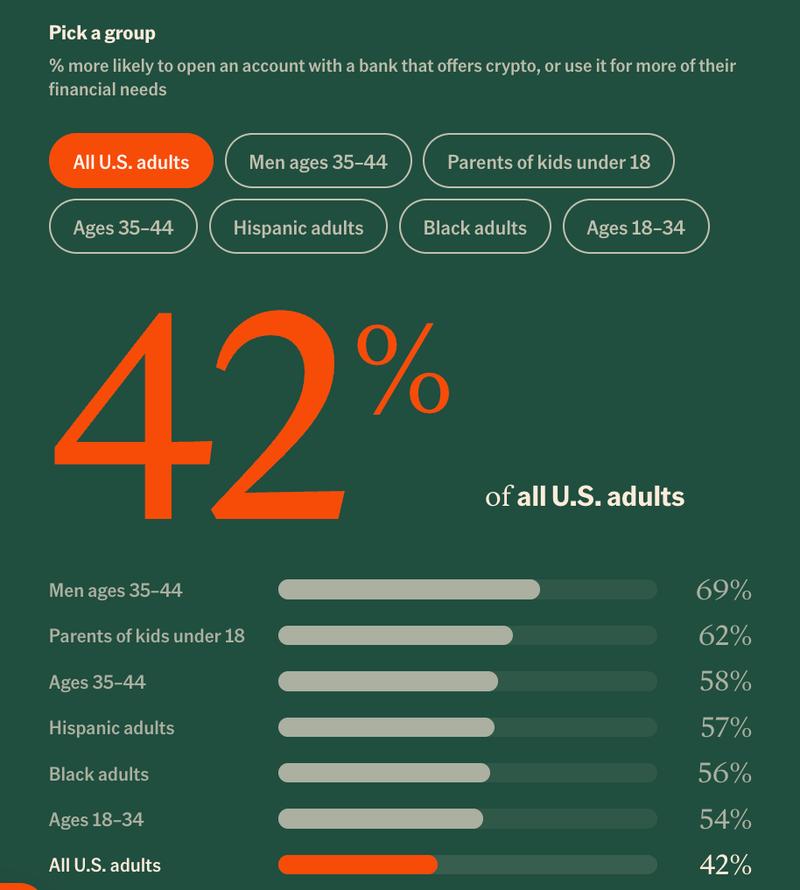
An independent survey published Monday by the National Cryptocurrency Association revealed that 42% of American adults, equivalent to roughly 112 million individuals, would demonstrate increased likelihood to establish accounts with banks providing cryptocurrency services or expand their usage of such institutions for additional financial requirements.
Survey results indicated that 18% of US adults expressed interest in purchasing or utilizing stablecoins via their primary banking institution or financial services provider. Conversely, 64% reported that their bank, credit union or financial consultant had never initiated discussions regarding cryptocurrency topics, while 43% remained uncertain about whether their banking institution provided crypto-related services.
Total stablecoin market capitalization shows minimal change amid transaction volume growth
Notwithstanding heightened transaction volumes, total stablecoin market capitalization registered at $301.42 billion on Tuesday, representing approximately a 0.6% decrease from the $303.14 billion recorded on Oct. 20, 2025, based on data from DefiLlama.
In the previous week, Standard Chartered revised its projection timeline for the stablecoin market achieving $2 trillion valuation, extending the forecast from 2028 to 2030, attributing the adjustment to more gradual supply expansion. In contrast, Citi has established a baseline projection of $1.9 trillion for the market by 2030, with an optimistic forecast scenario extending to $4 trillion.