
Survey reveals 36% of cryptocurrency investors reducing daily expenditures amid market slump
Research by CEX.IO reveals that 36% of American cryptocurrency investors have trimmed their routine expenditures while Bitcoin trades approximately 40% beneath its 2025 high point, underscoring intensifying financial pressure on households.

A fresh survey conducted by CEX.IO reveals that the latest cryptocurrency market decline has compelled more than one-third of digital asset traders to reduce their daily expenditures.
The research study, which polled 1,100 active CEX.IO platform users located in the United States, demonstrates that the ongoing market correction is creating financial pressure on household budgets, although the impact appears less catastrophic than the 2022 downturn, during which Bitcoin plummeted approximately 75% from its all-time high. Currently, Bitcoin continues trading roughly 40% underneath its October 2025 peak value, resulting in numerous retail participants holding positions with unrealised losses.
Survey results indicate that 36% of participants have reduced their routine expenditures directly because of prevailing market circumstances, with 10% characterizing these reductions as substantial sacrifices undertaken to preserve their cryptocurrency holdings. Additionally, 37% indicated they have delayed or completely abandoned planned purchases owing to losses incurred from cryptocurrency investments, with 21% specifically postponing significant financial decisions including home acquisitions, vehicle purchases or planned renovation projects.
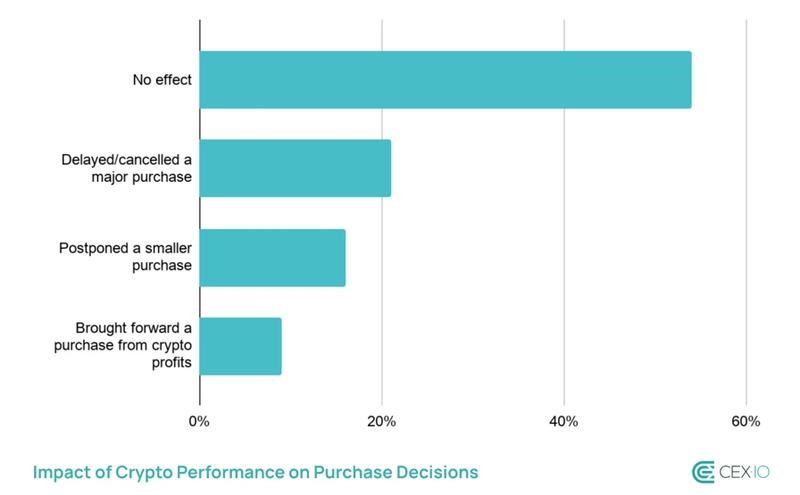
The 2025–2026 bear market has not produced the kind of systemic shock seen in past cycles (at least for now), but its effects appear to be showing up in quieter ways at the household level
CEX.IO
Crypto traders navigate downturn alone
Survey findings demonstrate that a significant number of cryptocurrency investors are weathering the current downturn in comparative isolation. A mere 5% indicated that another individual possesses comprehensive knowledge regarding the complete scope and monetary value of their cryptocurrency portfolios, whereas most participants either disclose partial information or maintain complete confidentiality about their investment positions.
Evidence of financial pressure is also apparent in reported cash flow patterns. Although 77% confirmed they have not acquired debt directly connected to cryptocurrency investments, 38% acknowledged experiencing some type of financial disturbance beginning in October 2025. One-quarter of participants stated they have drawn upon personal savings to preserve financial equilibrium, and 12% confessed to either missing payment deadlines or postponing scheduled payments.
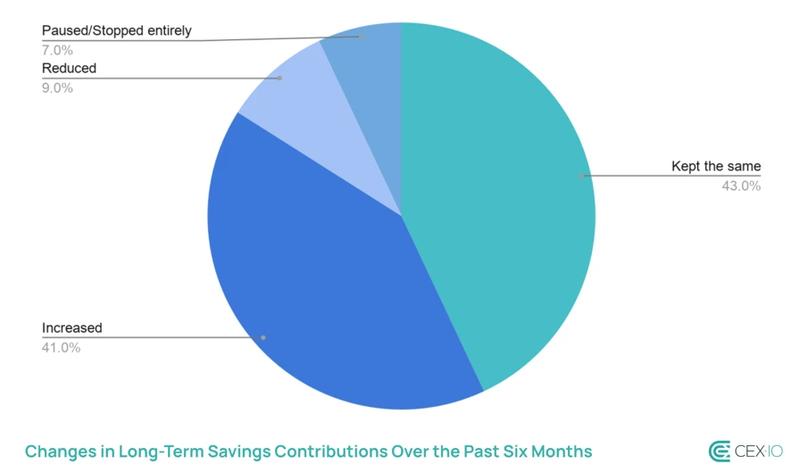
Despite these challenges, the majority of survey participants have not fundamentally altered their strategic plans. Approximately half of respondents disclosed that cryptocurrency assets constitute more than 30% of their total investable portfolio, nevertheless 73% indicated their strategy for generating income has remained consistent.
Regarding future intentions, a combined total of 79% stated they intend to either maintain their current positions or expand their cryptocurrency holdings throughout the upcoming six-month period.
Crypto offerings shape bank choice
A separate survey released earlier this week by Börse Stuttgart Digital discovered that cryptocurrency-related services are beginning to impact how European investors select their banking institutions, with 35% indicating they would contemplate transferring to different financial institutions if offered superior cryptocurrency service options.
The research study, which surveyed approximately 6,000 investors throughout Germany, Italy, Spain and France, additionally revealed that almost one in five participants anticipates their principal banking institution to offer cryptocurrency access capabilities within the next three years, suggesting a progressive transformation toward incorporating digital assets into conventional banking services.