
Stablecore Selected by Tennessee Bankers Association as Preferred Partner for Digital Assets
Community banks in Tennessee get streamlined access to stablecoin, tokenized deposit, and cryptocurrency-backed loan infrastructure through partnership, marking expanded institutional crypto integration.

Stablecore has been designated as a preferred technology provider for digital asset infrastructure by the Tennessee Bankers Association (TBA), a trade organization that represents commercial banking institutions throughout Tennessee, underscoring mounting enthusiasm among regional financial institutions for cryptocurrency-related infrastructure solutions.
According to a statement released on Tuesday, the TBA announced that Stablecore would deliver the technological infrastructure necessary for community and regional banking institutions to provide services including stablecoins, tokenized deposits, and lending backed by digital assets using their current operational frameworks.
This preferred provider status grants Stablecore visibility to approximately 175 financial institutions that comprise the association's membership base, which could substantially speed up implementation among smaller banking entities that currently do not possess internal digital asset technological capabilities.
The collaboration exemplifies a more widespread movement among conventional financial service providers toward engaging external technology vendors to incorporate cryptocurrency-adjacent offerings instead of constructing such infrastructure with internal resources.
The company specializes in creating backend technological infrastructure that empowers financial institutions to create and oversee tokenized financial instruments, which include both stablecoins and deposit tokens, while simultaneously managing regulatory compliance requirements and ensuring seamless integration with existing core banking platforms.
According to previous coverage by Cointelegraph, Stablecore has recently become part of the Jack Henry Integration Network, a platform that delivers digital banking technological solutions to approximately 1,670 banking institutions and credit unions throughout the United States.
Banks eye digital assets as US lawmakers debate market structure rules
The TBA's designation of Stablecore as a preferred provider arrives during a period when an increasing number of regional banking institutions are exploring the launch of digital asset service offerings, despite ongoing congressional deliberations regarding the appropriate regulatory framework.
Bill Hagerty, Tennessee's junior US Senator who serves on the Senate Banking Committee, stated during the previous month that there remains "still a lot more work to do" before congressional leaders can move forward with comprehensive legislation addressing market structure for digital assets.
At the same time, Senator Thom Tillis informed members of the press during the previous week about his intentions to advocate for the Senate Banking panel to address crypto market-structure legislative proposals when congressional members reconvene for their session beginning on May 11.
Legislative proposals currently under consideration seek to establish clarity regarding the processes through which stablecoins are both issued and regulated, which would potentially provide banking institutions with a more defined pathway toward offering tokenized deposits along with associated financial products.
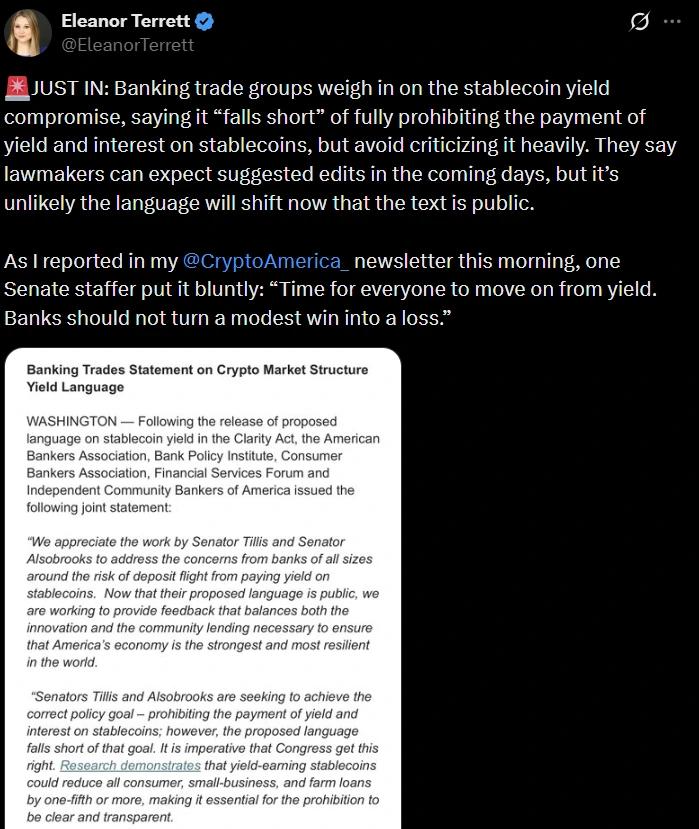
Concurrently, banking trade associations are maintaining their expression of apprehensions regarding stablecoin structural design, with particular focus on the question of whether entities issuing stablecoins should receive authorization to provide yield or interest payments. Proponents from within the industry contend that recent legislative compromises have failed to adequately restrict yield-bearing stablecoins, which could result in the blurring of distinctions between traditional bank deposits and digital asset products.
Last month, the Independent Community Bankers of America issued a call to Congress urging legislators to guarantee that proposed legislation adequately addresses their apprehensions regarding what the organization characterized as "the harmful impact on local economies of allowing crypto exchanges and other intermediaries to pay interest or yield on payment stablecoins."