
Stablecoins Show No Clear Edge Over Traditional Remittances, Italian Central Bank Research Reveals
Research conducted by Italy's central bank reveals that while stablecoin-based money transfers frequently undercut typical remittance fees, they don't regularly surpass top competitors, as currency conversion processes account for the bulk of expenses.

Research published by the Bank of Italy has concluded that remittances powered by stablecoins failed to demonstrate a consistent advantage in either cost efficiency or processing speed when compared against conventional payment channels, with the primary expenses and time delays attributed to the conversion processes between fiat currencies and digital assets.
The research team conducted experiments involving 200 USDC (USDC) remittance transactions spanning 10 bidirectional payment corridors that connected Italy with Brazil, Argentina, Japan, the United Arab Emirates and South Africa, analyzing total costs from end to end and settlement durations against conventional remittance service providers. The analysis revealed that fees associated with currency exchange and conversion constituted the majority of expenses, whereas fees tied to blockchain transactions represented merely a minor portion of total costs.
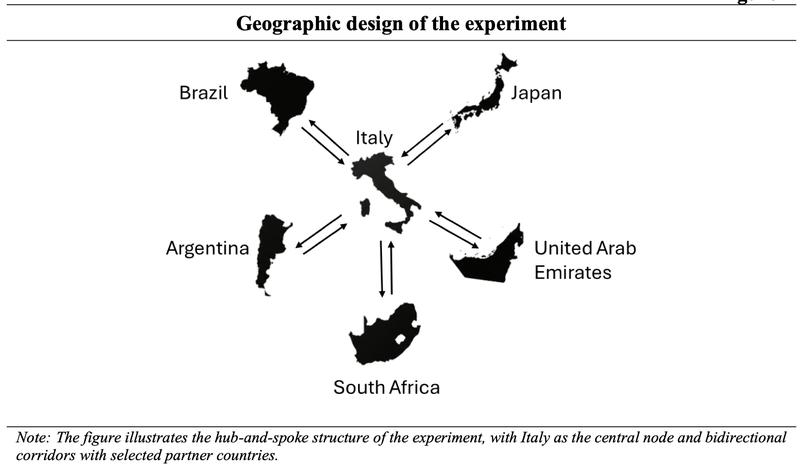
Among the stablecoin-powered remittances analyzed throughout the study, aggregate costs varied from 0.3% to almost 9% based on which payment corridor was utilized, whereas transfer completion times came in at under 20 minutes in jurisdictions where instant payment infrastructure was accessible and extended to one to two business days in locations lacking such systems.
Leveraging the World Bank's published global average remittance cost figure of 6.65% as a comparative baseline, researchers discovered that stablecoin-based transfers delivered lower costs in the majority of payment corridors examined. Nevertheless, these transfers proved less expensive than Wise in merely three out of seven corridors where direct comparisons were possible.
Payment Infrastructure Remains Critical
The research arrived at the conclusion that capital allocation toward domestic instant payment infrastructure has the potential to enhance the competitive position of stablecoin-powered cross-border payment solutions, with findings indicating that settlement durations were substantially dependent on the sophistication and quality of local payment infrastructure.
The research authors contended that the most significant efficiency improvements might materialize when stablecoins eliminate the requirement for conversion back to traditional fiat currencies, stating:
If stablecoins could be spent directly in the real economy, for goods and services, rents, or school fees, without reconversion into local fiat currency, the economic advantages of stablecoin-based transfers would be substantially higher.
Regulation Shapes Remittance Efficiency
The research additionally determined that the structure and design of regulatory frameworks played a substantial role in determining the efficiency of transfer operations. The research authors indicated that regulatory approaches characterized by prohibition failed to completely eliminate stablecoin demand and instead redirected users toward offshore platforms and alternative unregulated channels, whereas excessively restrictive regulatory frameworks elevated operational complexity for individual retail users.
These research findings emerge at a time when the European Union has put into effect its Markets in Crypto-Assets (MiCA) framework and the United States has enacted the GENIUS Act, two distinct regulatory regimes that provide governance for crypto assets and payment stablecoins, respectively.
The market capitalization of stablecoins has expanded to approximately $307 billion, representing an increase of roughly 16% during the past year, based on data provided by DefiLlama.