
South Korean crypto tax abolition petition surpasses 50,000 signatures
Opponents of the upcoming 22% cryptocurrency tax argue it creates unfair advantages for alternative investment categories that face significantly reduced tax obligations.

An online petition calling for the elimination of South Korea's proposed 22% cryptocurrency gains tax has successfully crossed the 50,000-signature milestone, compelling the nation's Finance and Economic Planning Committee to conduct an official examination of concerns surrounding the controversial tax policy.
Scheduled to become operational in January 2027, the 22% levy creates significant financial and administrative "burdens" on cryptocurrency investors, according to the petition, while simultaneously restricting economic advancement opportunities for the nation's youth, who face barriers to property ownership amid soaring residential real estate values.
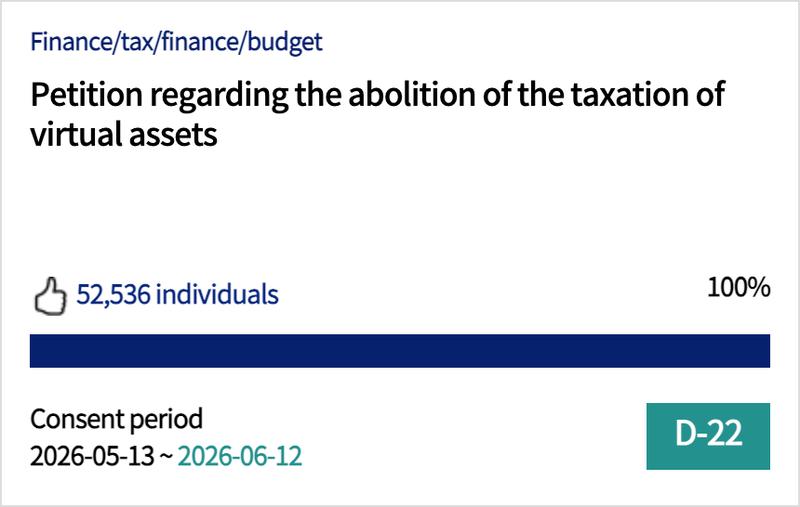
The petition further argued that implementing a 22% tax rate on cryptocurrency profits, while providing more favorable tax conditions for competing asset categories, damages South Korea's competitive position in the global crypto marketplace. In a translated excerpt, petition organizers stated:
"If taxation is enforced in order to secure short-term tax revenues, it is likely to lead to greater losses in the long term, namely, a contraction of industry and an outflow of capital and talent abroad."
Serving as a major cryptocurrency center in the Asia-Pacific area, South Korea saw approximately 32% of its citizens holding digital currencies as of March 2025, based on reports from Yonhap, a domestic news service. Nevertheless, cryptocurrency ownership rates have decreased throughout the current year amid ongoing downward pressure on digital asset valuations.
South Korea's crypto market contracts as tighter controls are proposed
The aggregate value of digital assets owned by South Korean citizens dropped from approximately 121.8 trillion won ($83.3 billion) in January 2025 to roughly 60.6 trillion won ($41.4 billion) by February 2026, based on market intelligence data.
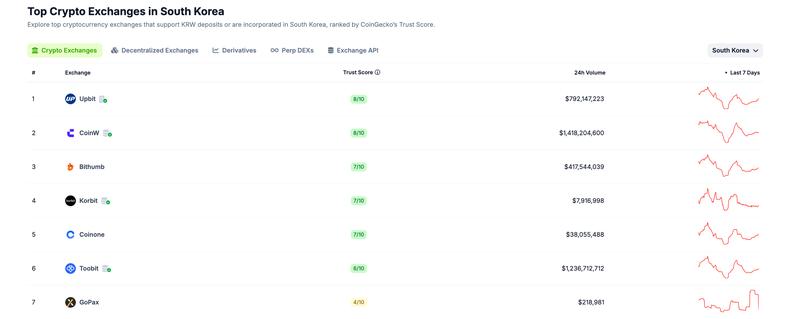
Average daily transaction volumes across the nation's five leading cryptocurrency trading platforms, including Upbit, Bithumb, Coinone, Korbit and Gopax, experienced a sharp decline from $11.6 billion in December 2024 to merely $3 billion by February.
More stringent Anti-Money Laundering (AML) requirements and Know Your Customer verification procedures in South Korea are additionally pushing investors away from the cryptocurrency sector, according to opponents of these regulatory measures.
During March, South Korea's Financial Services Commission (FSC) working alongside the Financial Intelligence Unit (FIU) put forward proposals requiring that all cryptocurrency transfers exceeding 10 million won ($6,630) directed to or received from international crypto wallets be automatically designated as suspicious activity.
Industry advocacy groups representing the cryptocurrency sector within the country have voiced opposition to these new regulatory frameworks, contending that the compliance and reporting obligations would impose excessive operational challenges on trading platforms.