
Sony-backed Soneium app to receive Privacy Boost integration from Startale
The Soneium application from Startale will incorporate Privacy Boost technology from Sunnyside Labs, introducing confidential transaction capabilities alongside compliance-ready auditing features.

The Startale Group, a cryptocurrency infrastructure firm, has announced that Sunnyside Labs' Privacy Boost solution will serve as the designated privacy technology partner for its Startale App, which operates on Soneium, a blockchain platform associated with Sony.
According to an announcement made by Startale Group on Tuesday, the partnership will introduce self-custody private transaction capabilities to the application, featuring protected account balances, confidential person-to-person transfers, and privacy-integrated payment systems operating on the Soneium network.
This development introduces a user-oriented privacy component to Startale's Soneium platform, which has ties to Sony, as cryptocurrency applications work to provide users with greater authority over their publicly visible blockchain transactions while maintaining compliance frameworks for platform administrators.
In an interview with Cointelegraph, Taem Park, co-founder and CEO of Sunnyside Labs, explained that selective auditability ensures transaction information stays concealed from public view, while permitting authorized platform operators to access this data using a functionality known as Audit View.
Park drew parallels between this approach and conventional financial systems, where financial institutions possess the ability to examine customer transactions for regulatory compliance requirements.
This means AML and regulatory obligations can be met without requiring all activity to be publicly transparent. This is a fundamentally different architecture from privacy tools that obscure transactions from everyone, including the operator,Park told Cointelegraph
The system's architecture raises an important consideration regarding who maintains ultimate authority over private transaction information access. Although Privacy Boost is engineered to conceal transaction particulars from public observation, its Audit View framework maintains operator-level transparency for regulatory compliance objectives. This arrangement means users depend not solely on cryptographic protection, but additionally on Sunnyside Labs' governance protocols concerning when and how protected transaction records may be examined.
Selective disclosure faces privacy, compliance tradeoffs
The implementation of the Audit View framework positions Startale's integration alongside privacy mechanisms that attempt to shield transaction information from public visibility while simultaneously enabling certain forms of inspection by designated or authorized entities.
Zcash, among the pioneering privacy-oriented blockchain platforms, employs zero-knowledge proofs and enables selective disclosure capabilities via viewing keys. Secret Network implements a comparable access-control framework for confidential smart contract information, with its technical documentation characterizing viewing keys as encrypted credentials for accessing data associated with a particular smart contract and private key.
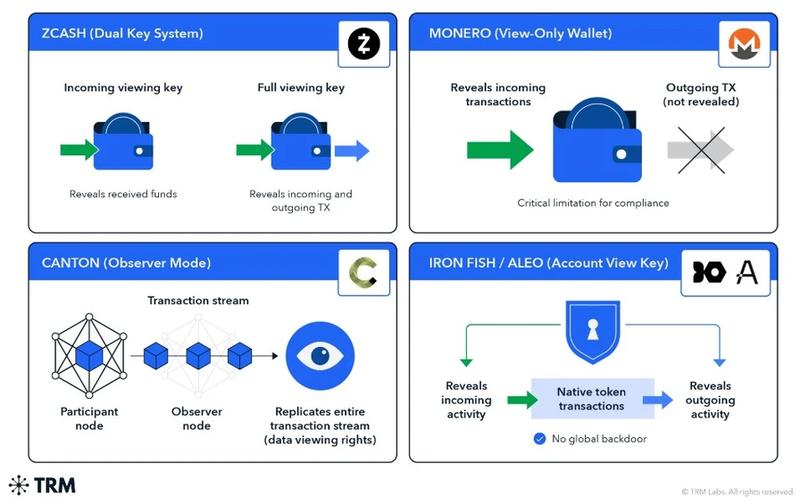
In a report published on Feb. 19, TRM Labs, a blockchain intelligence firm, stated that transaction view keys deliver "strong privacy but weak compliance utility," especially when dealing with high-value transfers, rapid fund movements or systemic monitoring.
The Audit View model utilized by Privacy Boost seems to employ an alternative methodology by granting authorized operators the ability to view private transaction data for regulatory compliance objectives. While this may enhance the system's practicality for regulated consumer-facing applications, it simultaneously indicates that disclosure control extends beyond users alone.
According to TRM Labs' research conclusions, "No single privacy regime satisfies all stakeholder needs." Nevertheless, the firm noted that hybrid methodologies that combine visibility features, access management protocols, and restrictions surrounding private-asset conversions might present the most viable solution.