Soluna sees 58% revenue surge as data center hosting compensates for declining Bitcoin mining
Revenue from hosting services exceeded mining operations as additional capacity became operational, underscoring Soluna's strategic pivot toward artificial intelligence and high-performance computing data centers.

Soluna Holdings, a digital infrastructure provider, announced robust first-quarter revenue expansion as its growing data center business helped compensate for diminished returns from its cryptocurrency mining operations.
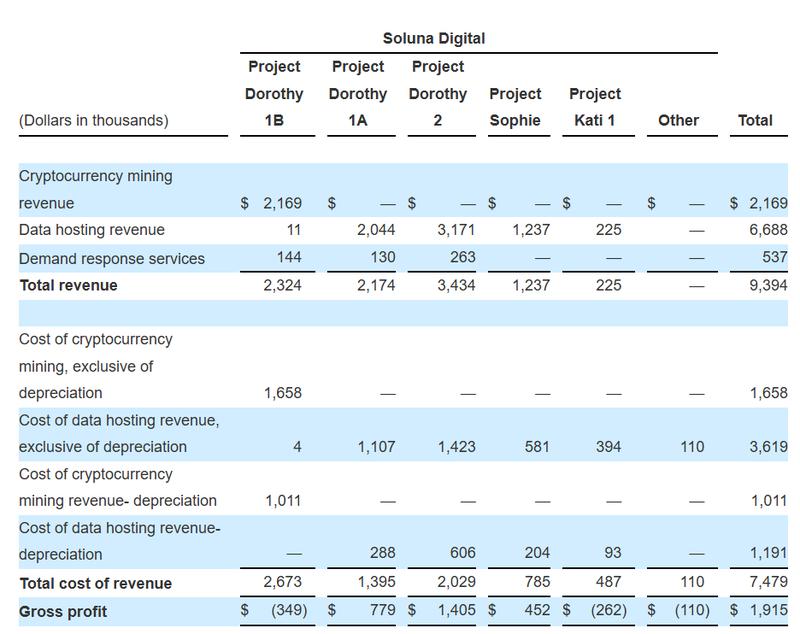
The company's revenue climbed 58% year-over-year to reach $9.4 million and grew 2% quarter-over-quarter, according to Monday's earnings announcement. This marked Soluna's fourth straight quarter of sequential revenue expansion.
The revenue increase stemmed from new capacity that became operational at the company's Texas-based Dorothy and Kati facilities. Revenue from data center hosting operations reached $6.7 million, whereas cryptocurrency mining generated approximately $2.2 million, declining from close to $3 million in the prior-year period, reflecting challenging Bitcoin mining economics.
While revenue increased, Soluna continued to operate at a loss. The company's net loss expanded to $17.9 million compared to $10.5 million in the year-ago period, largely attributable to increased stock-based compensation, interest expense and financing costs. The adjusted EBITDA loss showed modest improvement, narrowing to $2.1 million.
The company concluded the quarter holding $68.6 million in cash while continuing to expand its infrastructure presence, with strategic plans to develop its artificial intelligence and high-performance computing operations.
Bitcoin miners transition to AI infrastructure services
Soluna joins a wider industry movement among Bitcoin (BTC) mining companies pursuing alternative revenue sources as profitability from mining operations faces increasing pressure. Mining profitability has contracted substantially following the 2024 halving event, with recent BTC price weakness compounding the challenges.
According to a March analysis from CoinShares, up to 20% of Bitcoin mining operations may currently be unprofitable, especially those utilizing older, less energy-efficient equipment. The analysis also highlighted that Bitcoin hashprice — a critical metric for miner profitability — dropped to its lowest post-halving level in February.
As a result, multiple publicly listed mining companies, such as HIVE Digital Technologies and TeraWulf, have reallocated investment toward artificial intelligence infrastructure and high-performance computing services.
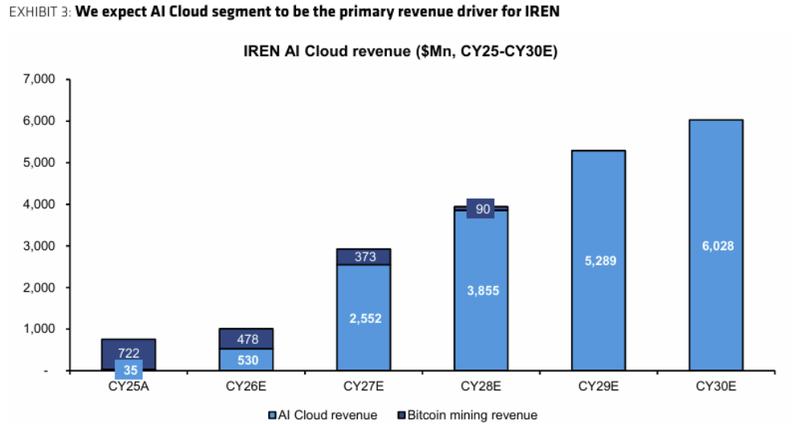
Bernstein analysts recently projected that IREN's future valuation will primarily derive from AI infrastructure operations rather than digital asset mining activities. The investment firm pointed to IREN's expanding AI cloud services and its long-term partnership agreement with Microsoft as primary catalysts for this strategic transformation.