
Solana strengthens European institutional outreach with new Swiss research organization
A Switzerland-based research institute and comprehensive practitioner guide are being introduced by Solana to assist European financial entities in assessing its blockchain technology amid increasing regulatory transparency and on-chain activity.

A new Switzerland-based research organization is being established by Solana to assist financial institutions in understanding the evolving landscape of cryptocurrency regulations, amid growing competition between public blockchain networks and permissioned systems for institutional market share.
The Solana Research Institute (SRI), established by Angus Scott, a former executive at Euroclear, is being introduced together with an approximately 60-page document designed for senior financial professionals who are evaluating the blockchain platform, based on a Thursday announcement provided to Cointelegraph. Organizations contributing to this effort include the Solana Foundation, Jito, R3 and Figment.
The program has been created to assist institutional entities in understanding regulatory frameworks including Europe's Markets in Crypto Assets Regulation (MiCA) framework and the United States' Guiding and Establishing National Innovation for US Stablecoins (GENIUS) Act, as increasing regulatory transparency starts to influence how companies interact with digital assets.
This development represents a component of Solana's wider initiative to strengthen its presence in institutional financial markets, coming after the 2025 introduction of the Solana Policy Institute in Washington. Whereas that initiative concentrated on engaging policymakers, SRI is directed toward companies evaluating operational aspects, risk management and market structure factors that have hindered the adoption of public blockchain networks among regulated financial institutions.
Ben Brophy, head of institutional growth in Europe at the Solana Foundation, told Cointelegraph that SRI seeks to assist institutions in transitioning from experimentation to deployment, bringing "credible analysis and informed dialogue to the forefront."
Stablecoins, RWAs and incumbents
This introduction arrives as Solana documents increasing activity in tokenized assets and stablecoins, which includes $650 billion in stablecoin transfer volume in February and more than $2 billion in tokenized real-world assets in March, based on network data.
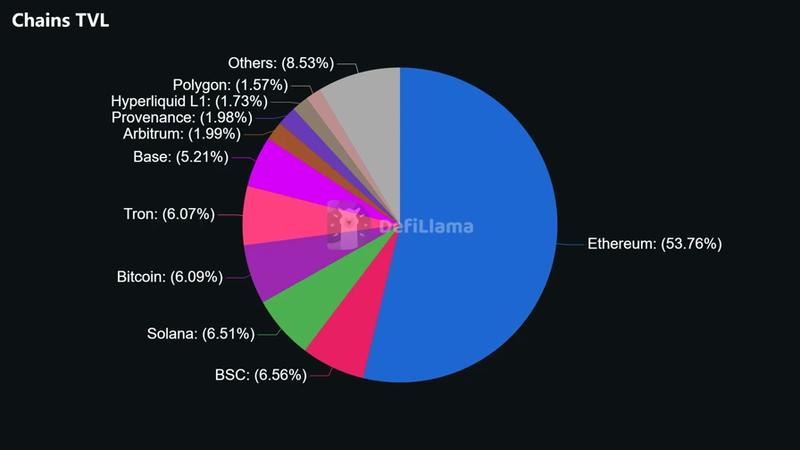
Nevertheless, Ethereum remains the platform hosting the most substantial onchain liquidity, with over $165 billion in stablecoins and the highest total value locked among public networks in decentralized finance at around $44 billion, compared to just over $5 billion on Solana, according to DefiLlama data.
Permissioned infrastructure solutions are also making progress. Canton Network materials say applications on the permissioned network now account for more than $6 trillion in tokenized assets, including large repurchasing agreements and securities positions, reflecting ongoing demand for privacy-preserving rails among regulated institutions.
Scott referenced growing institutional involvement in blockchain technology over the preceding 12 months, in the release, describing the transition as "significant." SRI states that it has organized closed-door sessions in London with participants from institutions including State Street and the Depository Trust & Clearing Corporation, highlighting early engagement from traditional finance.
Execution, infrastructure and remaining gaps
For providers of infrastructure solutions, the upcoming phase will likely hinge on execution quality and market structure considerations. Jito, a contributor to Solana's staking and transaction pipeline, said institutions are increasingly focused on determinism, pre-trade privacy and best execution guarantees.
"There has been a substantial shift from 'is this viable?' to detailed requirements-gathering around execution quality, market structure and operational risk,"
Nick Almond, head of governance at Jito Foundation, told Cointelegraph, adding that regulatory clarity in the US and Europe is driving more concrete engagement.
Nevertheless, obstacles persist. Almond noted many institutions are waiting until they achieve satisfaction with the maturity level of custody solutions, reporting capabilities and venue connectivity infrastructure surrounding public blockchain networks, areas he described as still in the "requirements-building" phase across the ecosystem.