
Senate Banking Committee Approves CLARITY Act, Moving Crypto Bill Forward
Following extensive debate over amendments addressing ethics concerns and other matters related to digital asset market structure legislation, lawmakers voted to move the bill forward, paving the way for a full Senate vote.


Members of the Senate Banking Committee in the United States conducted a markup session for a highly anticipated digital asset market structure bill on Thursday, representing a crucial milestone in Congressional efforts to provide regulatory certainty for digital asset firms and marketplaces.
During Thursday's Senate Banking Committee session, the Digital Asset Market Clarity Act (CLARITY) received support from all 13 Republican committee members along with two Democratic senators, while nine Democrats cast votes against the legislation.
Democratic Senators Ruben Gallego and Angela Alsobrooks joined Republicans in supporting the measure. The committee vote occurred following the introduction of over 100 proposed amendments to the cryptocurrency legislation, covering topics from stablecoin yield provisions to ethics-related restrictions.
During opening remarks preceding the vote, committee chair Tim Scott stated that the legislation prioritized consumer protection, maintaining innovation within US borders, and protecting national security interests in relation to digital assets.
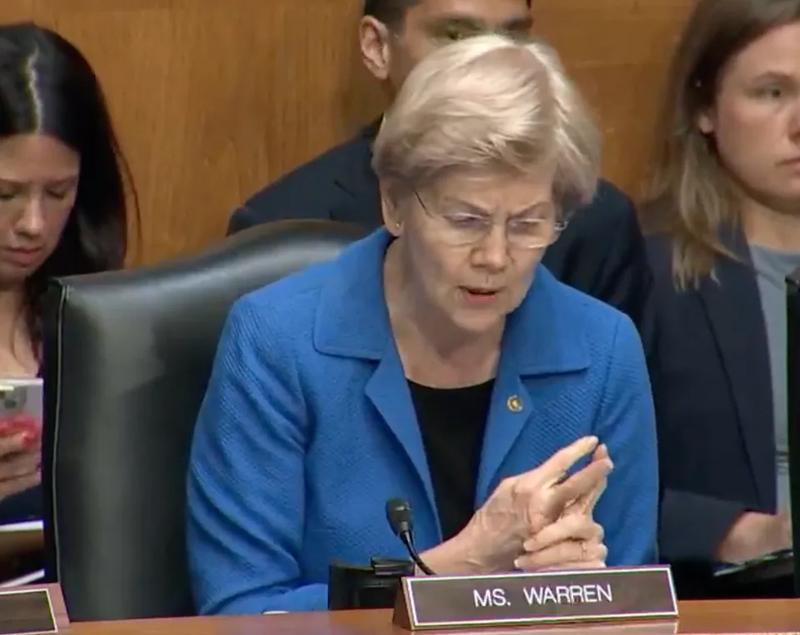
Elizabeth Warren, the committee's ranking member, characterized the legislation as "written by the crypto industry for the crypto industry," further claiming it would enable Republican lawmakers to "grease the skids" for US President Donald Trump's "crypto grift." Warren asserted, "Nothing made it into this bill that wasn't approved by the crypto industry."
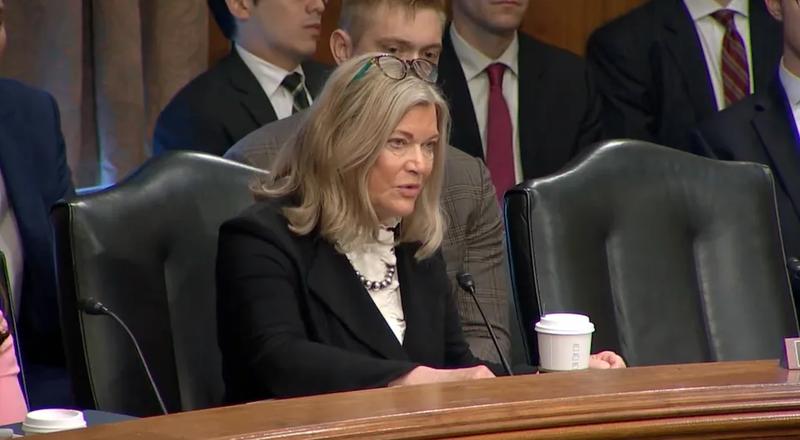
Republican Senator Cynthia Lummis, among the bill's principal Republican supporters, responded to numerous concerns raised by Warren, characterizing CLARITY as legislation that is "pro law enforcement" and "pro consumer."
Democrat Senator Jack Reed criticized the bill as falling short of genuine bipartisan collaboration, arguing that Scott had "arbitrarily" rejected consideration of amendments put forward by Democratic members.
Following CLARITY's advancement through both the banking and agriculture committees, which address regulations and laws under the Securities and Exchange Commission (SEC) and Commodity Futures Trading Commission (CFTC) jurisdictions, respectively, the legislation is anticipated to proceed to a full Senate floor vote in the near future.
The legislation requires 60 votes for Senate passage. Following Senate approval, the US House of Representatives must then vote to approve the modified legislation.
Kristin Smith, President of the Solana Policy Institute, told Cointelegraph prior to the markup, "I think it's so difficult to get Senate floor time, and if they get something through the Senate that has the votes, I think the House will probably pass that identical language, and then it will be able to go on to the president's desk for a signature."
Numerous amendments underwent debate and rejection during markup
A significant number of amendments introduced during markup were either accepted or rejected following partisan voting patterns, tackling various dimensions of cryptocurrency industry regulation.
Amendments considered during the markup included Scott's provisions regarding AI sandboxes and Warren's proposals concerning "tokenization loopholes" and money laundering activities, with Warren referencing reports indicating Iran was collecting cryptocurrency tolls from vessels transiting the Strait of Hormuz and engaging in other sanctions evasion activities.
In response to Warren's proposed amendment, Lummis indicated that CLARITY would encompass regulation of cryptocurrency mixers. The amendment proposed by Scott was incorporated, whereas Warren's amendment was rejected.
An additional amendment introduced by Warren called for US banking regulators to provide reporting on information connected to Jeffrey Epstein, the deceased sex offender, whom Warren characterized as an "early backer of crypto."
Lummis argued the provision lacked relevance to digital assets and should be excluded from the bill. The amendment failed to pass following a party-line vote by lawmakers. Republicans similarly opposed amendments introduced by Reed addressing stablecoins and digital dollars.
Democratic Senator Catherine Cortez Masto, who voiced general approval for the CLARITY Act during the markup, put forward an amendment that would expand law enforcement authority in cryptocurrency-related cases. The amendment was defeated along party lines.
An amendment proposed by Democratic Senator Tina Smith sought to prevent federal agencies from providing bailouts to cryptocurrency companies in the event of another market collapse. Characterizing it as a "preventative measure" responding to cryptocurrency market volatility, Smith along with all Democrats supported the amendment, which nonetheless failed along party lines.
Democrats maintain focus on ethics concerns
The committee additionally reviewed an amendment from Democratic Senator Chris Van Hollen addressing Trump's potential conflicts of interest involving the cryptocurrency industry through his family's World Liberty Financial enterprise and memecoins.
Scott and Republican Senator Bernie Moreno came to the president's defense, characterizing Van Hollen's statements as "ad hominem" attacks. The provision received opposition from all 13 Republican members.
"The people involved directly in making these policies, from the president to the Congress, should not be able to be issuers of these particular assets and coins," said Van Hollen.
Senator Raphael Warnock retracted an amendment responding to what he termed "pure corruption" within the Trump administration, stating he would not provide support for any legislation lacking these carveouts.
Warren reiterated these concerns through a separate amendment, which would maintain funding for the Consumer Financial Protection Bureau in response to the administration's efforts to eliminate the agency beginning in 2025.