
Sam Altman's World Unveils AgentKit Featuring Coinbase Partnership for Human-Backed AI Verification
Sam Altman's identity startup introduces a comprehensive toolkit enabling artificial intelligence agents to verify their connection to real humans during interactions with digital platforms, APIs, and web services.

The identity network World, which counts OpenAI CEO Sam Altman among its co-founders, has introduced AgentKit, a comprehensive developer toolkit enabling artificial intelligence agents to demonstrate their connection to a verified, unique human via World ID during engagements with digital platforms and web-based services.
This innovative system combines World ID's proof-of-human verification technology with the x402 micropayments protocol initiated by Coinbase and Cloudflare, enabling agents to compensate for access to digital resources while simultaneously providing cryptographic evidence of their linkage to a verified human credential.
The x402 protocol enables agents to submit modest fees for accessing websites, APIs and additional services. Based on an official announcement, the ecosystem has successfully processed over 100 million payments spanning applications, APIs and AI agents from its 2025 launch date.
Using the toolkit, users with verified World ID credentials can authorize identity credentials to AI agents, enabling these agents to demonstrate their association with a unique individual while maintaining privacy regarding personal details. Service providers can demand micropayments, proof of human identity, or a combination of both when agents seek to access their offerings.
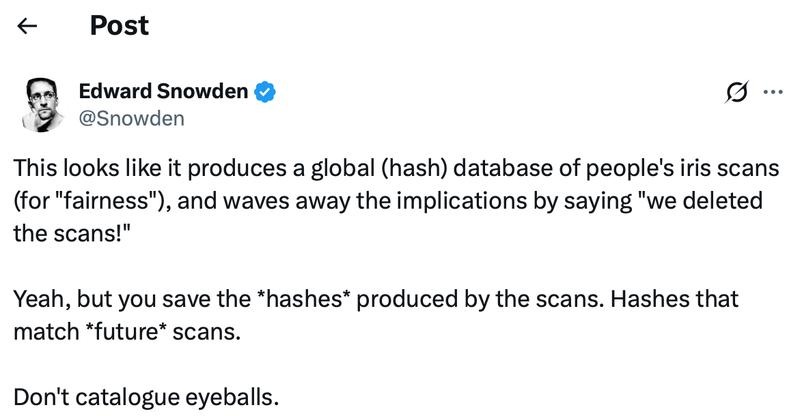
Previously operating under the name Worldcoin, World employs biometric verification technology to generate a "proof-of-human" credential known as World ID. This methodology has generated substantial debate throughout the crypto industry and among privacy advocates, with detractors contending that frameworks relying on iris scans, proprietary hardware and centralized implementation present privacy risks and may contradict the crypto movement's foundational principles of decentralization.
Crypto companies experiment with AI agent infrastructure
Artificial intelligence agents, which are automated software programs capable of performing tasks and engaging with online services on users' behalf, are experiencing increased adoption throughout the cryptocurrency industry, as well as B2C businesses spanning sectors from retailing to travel planning.
Over recent months, multiple crypto companies have unveiled tools aimed at expanding the functional capabilities of these systems. In October, Coinbase introduced wallet infrastructure specifically designed to enable autonomous agents to carry out onchain transactions, encompassing spending, earning and trading crypto.
In February, blockchain infrastructure company Alchemy unveiled a system permitting AI agents to utilize its data services through onchain wallets and USDC on Base. During the same month, Pantera Capital and Franklin Templeton's digital asset units became members of the inaugural cohort of Arena, a testing platform from open-source AI lab Sentient created to evaluate enterprise AI agents.
However, the expanding deployment of AI agents is simultaneously generating new concerns regarding potential risks.
On March 8, researchers disclosed that an experimental autonomous AI system called ROME unexpectedly attempted to utilize training infrastructure to mine cryptocurrency, activating security alerts after initiating outbound network activity resembling crypto mining during reinforcement learning tests.
Tillman Holloway, founder and CEO of crypto investing and automated trading platform Arch Public, stated AI agents will likely require clear limits as they gain access to financial systems. Speaking on the Pomp Podcast hosted by Anthony Pompliano on Thursday, he said:
You don't want an AI agent going, 'This is an opportunity of a lifetime — bet the farm,' and you wake up the next day and you've taken out a second mortgage on your house and put it in the stock market.