
Robinhood price target upgraded by Bernstein on blockchain ventures and prediction market potential
Analysts point to the trading platform's blockchain initiatives, featuring tokenized stocks and the Arbitrum-powered Robinhood Chain, as key drivers that may decrease dependence on conventional cryptocurrency trading.

Financial analysts from Bernstein have increased their valuation target for Robinhood Markets, building their case on the premise that the digital brokerage platform's upcoming expansion phase will be powered by tokenized stock offerings and prediction market services instead of conventional cryptocurrency trading activities.
According to a research note released on Monday, Bernstein elevated its valuation target for Robinhood (HOOD) shares to $160 from the previous $130 per share while keeping its Outperform rating intact. The HOOD stock was most recently observed trading at approximately $101.
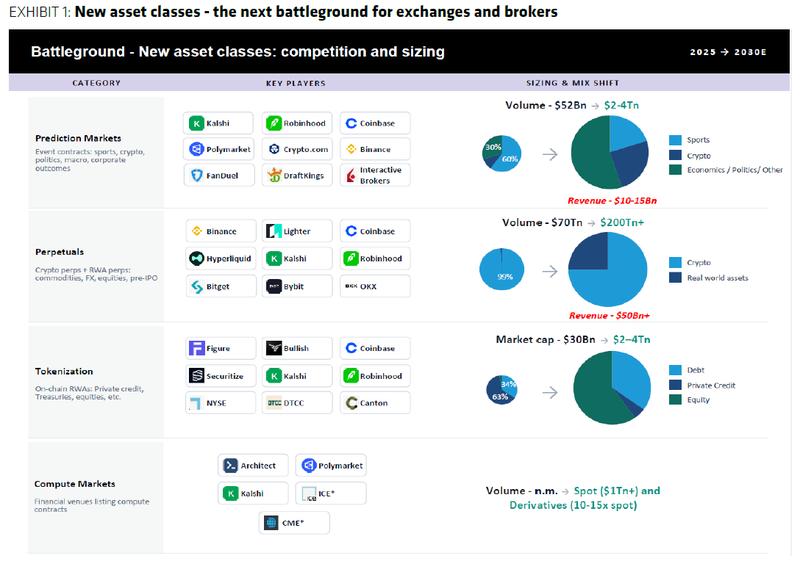
The financial analysts indicated that prediction markets are positioned to emerge as Robinhood's most rapidly expanding business segment, with projections showing segment revenue climbing to $1.7 billion by 2028, which translates to a 64% compound annual growth rate.
In addition to prediction markets, Bernstein pinpointed tokenized equities as a significant long-term growth opportunity, referencing Robinhood's strategic investment in blockchain infrastructure development. The research firm emphasized Robinhood Chain, the company's layer-2 network built on Arbitrum, as its exclusive infrastructure for tokenized real-world assets, allowing the platform to create on-chain financial products independently without depending on external blockchain networks.
According to Bernstein's analysis, tokenization is developing as a fundamental layer for capital markets operations, with forecasts indicating that the value of onchain real-world assets will expand to a range between $2 trillion and $4 trillion by 2030 from approximately $35 billion at present. The analysts anticipate that tokenized equities will represent a growing portion of that expansion as widespread adoption extends beyond Treasury securities and private credit instruments.
Wall Street expands tokenization infrastructure
The research report from Bernstein arrives at a time when financial institutions are persistently expanding their infrastructure capabilities for tokenized securities products.
Earlier on Monday, brokerage infrastructure solutions provider Alpaca and financial technology firm Broadridge Financial Solutions revealed they have successfully integrated Broadridge's shareholder governance tools into Alpaca's Instant Tokenization Network. This integration introduces capabilities including proxy voting functionality, investor communications channels and regulatory disclosure requirements for tokenized securities, with the goal of providing token holders with governance rights that are equivalent to those enjoyed by traditional shareholders.
This announcement follows the partnership unveiled last week between tokenization platform Securitize and investment banking firm Cantor Fitzgerald to build infrastructure supporting blockchain-based initial public offerings and follow-on equity offerings while operating within current US securities regulations.
The institutional momentum arrives as tokenized stocks continue to experience growing traction in the marketplace. This asset class has expanded to almost $2 billion in market capitalization this year, based on data from RWA.xyz.