Ripple Partnership Enables Bitso to Launch MXNB Peso Stablecoin on XRP Ledger
Through the integration of MXNB and RLUSD on the XRP Ledger, the two companies aim to facilitate institutional payment flows between Mexico and the United States amid rising stablecoin usage throughout Latin America.

Through an enhanced payments collaboration with Ripple, Bitso is deploying its MXNB stablecoin—backed by the Mexican peso—to the XRP Ledger, where it will function in tandem with Ripple USD (RLUSD) to facilitate enterprise-level cross-border settlement operations between Mexico and the United States.
The Mexico City-headquartered Bitso announced that MXNB will be issued directly on the XRP Ledger, where the token will become part of Ripple's Payments on DEX infrastructure and work in conjunction with the RLUSD stablecoin to enable settlement of enterprise payments denominated in both dollars and pesos.
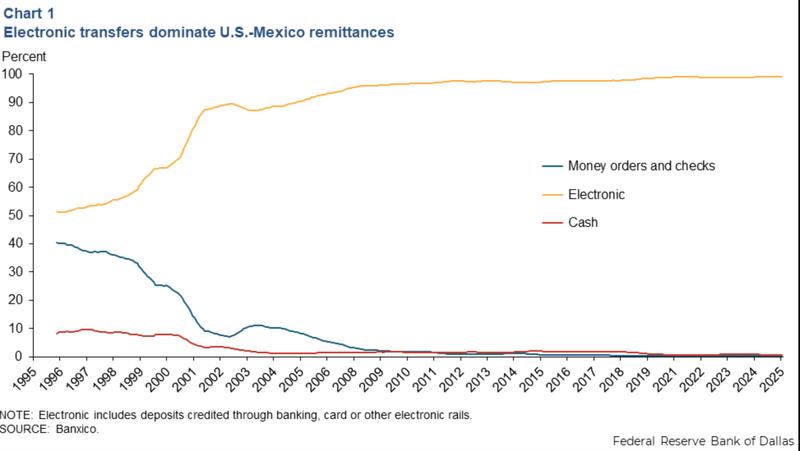
The remittance flow between Mexico and the US represents the world's largest single remittance corridor, data from the US Federal Reserve indicates. Trade in American goods and services with Mexico reached approximately $935.1 billion in 2024, representing a 5.5% increase compared to 2023, based on figures from the White House Office of the US Trade Representative.
Integration of MXNB will also extend to the XRP Ledger's Permissioned DEX, a specialized platform built for verified participants that provides access to onchain settlement infrastructure and liquidity.
The two companies have maintained a cross-border payment services partnership throughout Latin America for multiple years, establishing the foundation for this most recent initiative.
Stablecoins continue to gain ground in cross-border payments
Throughout Latin America, where Bitso maintains direct operations in countries including Mexico, Brazil, Argentina and Colombia, along with institutional connections in Chile and Peru, stablecoin usage continues its upward trajectory.
On Bitso's platform during 2025, dollar-backed tokens accounted for 40% of all crypto purchases, surpassing the purchase volume of every other digital asset category.
Remittance companies and financial institutions have likewise broadened their stablecoin-based payment infrastructure in recent months. Anchorage Digital announced a partnership with Mexico's Grupo Salinas in May to enable cross-border settlement and treasury operations utilizing stablecoins. According to the companies, the collaboration would leverage blockchain-based payment rails to enable international dollar transfers for businesses and financial institutions.
MoneyGram introduced its MGUSD stablecoin, backed by the dollar, on the Stellar blockchain earlier this month. The company indicated that the token would be incorporated into its application through a self-custodial wallet, enabling users to maintain dollar-denominated balances, transfer funds globally and exchange them into local currencies.
The movement toward stablecoin-based payment solutions emerges as cross-border transfers continue to carry high costs. According to World Bank data, the average cost of sending $200 internationally stood at 6.36% during the third quarter of 2025, whereas blockchain-based settlement transactions can be executed for a fraction of a cent.
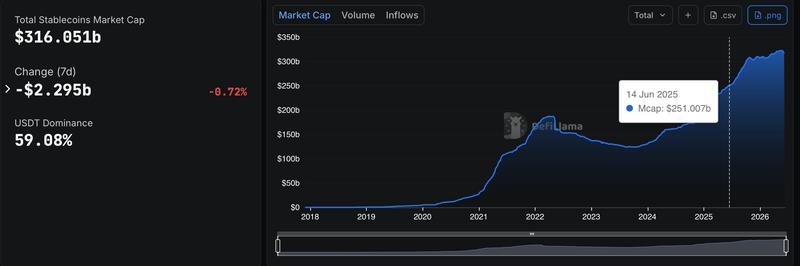
Over the past year, stablecoin adoption has seen significant acceleration, with the total market capitalization rising from approximately $251 billion in mid-2025 to exceed $316 billion by June 2026, based on data from DefiLlama.