
Quantum-Resistant Ethereum Wallets Available for 7 Cents, Kohaku Lead Reports
The proposed SPHINCS- system seeks to lower the expense of post-quantum signature validation on Ethereum as developers pursue a more permanent solution.

According to Nicolas Consigny, who leads the Ethereum Foundation's Kohaku project, Ethereum has the potential to implement post-quantum security measures for accounts at a cost as low as $0.07, and this could be accomplished without the need to wait for a hard fork.
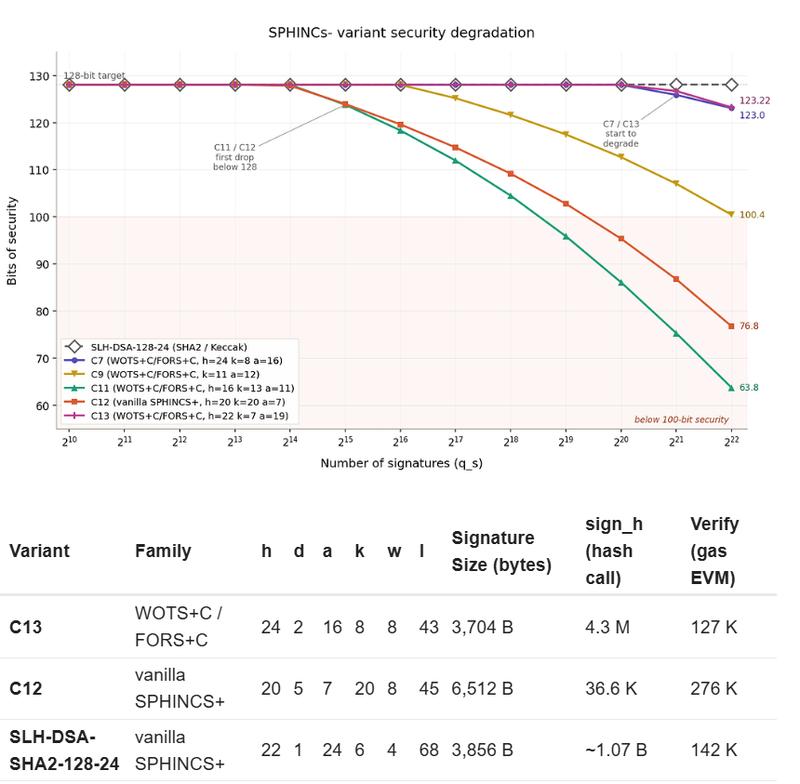
Consigny published a paper on Saturday via X, outlining a more economical method for Ethereum account holders to safeguard their assets against potential quantum-computing risks in the future. The solution modifies SPHINCS+, a post-quantum cryptographic signature standard created by the US National Institute of Standards and Technology, making it function more effectively within the Ethereum ecosystem.
The proposal, which has been named "SPHINCS-," is designed to decrease the costs associated with onchain verification while avoiding the necessity for a protocol modification or precompile. Consigny characterized SPHINCS- as an intermediary step leading to a future post-quantum signature framework called "leanSPHINCS," which is intended to further minimize verification expenses through the use of aggregation.
The initiative attempts to mitigate the potential long-term danger that quantum computing poses to Ethereum's Elliptic Curve Digital Signature Algorithm by offering a cost-effective alternative that can be implemented prior to the development of a specialized hard fork.
Future quantum computing threats stirs crypto community
Back in April, researcher Giancarlo Lelli received recognition from post-quantum startup Project Eleven for successfully breaking a 15-bit elliptic-curve cryptographic key utilizing a quantum computer.
While Bitcoin employs keys that are 256 bits in length, substantially more complex than the 15-bit key that Lelli successfully compromised, his achievement demonstrated a proof of concept. He successfully derived the corresponding private key from its associated public key by employing a variation of Shor's algorithm, a quantum computational method that theoretically represents a risk to the cryptographic systems utilized by Bitcoin.
Data from Glassnode indicates that approximately 1.92 million Bitcoin, which accounts for nearly 10% of the entire supply, are deemed "structurally unsafe" when considering a hypothetical future quantum attack scenario. An additional 4.12 million BTC, representing 20.6% of the total supply, fall into the category of "operationally unsafe" as a result of key or address management practices.
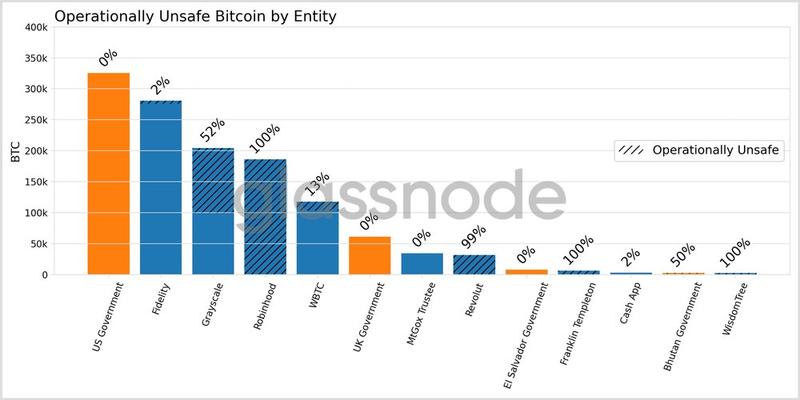
According to the analytics firm's assessment, the remaining 69.8% of Bitcoin's supply, equivalent to 13.99 million Bitcoin, continues to be unexposed to quantum computing threats, which aligns closely with an estimate from Ark Invest published in March stating that 65% of the supply was secure.