
Polymarket prohibition fails to stop Dutch access to prediction markets
Despite February's Polymarket restrictions, Dutch residents continue accessing prediction markets through Kalshi, Hyperliquid, and Interactive Brokers.

Despite restrictions imposed earlier this year, Dutch residents maintain their ability to participate in cryptocurrency-based prediction markets following the prohibition of industry leader Polymarket.
The Dutch Gaming Authority (Ksa) imposed a ban on Polymarket in February due to the platform's operation without proper gambling licensing. Nevertheless, platforms including US-headquartered Kalshi, cryptocurrency exchange Hyperliquid, and major investment firm Interactive Brokers continue providing prediction market services to users in the Netherlands, an investigative report by Dutch financial publication FD revealed.
The Ksa issued a statement indicating that Polymarket's prohibition extends to comparable platforms. A spokesperson was quoted saying, "Websites similar to Polymarket also fall under our supervision and can therefore be sanctioned by us."
According to the investigation, Kalshi seems to be deliberately pursuing Dutch customers, the report indicated, noting that the platform enables wagering on football matches in the Dutch Eredivisie and had previously offered speculation opportunities on Dutch electoral outcomes. Hyperliquid, functioning as a decentralized blockchain infrastructure, has likewise recently broadened its prediction market services to include the Netherlands.
On the other hand, Interactive Brokers positions its offerings as financial instruments instead of gambling products, asserting supervision by the Irish central bank, according to the report. Nevertheless, when contacted by FD, the Irish central bank stated it possessed no information regarding this arrangement and directed inquiries to the Irish gambling regulatory body.
Cointelegraph reached out to Kalshi, Hyperliquid and Interactive Brokers for comment, but had not received a response by publication.
Prediction markets under global scrutiny
Regulatory challenges for prediction markets are intensifying worldwide. In the previous month, Brazilian authorities initiated the shutdown of 27 platforms, with Kalshi and Polymarket among them. An increasing number of European countries, including France, Italy, Singapore, Switzerland and Poland have similarly imposed restrictions or penalties on platforms conducting operations without proper authorization. Hungary and Portugal have also taken specific action against Polymarket.
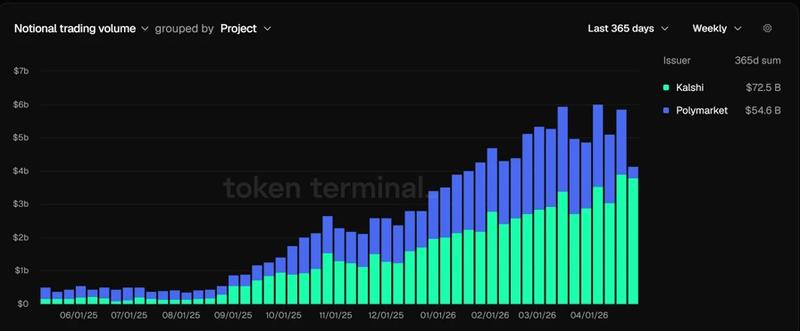
Within the United States, the regulatory landscape is considerably more fragmented. A jurisdictional dispute between federal and state authorities has emerged concerning regulatory authority over prediction markets. In recent weeks alone, the CFTC has initiated legal proceedings against Illinois, Arizona, Connecticut, New York and Wisconsin, contending that these states exceeded their authority by attempting to regulate markets falling under federal oversight.
Venture capital company a16z supported the federal stance, contending that requiring exchanges to restrict users according to their state of residence creates direct conflicts with the CFTC's regulations mandating impartial access.
Most traders lose money on prediction markets
Research conducted in April by the London Business School revealed that merely 3% of prediction market participants achieve consistent profitability, whereas approximately 70% experience financial losses.
The matter of insider trading within prediction markets also presents concerns. Unidentified traders were discovered to have accurately wagered on the US attack on Iran and the attempted kidnapping of Venezuelan President Nicolás Maduro, prompting suspicions regarding prior knowledge of these events.