
Ondo Finance pushes regulators to authorize onshore US stock perpetual futures
Ondo Finance contends that perpetual futures contracts linked to individual equities can function within current US securities regulations as authorities seek to relocate derivatives trading domestically.

Ondo Finance is making the case to United States regulators that perpetual futures contracts based on individual equities should be brought onshore, maintaining that these financial instruments can function within the nation's current security futures regulatory framework and don't require additional legislation.
Through three separate comment letters submitted on Aug. 24 to both the Securities and Exchange Commission (SEC) and the Commodity Futures Trading Commission (CFTC), Ondo made the case that current regulations have the capacity to support perpetual stock futures contracts while simultaneously addressing contemporary margining methodologies and blockchain-based market information.
Ondo disclosed that its Panama-domiciled affiliate currently provides stablecoin-settled perpetual futures contracts on individual stocks listed in the US to users outside United States borders, with the trading platform having achieved $8 billion in total trading volume by Aug. 14, approximately six weeks following its initial launch.
The firm contended that regular funding payments at scheduled intervals can maintain perpetual contracts in alignment with the market price of their corresponding stocks, serving an equivalent purpose to the expiration mechanism found in conventional futures contracts.
Nothing in the statutory definition of a security futures product requires a fixed expiration date.
Ondo, product-classification letter
Ondo further highlighted that numerous stocks serving as the underlying assets for offshore perpetuals experience their primary trading activity on exchanges based in the United States. "Bringing that activity back to the U.S. should not be an open question; it's something both agencies should actively pursue," the company said.
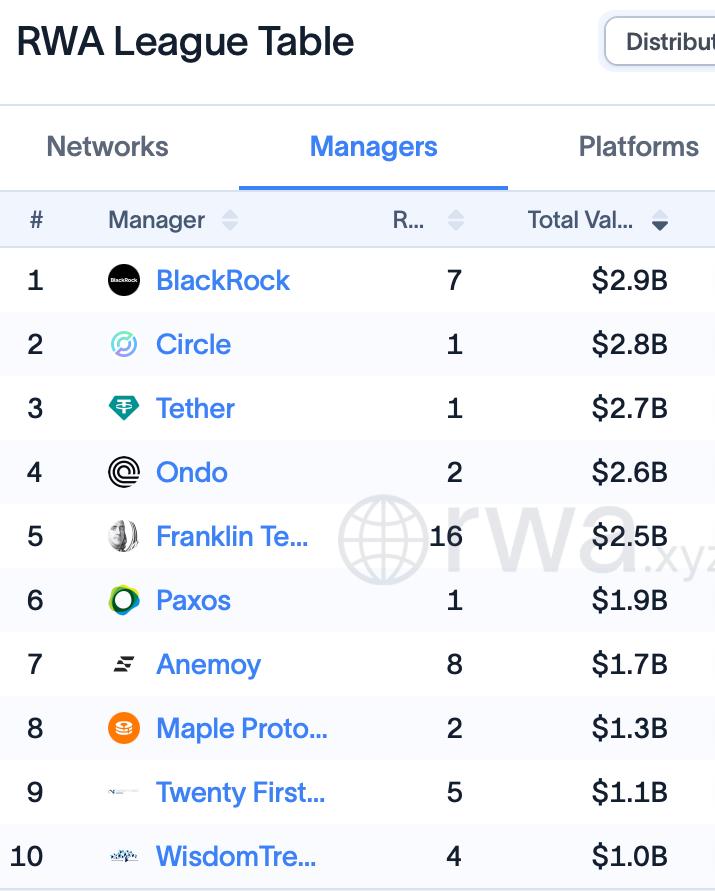
Ondo ranks among the leading managers of tokenized real-world assets, holding the fourth position with approximately $2.6 billion in distributed value as of Wednesday, based on data from RWA.xyz.
US regulators look to modernize market rules
Ondo's submitted proposal arrives at a time when United States regulators are reassessing the application of current market regulations to blockchain-based products, which include perpetual futures contracts and tokenized securities offerings.
President Donald Trump announced in August that CFTC Chair Michael Selig was engaged in efforts to facilitate Hyperliquid's entry into the United States market in a "fully compliant and legal fashion." Hyperliquid has established its reputation primarily through its blockchain-based perpetual futures marketplace, although neither the CFTC nor Hyperliquid has made public the specific details regarding how United States market access would be structured.
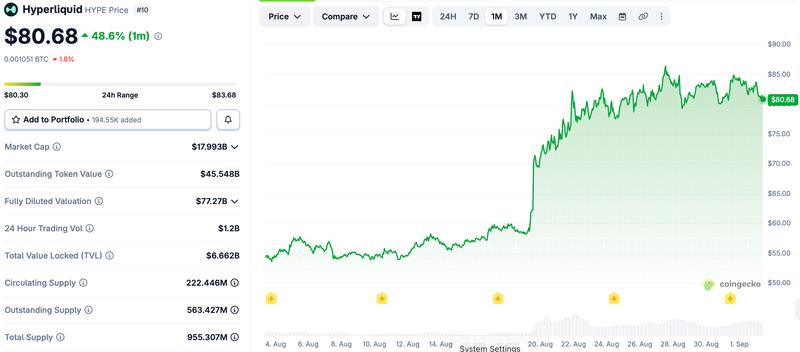
HYPE, which serves as the native token of Hyperliquid, experienced an increase of more than 20% in the aftermath of Trump's statements and has appreciated nearly 49% throughout the past month to reach a trading price of approximately $81 on Wednesday, based on data from CoinGecko.
The SEC, which maintains oversight authority over securities markets, and the CFTC, which holds regulatory jurisdiction over US derivatives markets, have additionally intensified their collaborative efforts throughout this year, executing a memorandum of understanding in March designed to harmonize regulatory oversight in jurisdictional areas where their authorities intersect.
On Tuesday, the SEC put forward a proposal to comprehensively overhaul its transfer agent framework that has remained largely unchanged for decades, referencing increasing market demand for blockchain-native recordkeeping systems and tokenized securities in United States markets as the regulatory agency reevaluates rules that were constructed for legacy market infrastructure.