
Not All Cryptocurrency Wallets Face Equal Quantum Computing Threats, Galaxy Digital Reports
According to Will Owens from Galaxy Digital, the majority of cryptocurrency wallets remain protected from quantum computing threats, while significant efforts are underway to mitigate potential risks.

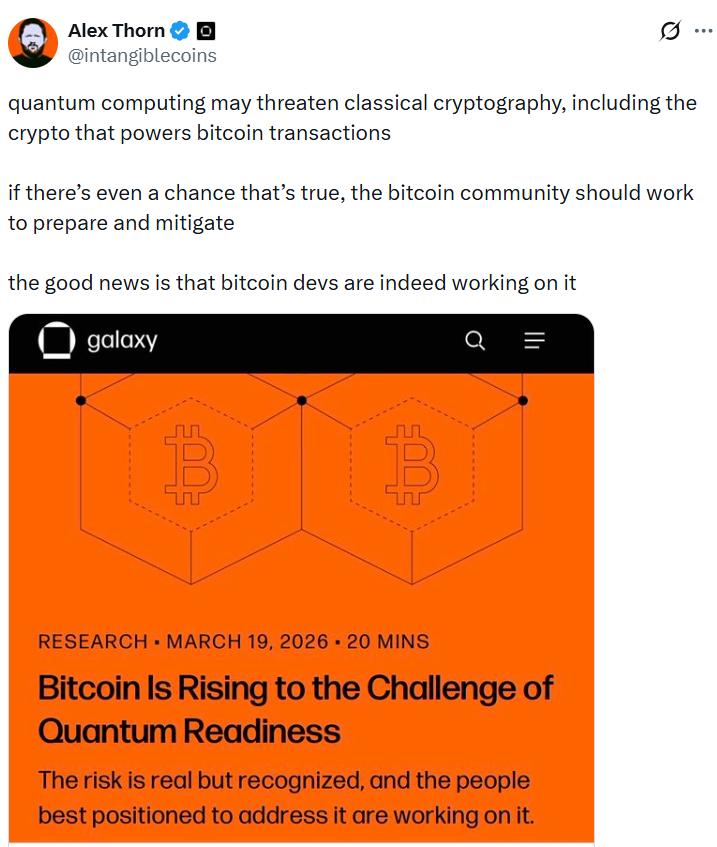
While quantum computing poses a genuine threat to Bitcoin holders, not every wallet faces the same level of vulnerability, and those most qualified to tackle this challenge are actively working on solutions, according to Will Owens, a research analyst at Galaxy Digital.
In a Thursday report, Owens explained that theoretically, quantum computers possess the capability to extract private keys from their corresponding public keys, which would enable malicious actors to mimic legitimate owners, create fraudulent signatures, and pilfer digital assets.
That said, he emphasized that the vulnerability varies significantly across different wallet types.
"The reality is that most wallets remain protected at present. The danger only materializes when public keys become exposed on the blockchain," Owens stated.
According to Owens, wallet exposure occurs through two primary mechanisms: wallets with public keys that are already publicly visible on-chain, and wallets that disclose their public keys during transaction execution.
The cryptocurrency community has engaged in extensive discussions regarding quantum computing as a potential critical juncture for the industry. Sophisticated computing systems with encryption-breaking capabilities have been theorized to possess the ability to uncover user credentials, compromise confidential information, and misappropriate user assets.
The right people are on top of the issue
Skeptics contend that the quantum computing danger is exaggerated given that the technology remains several decades from practical implementation, and that traditional financial institutions and other conventional targets would fall victim well before Bitcoin networks are compromised.
Owens also noted that discussions circulating online suggest Bitcoin Core developers are "ignoring and gatekeeping" quantum-focused proposals, including the soft fork BIP 360, but his investigation revealed a different picture, observing that the "pace of proposals has accelerated meaningfully since late 2025."
"In contrast to certain public critiques, our examination uncovered significant developmental efforts addressing quantum vulnerability concerns and potential countermeasures," Owens remarked.
"The ecosystem now has a concrete and maturing set of proposals spanning the full problem surface. These proposals are not theoretical. They are being actively developed, reviewed, and debated by some of the most experienced contributors in the Bitcoin ecosystem."
Additional industry participants have also put forward their own remedies. Cryptocurrency veteran Willy Woo proposed last November that Bitcoin (BTC) holders could safeguard their assets until a permanent quantum solution emerges by storing coins in a SegWit wallet for approximately seven years.
Governance will still likely present a challenge
Once the developer community successfully devises a post-quantum resolution, Owens indicated it will probably introduce governance complications since "Bitcoin has no CEO, no board, and no central authority that can mandate a software update."
"However, the characteristics of this specific threat — originating externally, being technical in nature, and having universal consequences — create an alignment of incentives that previous disagreements regarding Bitcoin's economic trajectory did not produce," he explained. "Every honest participant in the network, from miners to holders to exchanges, has a direct financial interest in the network's continued security."
"For investors, the key takeaway is straightforward: the risk is real but recognized, and the people best positioned to address it are working on it."