
New CGT proposals in Australia may push crypto investors away from long-term holding strategies
Proposed reforms to Australia's capital gains taxation system may substantially raise tax obligations for cryptocurrency holders, with industry experts suggesting this could trigger a shift in investor behavior from long-term holding strategies toward more active trading approaches.


Proposed modifications to Australia's capital gains taxation framework could result in reduced returns for digital currency investors, particularly those in lower income brackets, and may undermine strategies centered on "patient investing," multiple cryptocurrency industry leaders have stated.
The proposed overhaul, unveiled by the governing Labor Party on Tuesday within its fiscal year 2027 budget proposal, would implement a baseline 30% tax rate on capital gains while eliminating the existing 50% capital gains tax discount currently available for assets maintained beyond a 12-month period.
Robin Singh, CEO and founder of cryptocurrency tax platform Koinly, shared with Cointelegraph that the proposed modifications present both advantages and disadvantages: While the new framework "theoretically" shields investors from taxation on gains that merely reflect inflation, in reality, the majority of cryptocurrency investors will face higher tax burdens, with those earning lower incomes experiencing the most severe impact.
"A lower-income earner who would have paid around $3,800 under the old rules, 19% on a $20,000 discounted gain, will pay $10,200 under the new ones. That's nearly triple. For students, part-time workers and anyone without significant other income, this is the biggest shift," Singh added.
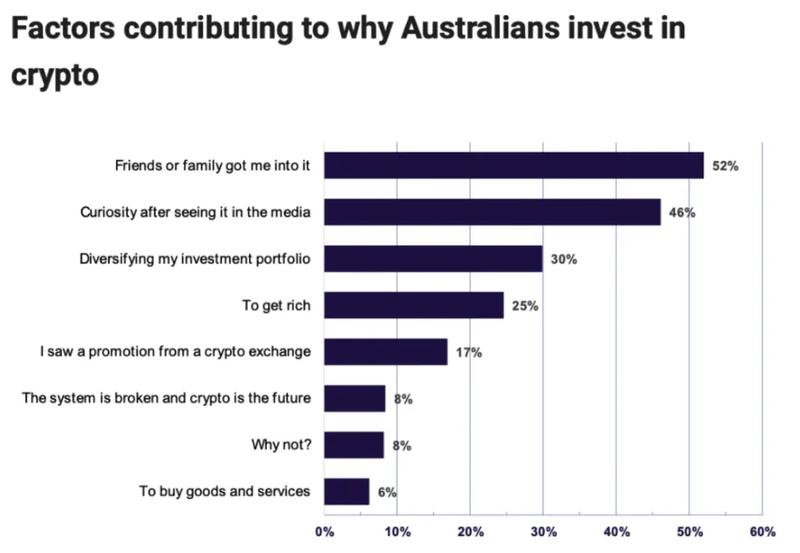
Numerous investors, especially those from Gen Z and Millennial demographics, have viewed cryptocurrency as a vehicle for wealth generation and sustained financial prosperity. The proposed tax modifications could undermine this perspective. Research conducted in 2025 by cryptocurrency exchange Independent Reserve revealed that 30% of participants were investing in digital currencies to diversify their investment portfolios, while 25% were engaging in trading activities with the goal of achieving significant wealth.
"For retail and mid-sized holders, the hodl tax incentive is effectively gone. Crypto has historically grown much faster than inflation, so the inflation adjustment doesn't come close to offsetting the loss of the 50% discount. With no tax reward for sitting on positions, expect more frequent trading and shorter holding periods."
"That said, the market has always adapted. Investors will rework their strategies, advisors will rework their advice, and the dust will settle," Singh added.
Anticipated shift in cryptocurrency trader behavior patterns
Jonathon Miller, who serves as the Australian general manager for cryptocurrency exchange Kraken, concurred that the proposed changes would diminish the appeal of maintaining long-term cryptocurrency positions.

"The bigger risk is that reducing the benefit of long-term holding makes patient investing less attractive, particularly in a market where assets can be traded around the clock. That could push some investors toward shorter-term behavior, which is not necessarily the best strategy for long-term wealth building," Miller said.
"The sector will continue to mature, but policy settings can influence whether that maturity is built around long-term confidence or shorter-term activity."
Andrea Yuen, serving as co-CEO of Australian cryptocurrency trading platform Swyftx, indicated that the taxation changes might encourage cryptocurrency investors to explore alternative pathways for building long-term wealth.
"The change is likely to act as a catalyst for patient capital over the next few years. We expect a significant trend toward crypto allocations within retirement portfolios and self-managed super funds. Investors are essentially being incentivized toward structured, long-term wealth creation," Yuen added.
BTC Markets, an Australian cryptocurrency exchange, disclosed in its Investor Study Report that registrations for SMSF increased 69% year-on-year throughout the 2024–2025 financial year.
Proposed CGT reforms must clear parliamentary hurdles
The Australian government has maintained that the proposed changes will reduce investor demand for property acquisitions because, in the absence of tax incentives, property becomes a less appealing investment vehicle and this could increase available supply.
The new provisions will be applicable exclusively to gains accumulated following July 1, 2027, with newly constructed homes receiving an exemption. Opponents contend that the measures will instead drive housing prices upward, suppress investment activity, create negative impacts on business operations and intensify pressure on new housing supply availability, The Australian reported on Friday.
The proposed tax reforms must still successfully navigate passage through the Australian Parliament. Angus Taylor, who leads Australia's other major political party, the Liberals, has reportedly committed to opposing the proposed measures and reversing them should his party form government following the next federal election in 2028.
The Labor Party will also require passage of the tax reforms through the House of Representatives, where 76 votes are necessary for approval, and subsequently through the Senate with 39 votes. Labor currently controls 94 seats in the House and maintains 30 seats in the Senate.