Nearly 15-year-old Bitcoin wallet linked to New York legal battle activates $1.9M transfer
After remaining inactive for almost 15 years, a Bitcoin wallet has transferred $1.9 million worth of BTC while being part of a New York legal case targeting thousands of dormant cryptocurrency addresses.

A Bitcoin wallet that had been inactive for nearly 15 years has executed a transaction moving 30 BTC valued at approximately $1.88 million.
The Bitcoin wallet identified as "1KV47" completed its initial outbound transaction on Saturday, marking its first movement since it received 30 BTC back in August 2011, according to blockchain data disclosed by Galaxy Research.
This wallet is one of 39,069 Bitcoin addresses included in a legal action filed in New York by an individual using the pseudonym "Noah Doe" along with two companies based in Wyoming, who are pursuing ownership rights to inactive Bitcoin wallets. This legal proceeding has the potential to establish precedent for how dormant cryptocurrency assets are handled under New York's lost-property statutes.
The Bitcoin addresses referenced in the lawsuit encompass those commonly linked to Bitcoin's anonymous creator Satoshi Nakamoto, and these addresses together contain approximately 3.7 million BTC valued at roughly $234 billion, as reported by Sani, who founded the analytics platform Timechain Index.
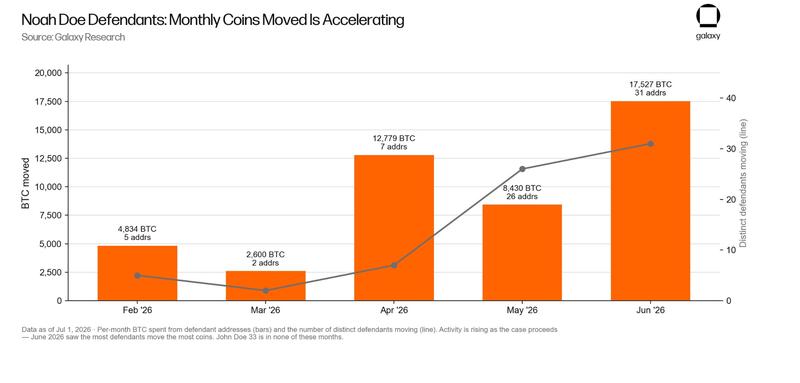
An increasing number of inactive Bitcoin wallets connected to the New York legal case have become active recently, with 31 addresses moving 17,527 BTC during June, compared to just five addresses that transferred 4,834 BTC in February, as noted by Alex Thorn, Galaxy Digital head of research.
Can dormant Bitcoin holdings be considered "lost" property?
Last Friday, one defendant using the pseudonym "John Doe 33," who asserts control over one of the inactive Bitcoin wallets, submitted a motion requesting dismissal of the legal case, contending that Bitcoin addresses are simply data strings that lack the legal standing to be sued.
While a New York court possesses jurisdiction to determine rights concerning intangible property, it lacks the legal authority to reclassify public addresses as "found" property merely because the plaintiff has copied these addresses onto a hard drive, according to Edwin Mata, lawyer and CEO of tokenization platform Brickken, in his statement to Cointelegraph.
He added:
The core flaw is that inactivity is not abandonment. Under property law, abandonment generally requires intent to relinquish rights, and a dormant Bitcoin address proves none of that.
The Bitcoin wallets identified in the legal filing could represent Bitcoin stored in long-term cold storage solutions, cryptocurrency with misplaced private keys, or simply belong to holders who choose not to move their assets. In the absence of the private keys required to access and control these holdings, the legal foundation supporting the lawsuit remains "very weak," according to Mata.