
Mastercard's Strategic Play: Infrastructure Over Issuing Its Own Stablecoin
An in-depth look at Mastercard's $1.8 billion acquisition of BVNK and the strategic reasoning behind controlling payment infrastructure rather than launching a proprietary stablecoin.
The strategic significance behind Mastercard's BVNK purchase
The decision by Mastercard to purchase BVNK for a sum reaching $1.8 billion represents more than a simple foray into cryptocurrency markets. The move signals a deliberate and calculated strategic pivot.
Instead of launching a proprietary stablecoin, Mastercard has chosen to acquire ownership of the foundational infrastructure that bridges traditional finance with blockchain-based payment systems.
This strategy raises a critical question: What drives a payments industry giant to forego developing its own digital currency in favor of purchasing the systems that enable its transfer?
The answer lies in regulatory dynamics, scalability potential and maintaining enduring control over the foundational infrastructure underpinning digital finance.
The value proposition BVNK offers
BVNK functions as a payments infrastructure provider rather than a stablecoin issuer. Strong infrastructure represents a critical component for the stablecoin ecosystem's operations.
The platform enables businesses to:
- Send and receive payments with stablecoins
- Perform smooth conversions between fiat currencies and crypto
- Operate in more than 130 countries
Consequently, BVNK functions as a bridge linking two separate financial worlds:
- Conventional payment networks, including banks, card networks and fiat channels
- Blockchain networks, including stablecoins, crypto wallets and on-chain transactions
Rather than creating a novel currency type, BVNK enables organizations to leverage existing currencies with enhanced efficiency.
Did you know? Stablecoins process trillions of dollars in annual transaction volume and often rival major card networks. Yet many users do not realize they are interacting with blockchain-based systems behind the scenes when using certain fintech payment services.
Mastercard's core mission: Bridging financial ecosystems
Mastercard operates as a bridge between financial ecosystems, functioning essentially as a network of networks. Instead of attempting to compete against various digital money formats, Mastercard seeks to serve as an integrator that connects them all cohesively.
This strategy encompasses unifying:
- Traditional card-based payment systems
- Core banking infrastructure
- Blockchain-based transaction rails
Company executives anticipate that the future of payments will encompass a diverse range of digital money types, including:
- Stablecoins
- Tokenized bank deposits
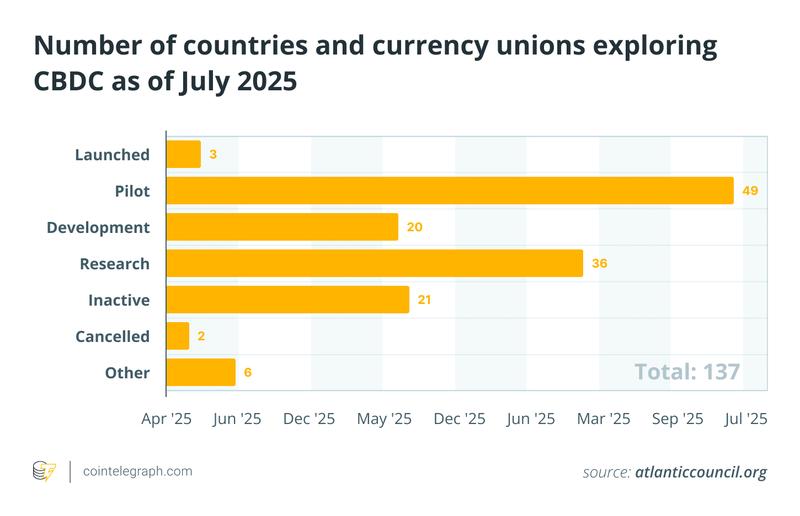
- Central bank digital currencies (CBDCs)
The rationale behind Mastercard avoiding stablecoin issuance
At first glance, launching a Mastercard-branded stablecoin might seem like a logical move. Yet the company has identified several substantial reasons to avoid this path:
Demanding regulatory requirements
Issuers of stablecoins face mounting regulatory scrutiny. New regulatory frameworks, including the GENIUS Act (Guiding and Establishing National Innovation for US Stablecoins), are intended to mandate:
- Strict reserve requirements
- Enhanced transparency obligations
- Oversight similar to that applied to traditional banks
Launching a stablecoin would transform Mastercard into a regulated financial issuer, introducing significant operational complexity and compliance burdens.
Balance sheet exposure and liability
Stablecoin issuers must maintain reserves, usually in cash or government securities, to fully collateralize tokens in circulation. This requirement presents multiple challenges, such as:
- Complex liquidity management
- Potential redemption pressures
- Vulnerability to shifts in market conditions
By avoiding the issuance path, Mastercard sidesteps these financial exposures and responsibilities.
Maintaining partner relationships
Mastercard works closely with:
- Commercial banks
- Fintech platforms
- Various payment providers
Launching a proprietary stablecoin could position Mastercard as a direct competitor to these critical ecosystem partners. Concentrating on infrastructure allows Mastercard to maintain neutrality while serving rather than competing with its collaborators.
Did you know? The concept of "tokenized deposits" is gaining traction among banks, where traditional money is digitized on a blockchain. However, it remains within regulated banking systems, offering a potential alternative to privately issued stablecoins.
Why infrastructure control provides greater strategic advantage
Owning infrastructure typically provides more substantial power than owning a single asset. While a stablecoin issuer profits solely from its own token, an infrastructure provider derives value from transactions involving numerous tokens.
This business model allows Mastercard to:
- Support Tether USDt (USDT), USDC (USDC) and emerging bank-issued tokens
- Generate fees from a broad spectrum of use cases
- Grow in tandem with the entire ecosystem rather than being limited to one product
Through this move, Mastercard establishes itself to extract value across the entire spectrum of digital payment flows.
The importance of timing in this moment
This acquisition coincides with rising institutional enthusiasm for stablecoins, which possess the capacity to reshape global payments substantially in the next ten years.
Multiple converging forces support this development:
- Significantly faster and more cost-effective cross-border transactions
- Growing regulatory clarity
- Expanding adoption among fintech companies and large enterprises
Stablecoins have progressed beyond the experimental stage and are now increasingly recognized as fundamental components of financial infrastructure.
Did you know? Cross-border payments through traditional banking can involve up to five intermediaries. Stablecoin-based transfers can reduce this to just two endpoints, dramatically cutting both time and cost.
The role of Visa, Coinbase and other market participants
Mastercard confronts competition within this arena. Visa has invested capital in BVNK, while Coinbase explored acquiring the company before ultimately stepping back.
This pattern indicates a broader industry trend toward convergence:
- Traditional financial institutions are advancing into blockchain territory
- Crypto-native companies are seeking deeper integration with established payment networks
However, strategic approaches differ significantly. While numerous crypto companies prioritize launching their own tokens, major payment networks concentrate on infrastructure and expansive distribution capabilities.
The competitive advantage of infrastructure in international payments
Traditional cross-border payment systems suffer from significant delays, frequently requiring multiple days, elevated fees and the participation of many intermediaries.
In contrast, systems built on stablecoins provide:
- Near-instant settlement
- Lower costs
- Round-the-clock availability
Through integrating infrastructure like BVNK, Mastercard can embed these advantages into its existing network without requiring wholesale replacement.
Mastercard's approach lowers adoption barriers significantly. Financial institutions and fintech companies can now:
- Provide stablecoin services without developing their own blockchain systems
- Use global payment rails more efficiently
- Seamlessly incorporate digital currency features into their current offerings
This positioning establishes Mastercard as a critical backend enabler for finance's evolution.
Potential challenges and unresolved questions
While Mastercard's infrastructure-centric strategy holds considerable promise, significant challenges and uncertainties persist that may shape its ultimate success.
Key concerns encompass:
- Persistent regulatory differences and fragmentation across jurisdictions, creating compliance hurdles and inconsistent operating environments for cross-border activities
- Heavy reliance on external stablecoins issued and managed by third parties, which introduces dependency risks related to their stability, governance and continued availability
- Intensifying competition from CBDCs as well as powerful technology giants entering the payments space with their own solutions and vast user bases
- Potential margin compression in infrastructure-based services, as increased competition and scale drive fees downward over time
Shifting geopolitical dynamics, changes in monetary policy and unexpected technological disruptions may further complicate the trajectory ahead.
In the end, how successful and sustainable Mastercard's approach proves to be will hinge on the continued evolution and maturation of the wider stablecoin ecosystem.