
Major prediction platforms Kalshi and Polymarket implement sweeping restrictions to combat insider trading
In a coordinated effort, Kalshi and Polymarket have introduced measures to prevent insider trading, coinciding with the introduction of bipartisan legislation targeting sports-related event contracts.

On Monday, Kalshi and Polymarket, two leading prediction market platforms, unveiled new regulatory safeguards designed to combat insider trading, responding to growing scrutiny over potential market manipulation in recent event-based contracts.
The announcement coincides with the same day that members of Congress from both parties put forward legislation aimed at prohibiting event contracts that bear resemblance to "sports bet" or "casino-style game" activities.
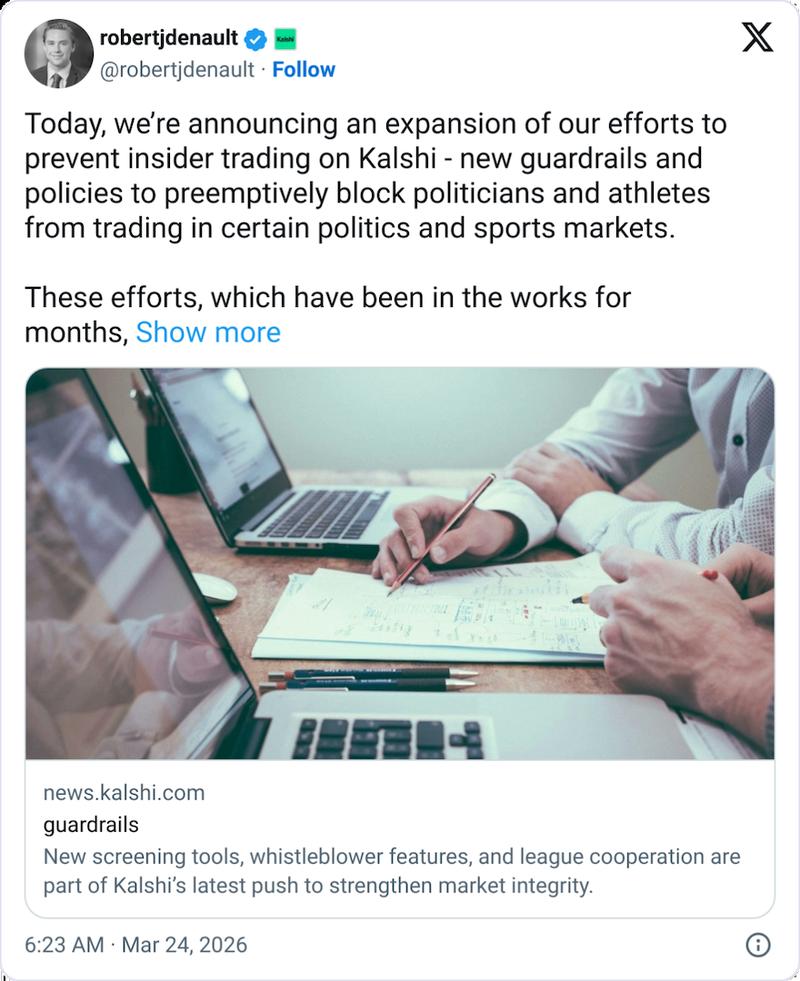
In its Monday announcement, Kalshi disclosed plans to implement preventive measures that would prohibit political candidates from placing trades on their own electoral campaigns, while also barring individuals connected to collegiate and professional sports leagues, including athletes, team staff members, and officiating personnel.
The restrictions announced by Kalshi came mere hours following Polymarket's disclosure of comparatively more expansive prohibitions designed to ban participants who engage in trading using misappropriated confidential data, information obtained through illegal means, or individuals possessing the capability to directly influence market outcomes.
Both platforms have encountered increasing scrutiny regarding insider trading practices following incidents where Polymarket participants generated profits through strategically-timed wagers placed before military strikes conducted by US and Israeli forces against Iran, as well as ahead of a US military mission aimed at apprehending Venezuelan President Nicolás Maduro.
Speaking to The Guardian on Monday, Ben Yorke, who previously served as a research analyst at Cointelegraph, characterized the Iran strike wagers as the work of "someone with some degree of inside info," noting that the positions were taken at prevailing market prices and distributed across numerous accounts in what appeared to be a deliberate effort to mask the trader's identity.
According to Kalshi's statement, the prohibition measures have "been in the works for months" and were implemented proactively in response to regulatory guidance and congressional legislative initiatives addressing insider trading and market manipulation concerns within prediction market environments.
Bipartisan legislative proposal seeks to prohibit sports event contracts
The timing of Kalshi and Polymarket's prohibition announcements follows the introduction of legislation by Democratic Senator Adam Schiff and Republican Senator John Curtis on Monday, which would outlaw specific event contracts "that are indistinguishable from gambling."
The proposed legislation, titled the Prediction Markets Are Gambling Act, would prohibit entities registered with the Commodity Futures Trading Commission, a category that encompasses both Kalshi and Polymarket US, from offering event contracts that have characteristics resembling "a sports bet or a casino-style game."
"Sports prediction contracts are sports bets — just with a different name,"
Schiff said. "These contracts have been offered in all fifty states in clear violation of state and federal law."
Senator Curtis stated that the proposed legislation "clarifies regulatory jurisdiction, ensuring that states can maintain their authority over sports betting and casino gaming."
Responding to the legislative proposal, Tarek Mansour, who serves as CEO of Kalshi and is affiliated with the Coalition for Prediction Markets lobbying organization, shared on X that the bill represented the "casino lobby hard at work."
"This bill isn't about protecting consumers; it's about protecting monopolies,"
he added.
Multiple prediction market operators, including Kalshi, Polymarket and Coinbase, currently face legal challenges across various state jurisdictions, with state authorities contending that sports event contracts constitute gambling activities that necessitate state-issued licensing for legal operation.
The platforms have countered these claims by asserting that their contract offerings do not constitute illegal wagering activities and fall, in any case, under the exclusive regulatory authority of the CFTC rather than state-level regulatory bodies.