
Legal Firm Seeks Court Order to Redistribute $344M in Iranian-Connected USDt Holdings
Gerstein Harrow LLP pursues legal action to seize frozen digital currency assets on behalf of judgment holders whose cases date back several decades and have no connection to cryptocurrency.

A legal filing submitted Thursday by Gerstein Harrow LLP in a miscellaneous enforcement case requests judicial intervention to force Tether, the stablecoin issuer, to release over $344 million worth of frozen USDt tokens connected to entities based in Iran.
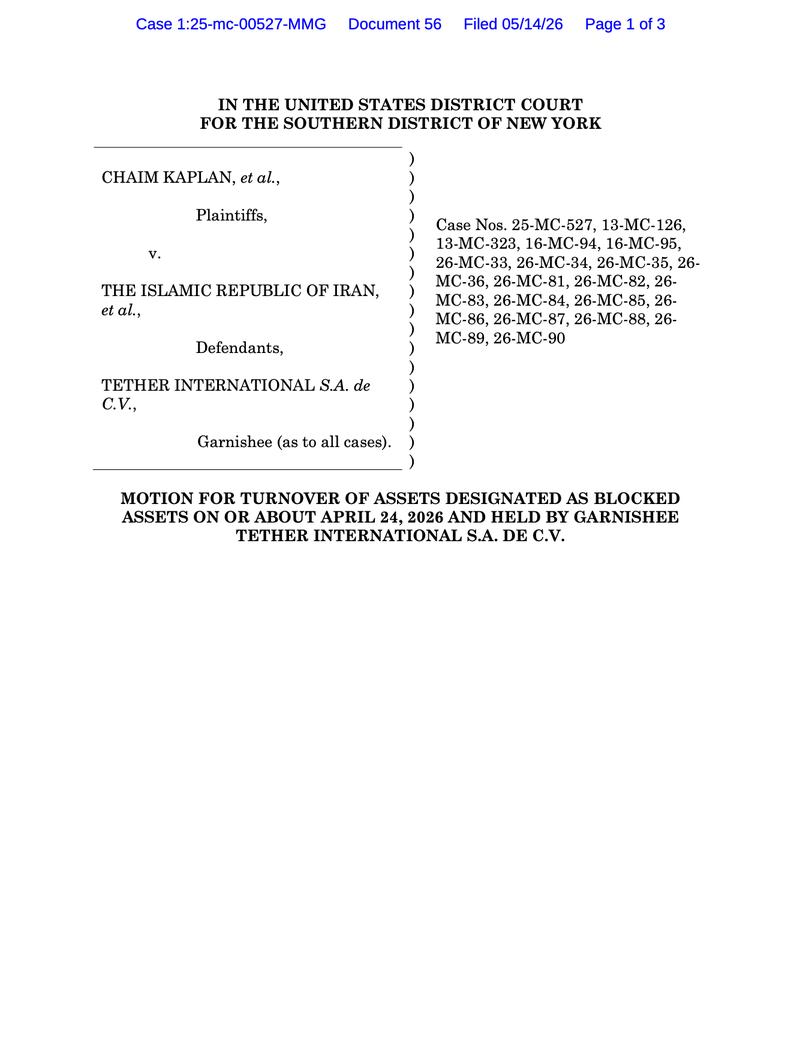
During May, the same legal practice submitted a restraining notice targeting the Kelp decentralized autonomous organization (DAO), the entity overseeing operations of the liquid staking platform, in an effort to prevent the movement of frozen Ether (ETH) connected to the Kelp security breach that occurred in April, which resulted in losses of $293 million.
The legal strategies employed by the firm have sparked significant criticism from members of the cryptocurrency community, with detractors contending that redirecting assets that should go to victims of hacking incidents to fulfill judgments from decades-old, unrelated cases creates obstacles to timely reimbursement for those who suffered losses in the hacks and possess more legitimate entitlement to the frozen funds.
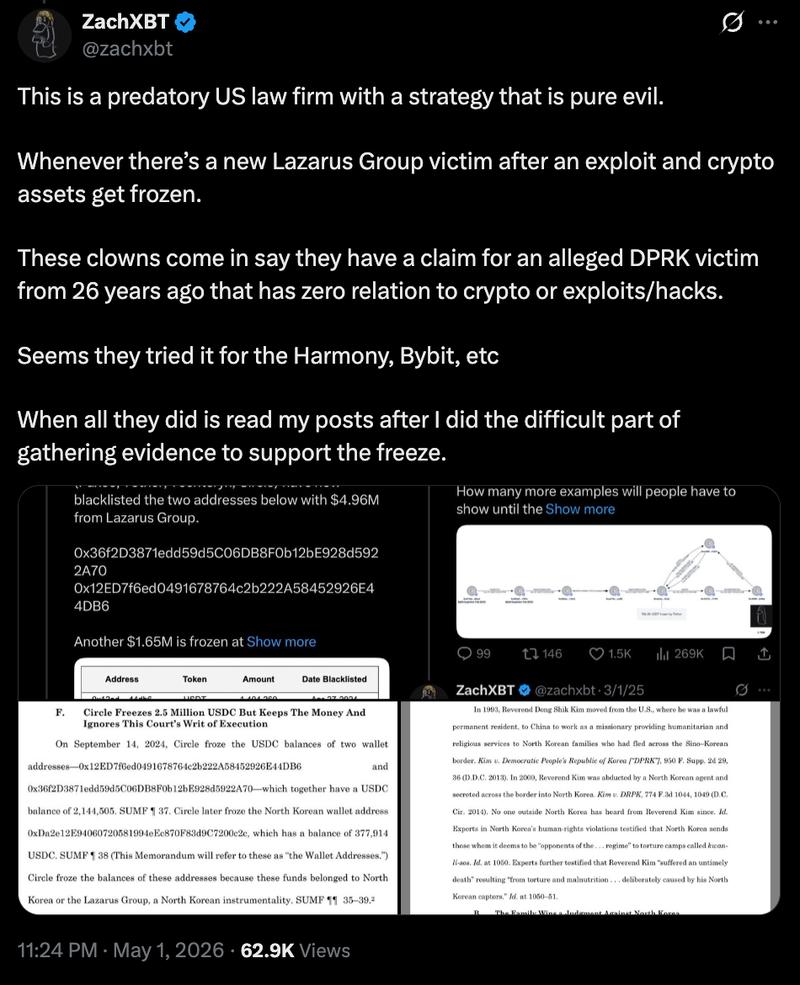
ZachXBT slams Gerstein Harrow for crypto targeting strategy
The law practice of Gerstein Harrow LLP has an established track record of submitting comparable legal claims against various cryptocurrency firms and platforms in the aftermath of security breaches and cybersecurity exploits, which include actions involving the Harmony protocol, the Bybit cryptocurrency exchange, and numerous other targets, as documented by blockchain investigator ZachXBT.
"This is a predatory US law firm with a strategy that is pure evil," he said in an X post from May 1, adding that the law firm used his cybersecurity research of various crypto hacking incidents to justify the claims.
"Whenever there's a new Lazarus Group victim after an exploit and crypto assets get frozen, these clowns come in and say they have a claim for an alleged DPRK victim from 26 years ago that has zero relation to crypto or exploits/hacks," he added.
During April, the United States Office of Foreign Assets Control (OFAC) issued a directive requiring Tether to freeze $344 million worth of stablecoins associated with Iranian entities.
The decision to freeze these digital assets also generated divided responses from the cryptocurrency community regarding the moral implications of implementing wallet freezes and the responsibilities of centralized cryptocurrency issuers when complying with law enforcement directives.