
Crypto community debates reports of Iran implementing Bitcoin tolls for tanker traffic
Members of the Bitcoin community respond to emerging claims that Iran has begun accepting Bitcoin payments for transit fees from oil tankers navigating the Strait of Hormuz.
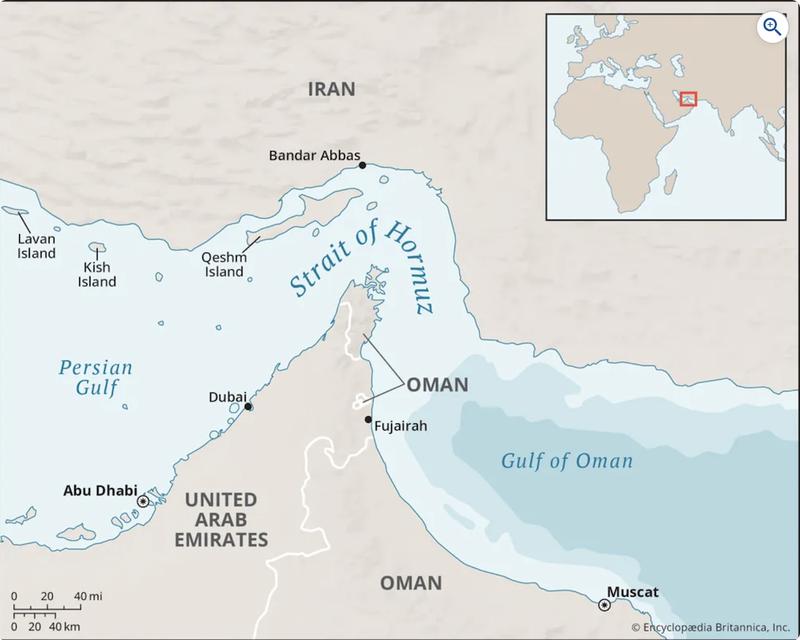
Members of the Bitcoin (BTC) community are actively debating both the practicality and broader consequences of Iran's government reportedly accepting BTC as payment for transit fees charged to oil tankers navigating through the Strait of Hormuz, a strategically vital waterway that handles approximately 20% of the world's oil supply.
The widespread discussion was triggered by a Financial Times article, released on Wednesday, stating that Iran's government was exploring the possibility of accepting BTC payments for these oil transit fees as a strategy to circumvent sanctions levied by the United States.
Multiple contradictory accounts have emerged following the initial Financial Times piece, with some sources indicating that the transit fees may actually be payable in stablecoins or Chinese yuan instead, as noted by Alex Thorn, who serves as head of firmwide research at Galaxy, a crypto investment firm.
Bitcoin proponent Justin Bechler argued that stablecoins carry the risk of being frozen by their issuers and referenced the compliance mechanisms incorporated in the GENIUS stablecoin regulatory framework as evidence for why Iran's government would avoid collecting transit fees in US-dollar-pegged stablecoins. He stated:
"USDT and USDC include built-in blacklist functions at the smart contract level. When an address is flagged, the issuer can freeze the tokens, rendering them completely illiquid. The law's enforcement depends entirely on the compliance of issuers."
"Bitcoin has no issuer, no compliance officer to pressure, and no freeze function. Iran's pivot toward Bitcoin follows directly from this structural reality," he added.
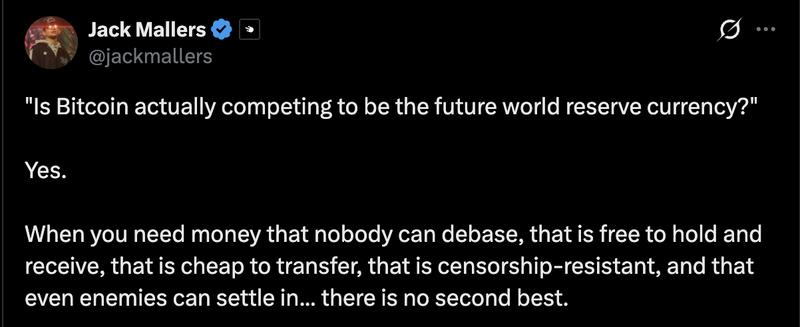
Should Iran's government proceed with accepting BTC for oil tanker transit payments, it would enhance Bitcoin's reputation as a politically neutral settlement mechanism for cross-border transactions, according to proponents.
Iran would likely use QR codes to collect BTC payments
According to Thorn's calculations, individual oil tankers would be required to pay somewhere between $200,000 and $2 million in transit tolls for passage through the Strait of Hormuz.
The original Financial Times reporting quoted a representative from Iran's Oil, Gas and Petrochemical Products Exporters' Union, stating that vessels would have only a "few seconds" to finalize their payment in BTC.
This timing constraint implies that vessels would make payments using the Lightning Network, a secondary layer payment protocol for BTC that enables participants to transmit transactions in mere seconds, as opposed to waiting for the standard 10-minute block confirmation time.
That said, the highest documented transaction conducted over the Lightning network thus far has been valued at $1 million, according to Thorn.
"More likely, the Iranian authorities would provide a QR code or alphanumeric Bitcoin address to the ships upon approval of their requests to pass through the Strait," he added.