
Iran Central Bank Crypto Holdings Exposed by Arkham Following $344M Tether Seizure
A new blockchain wallet mapping by Arkham Intelligence connects OFAC‑designated Tron addresses to Iran's central bank, exposing Tehran's purported digital asset reserves and transaction counterparties to complete public examination.


A blockchain intelligence firm called Arkham has released what it identifies as a comprehensive, public-facing digital map showing cryptocurrency wallets linked to the central bank of Iran, transforming a pair of US-sanctioned Tron-based addresses into publicly accessible resources available for investigators and general audiences alike.
This development has the potential to heighten examination of Iranian-connected organizations and their utilization of stablecoins and distributed ledger technology for transferring capital beyond conventional banking infrastructure, particularly as American officials ramp up sanctions enforcement related to terrorism funding and petroleum-based revenue streams.
In a research publication released by Arkham on May 11, the wallets are consolidated into an entity page and explorer dedicated to the Central Bank of Iran, which the company indicates can serve as an initial point for tracking associated addresses and capital movements.
The mapping framework relies on a pair of TRC-20 addresses that were incorporated into the US Treasury's Office of Foreign Assets Control (OFAC) Specially Designated Nationals list on April 24 as assets belonging to Bank Markazi Jomhouri Islami Iran, with cited connections to the Islamic Revolutionary Guard Corps-Qods Force and Hezbollah.
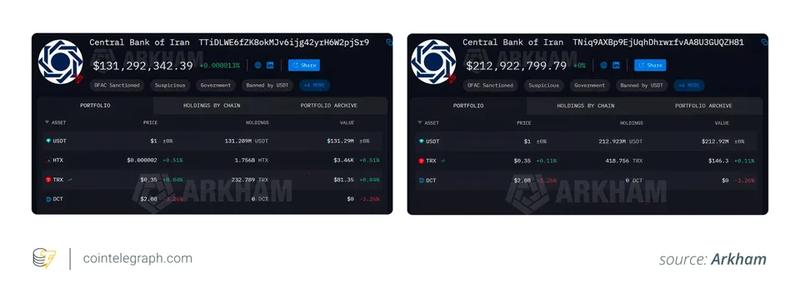
American officials seized approximately $344 million in cryptocurrency associated with Iran as part of that enforcement action, according to Treasury Secretary Scott Bessent, who characterized the move as an initiative to "systematically degrade Tehran's ability to generate, move, and repatriate funds." Separately, Tether announced it had immobilized the assets following a request from US authorities concerning "activity tied to unlawful conduct," though the company did not explicitly mention Iran in its official public disclosure.
The wallet mapping initiative by Arkham exemplifies a wider trend among blockchain intelligence companies and stablecoin providers to identify and dismantle sanctions circumvention networks that are progressively utilizing crypto infrastructure connected to Tron and Tether.
In a research note published on April 27, Chainalysis outlined a multi-stage stablecoin "pipeline" through which Iranian petroleum revenues were channeled via brokers, intermediary wallet addresses, cross-chain bridge protocols and decentralized finance platforms before ultimately returning to accounts affiliated with the Central Bank of Iran and entities linked to the IRGC.
Iran's wider crypto footprint
The discoveries shared by Arkham emerge within a larger context of expanding Iranian cryptocurrency adoption. A February analysis examining Iran's digital asset ecosystem, referencing data from TRM Labs and Chainalysis, estimated the nation's aggregate crypto transaction activity at approximately $11.4 billion in 2024 and $10 billion in 2025.
In May, Nobitex, recognized as Iran's biggest cryptocurrency exchange platform, was allegedly connected to members of an influential family maintaining relationships with Supreme Leader Ali Khamenei, and functioned as a critical channel linking domestic participants with international liquidity sources.
In April, Iran purportedly explored the possibility of collecting crypto-based toll payments from vessels navigating the Strait of Hormuz, establishing digital currencies as an alternate revenue mechanism independent of conventional banking systems.
In related news, Cointelegraph published a report Friday indicating that Tether had immobilized in excess of 500 million USDT during a recent 30-day timeframe spanning both Ethereum and Tron networks, with approximately 506 million of that total occurring on Tron, based on data from BlockSec's USDT Freeze Tracker.
A spokesperson representing TRON informed Cointelegraph that the blockchain network itself lacks the capability to monitor or restrict individual transaction activity, but highlighted the T3 Financial Crime Unit, a partnership involving TRON, Tether and TRM Labs established in 2024, as its primary mechanism for combating misuse, stating the unit collaborates with law enforcement agencies "to freeze hundreds of millions of funds," including assets connected to sanctioned organizations and terrorism financing operations. Tether chose not to provide a statement.