
Industry Expert Predicts Wave of Mergers Among Crypto Treasury Firms in 2026
Falling cryptocurrency valuations have left numerous companies holding digital assets underwater or seeing their shares trade below net asset value.

A wave of consolidation is expected to sweep through the crypto treasury sector this year as the market downturn continues, with companies that maintain operational businesses positioned to merge with or purchase those whose shares are trading beneath their net asset value (NAV), says Wojciech Kaszycki, who serves as chief strategy officer at crypto infrastructure and treasury firm BTCS.
Companies with operating businesses—such as those running validator services for blockchain networks or providing public and private credit instruments—are able to generate cash flow, which provides crypto treasury firms with a significant advantage over competitors that simply accumulate cryptocurrency holdings, Kaszycki explained in an interview with Cointelegraph.
This advantage in financial resources positions these companies to acquire competitors who are struggling with their cryptocurrency investments or whose market valuations have fallen beneath the actual value of their digital asset holdings, he explained. Kaszycki added:
"If you consolidate with another player, sometimes two plus two equals six or more, you can win faster, because everybody in this market trading below net asset value is struggling."
The crypto treasury sector faced a broad downturn throughout 2025, with numerous companies seeing their stock valuations plummet below the actual value of the cryptocurrency assets sitting on their balance sheets. This decline in crypto treasury valuations came before the broader crypto market crash that occurred in October.
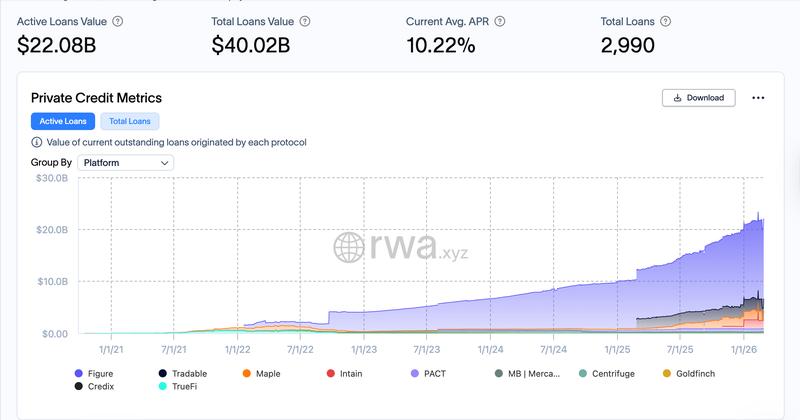
Tokenized public and private credit instruments as a revenue stream for crypto treasuries
"In today's world, credit instruments are one of the biggest financial instruments used worldwide," Kaszycki told Cointelegraph.
Both public and private credit instruments have the potential to be tokenized on blockchain networks, according to Kaszycki.
"I believe tokenized real-world assets (RWA), especially tokenization of public and private credit, is something that will grow a lot in the next 24 months," he said.
These tokenized RWAs have the potential to serve as collateral on decentralized finance (DeFi) platforms, including applications for lending or borrowing, according to him.
Strategy, which holds the position of the world's largest Bitcoin (BTC) treasury company, provides credit-like and fixed-income instruments to public investors.
The company pointed to its fixed-income offerings as part of its argument for why MSCI, an index provider, should add Strategy and other comparable crypto treasury companies to its stock indexes.
"Strategy's treasury operations are designed to provide investors with varying degrees of economic exposure to Bitcoin by offering a range of securities, including equity and fixed income instruments," Strategy wrote in response to MSCI.