
Indonesian Regulators Mandate Certifications for Crypto-Promoting Influencers
Financial authorities in Indonesia will mandate that social media influencers promoting cryptocurrency and digital assets obtain proper certifications, joining a global trend of stricter finfluencer regulation.

The financial regulatory body in Indonesia has rolled out new certification mandates for social media influencers promoting cryptocurrency and various digital financial products, marking the nation's broader push to regulate financial marketing activities across social platforms.
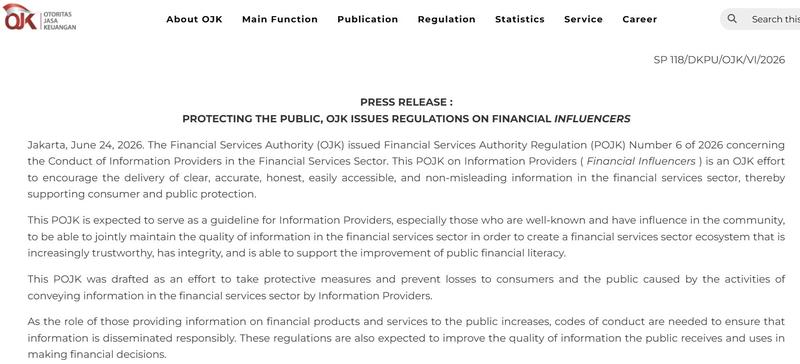
According to Financial Services Authority Regulation No. 6 of 2026, which was made public on Wednesday, anyone promoting digital assets through social channels must secure competency certifications, except in cases where they already fall under separate licensing frameworks.
Social media personalities are permitted to promote exclusively those digital assets that appear on authorized trading platforms, and any service providers mentioned in their content must possess valid licenses. All promotional initiatives must be carried out in partnership with regulated entities operating in the financial services sector, which bear full responsibility for the marketing materials, and such content must be disseminated exclusively via their official communication platforms.
The Southeast Asian nation now stands alongside an increasing roster of countries implementing stricter controls over financial influencers, commonly known as finfluencers, with nations such as Australia and the United Kingdom rolling out comprehensive regulations governing investment-related promotions and the Philippines implementing marketing limitations specific to cryptocurrency.
Global regulators tighten oversight of finfluencers
The United Kingdom and Australia were pioneers among regulatory territories in establishing clarity around how current financial legislation extends to social media influencers.
During March 2022, the Australian Securities and Investments Commission (ASIC) announced that social media influencers might need to obtain a financial services license in situations where their posted content constitutes financial advice or facilitates the arrangement of financial transactions. The commission additionally cautioned that licensed financial institutions could face liability for any wrongdoing committed by influencers with whom they collaborate.
During 2024, the UK Financial Conduct Authority (FCA) published guidance indicating that influencers operating without proper authorization could potentially face criminal charges when they promote financial products subject to regulation without receiving approval from a suitably authorized entity.
On April 24, the FCA spearheaded an international "week of action" initiative focused on combating illegal finfluencer activity. The FCA reported that 17 regulatory bodies took part in the campaign, engaging in enforcement operations, public awareness initiatives and educational programming designed for influencers seeking to operate within legal boundaries.
According to the regulatory framework, providers of crypto asset services must report their authorized third-party marketing partners to the Philippine Securities and Exchange Commission.