
Growing Ether Supply Squeeze Gains Momentum: What's Next for ETH Valuation?
Exchange withdrawals of ETH are accelerating as staking levels climb to new heights. Could this supply dynamic trigger bullish price action for Ether?

The available supply of Ether (ETH) on the Ethereum blockchain is becoming increasingly constrained, as exchange netflows, growing participation in staking, and diminishing exchange reserves collectively indicate a narrowing pool of tokens accessible for immediate trading.
Market observers believe this supply reduction could signal the beginning stages of a "new phase," possibly setting up a more robust structural price foundation for ETH in upcoming market cycles.
Staking activity secures 33.1% of ETH's total circulation
The proportion of Ethereum locked in staking mechanisms continues its upward trajectory, with approximately 38.1 million ETH staked as of Wednesday, representing about 33.1% of the complete supply. Staking service provider Everstake observed that this figure represents an all-time high, demonstrating a consistent movement toward illiquid holdings instead of available trading inventory. According to the staking platform,
"This steady reduction in liquid supply, combined with ongoing demand, creates the conditions for a structurally stronger price environment."
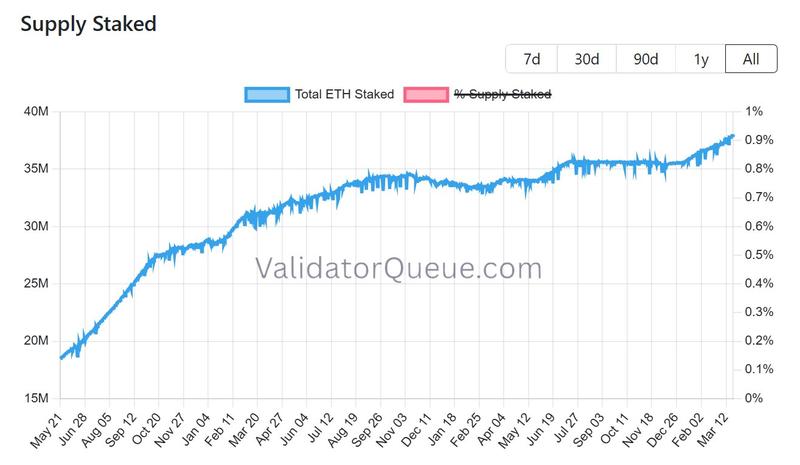
Market analyst Gaah emphasized that this magnitude of locked ETH produces a noticeable reduction in the available supply for trading.
Activity in the ETH validator queue supports this developing pattern. Currently, the entry queue holds 2,876,752 ETH with an anticipated waiting period of approximately 50 days, demonstrating continued strong interest in staking participation.
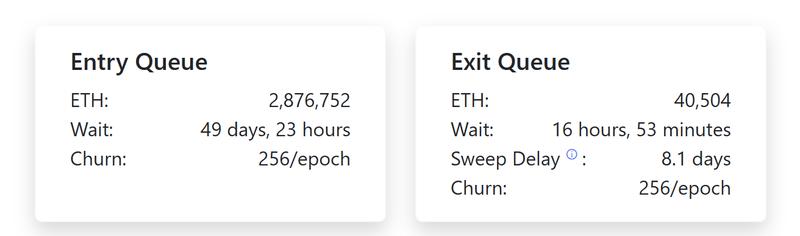
By comparison, the exit queue currently contains just 40,504 ETH, with a waiting time below 17 hours. The churn rate, which is limited to 256 validators per epoch, restricts the speed at which supply can return to circulation. This means that even if market sentiment changes direction, the process of unlocking the supply requires considerable time.
These dynamics decelerate the rate at which ETH can flow back to trading platforms, resulting in a substantial portion of the supply remaining inactive for market transactions.
Exchange reserves of ETH reach multi-year low points
Exchange activity for ETH has demonstrated persistent outflows across major platforms throughout recent weeks. Cryptocurrency analyst Amr Taha drew attention to a $1.67 billion ETH withdrawal from OKX on March 22. Similarly, Binance experienced two distinct outflows exceeding $300 million during early February.
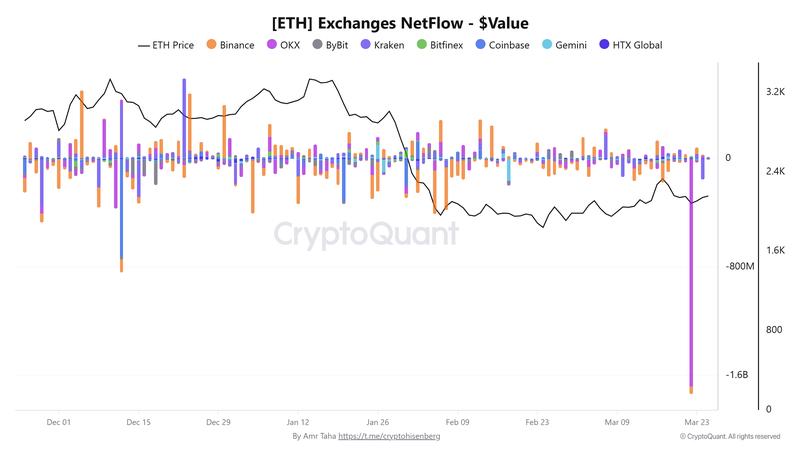
These substantial negative netflows demonstrate that ETH is being transferred off exchanges instead of being readied for selling activity.
Several exchanges reporting considerable withdrawals mentioned above, suggest a wider reduction in exchange-controlled supply. These reduced balances diminish immediate selling pressure from market participants and compress the accessible liquidity within spot markets.
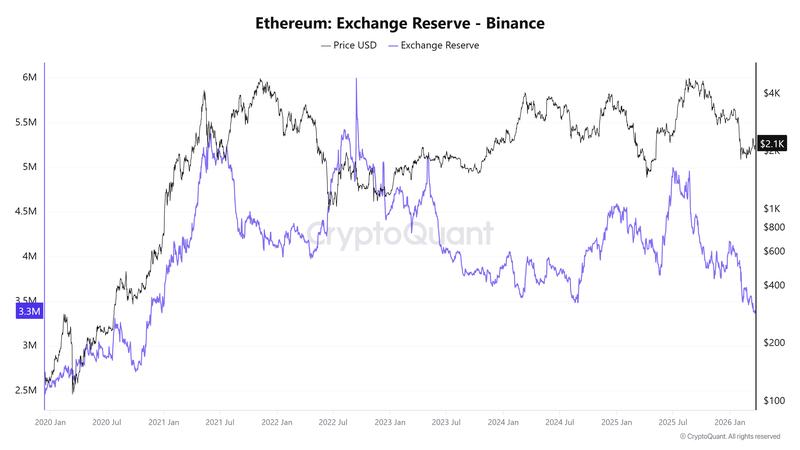
Data from CryptoQuant reveals the ETH supply held on exchanges has declined to its lowest point since 2016, with Binance-specific holdings presently positioned near its December 2020 lows of approximately 3.3 million ETH.
As fewer tokens remain available for active trading, the price responsiveness to demand surges, which could enable ETH to rise substantially above its present trading range near $2,000 to $2,200, once positive momentum reemerges.