
France Accounts for 70% of Global Physical Crypto Attacks, New Data Shows
Bitcoin advocates warn that centralized repositories of user data serve as prime targets for cybercriminals and organized crime groups seeking to victimize cryptocurrency owners and their loved ones.

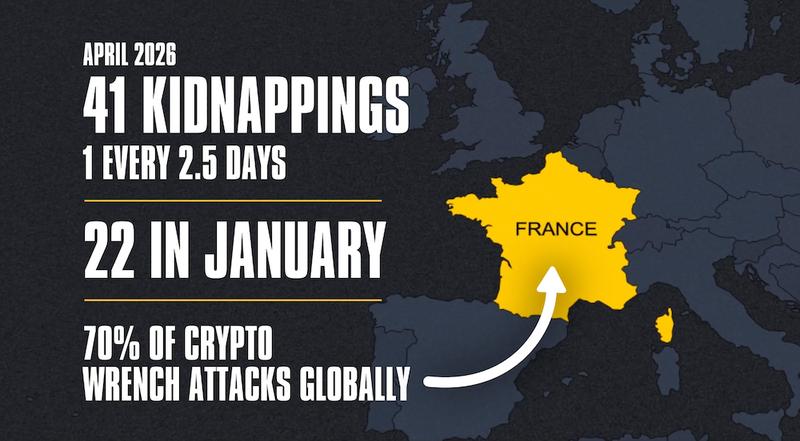
Approximately 70% of wrench attacks—violent physical assaults targeting cryptocurrency owners and their family members in attempts to confiscate digital currencies—take place in France, according to Bitcoin journalist Joe Nakamoto.
France has witnessed 41 kidnappings related to cryptocurrency theft in 2026 to date, Nakamoto reported, which translates to roughly one violent incident occurring every two and a half days, he noted.
The surge in these physical attacks can be traced back to know-your-customer information gathering practices, Nakamoto explained, with this sensitive data housed in centralized databases that fell victim to numerous prominent security breaches, most notably the 2020 compromise of hardware wallet manufacturer Ledger's client database.
The security incident exposed personal information including full identities, residential addresses and email contacts of over 270,000 clients across the globe, he continued. Jameson Lopp, the CEO of crypto wallet and key management company Casa, said:
"France is the canary in the coal mine, demonstrating how financial regulations create a surveillance apparatus that causes direct harm to bitcoin holders."
Resistance to mandatory know-your-customer information collection practices is growing within both the cryptocurrency and Bitcoin ecosystems, as owners of digital assets face ongoing threats from violent physical assaults and abductions, creating an urgent demand for enhanced protective protocols.
Don't become a target: Bitcoiners offer advice to safeguard against attacks
These violent crimes are generally organized by criminal elements operating from foreign countries, who recruit young individuals residing in France to execute the actual physical assaults, Nakamoto explained.
Digital asset owners can protect themselves by utilizing cryptocurrency custody platforms that provide protective features such as a previously established code word or phrase that enables a custodial or key management firm to recognize when the account holder is under active attack.
These service providers can subsequently lock down the digital assets, ensuring that attackers cannot gain access to them, and may also notify law enforcement agencies, he explained.
Nakamoto also recommended maintaining a "decoy" cryptocurrency wallet containing a modest sum of funds that can be surrendered to criminals should an attack occur.
Additionally, cryptocurrency owners ought to maintain discretion and refrain from engaging in crypto-related discussions on the internet or making their ownership of digital assets publicly known, he emphasized.
A minimum of 88 people have been taken into custody in relation to crypto wrench attacks occurring in France, according to Vanessa Perrée, the country's national prosecutor for organized crime.