Five Key Bitcoin Developments This Week as Dollar Index Reaches May 2025 Peak
As BTC hovered near $64,000, it confronted renewed US dollar index strength and macroeconomic challenges, though historical July patterns suggest potential price recovery ahead.

As the week begins, Bitcoin (BTC) maintains a position hovering around $64,000, while market observers identify numerous potential catalysts on the horizon.
Key points:
- The dollar is experiencing renewed strength, and historical patterns indicate Bitcoin typically struggles when the DXY climbs.
- Historical data shows July frequently moves opposite to June, creating a foundation for potential BTC price recovery.
- The release of PCE inflation figures approaches amid uncertain conditions regarding US-Iran diplomatic relations.
- The correlation between Bitcoin and crude oil markets strengthens the likelihood of $60,000 support levels maintaining.
- While short-term holders have engaged in selling activity, larger investors show no indication of surrender at present price levels.
Bitcoin traders eye new US dollar challenge
A well-known obstacle for Bitcoin price movement has returned to prominence this week as efforts continue to resolve the US-Iran conflict.
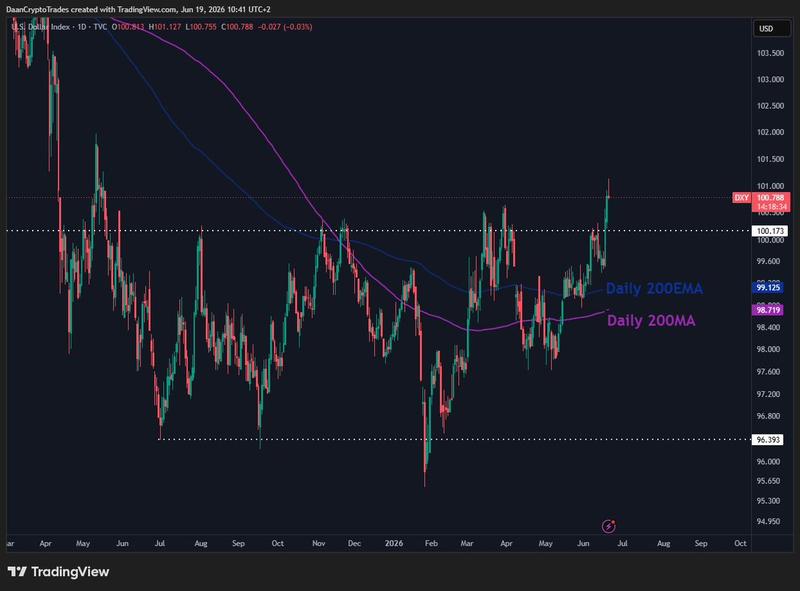
The US dollar index (DXY) has climbed back over the 100 threshold, reaching its most elevated position in more than twelve months, according to TradingView data.
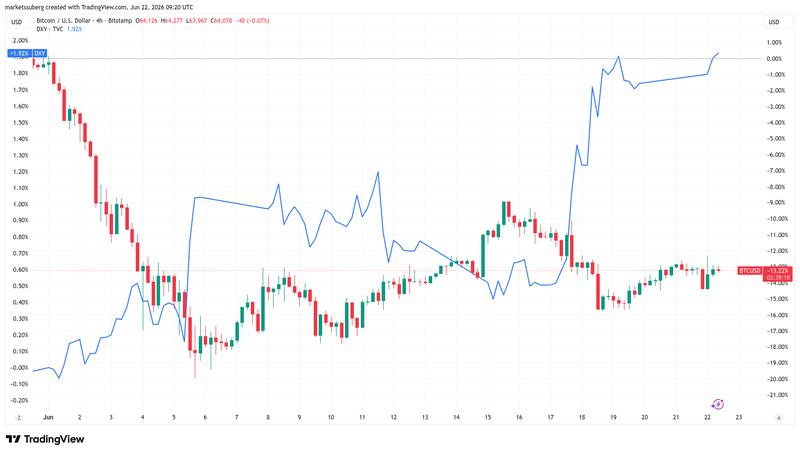
The DXY, a measurement of dollar performance against a collection of currencies from US trading partners, generally moves inversely to cryptocurrency markets. Continued strength in this index therefore represents a potential barrier to expanded gains across crypto and other risk-on assets.
"Breaking the big 100 level while being supported by its Daily 200MA/EMA," trader Daan Crypto Trades summarized in a post on X over the weekend, referring to the 200-day simple (SMA) and exponential (EMA) moving averages.
"If this ends up holding above 100, it would put some pressure on risk assets. So it's good to watch."
Analyst Benjamin Cowen identified a continuing DXY "bull case" extending into the second half of 2026.
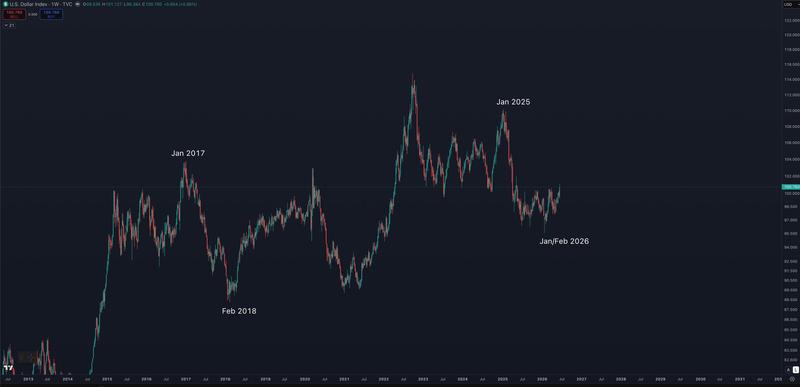
"$DXY is currently testing the upper range of a megaphone aka broadening wedge pattern. If it breaks above this pattern instead of rejecting then that would be a pretty big upward target-- somewhere around 106," ColinTalksCrypto, creator of the YouTube channel of the same name, added.
"It would be bad for risk assets as well."
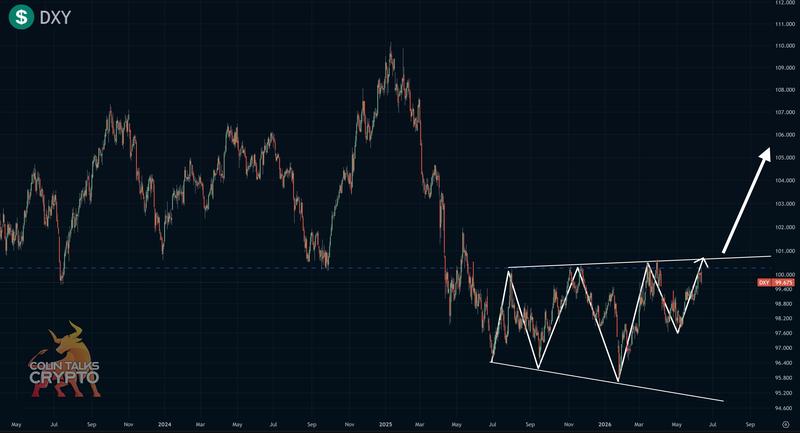
Market analyst Aksel Kibar anticipated an "important week" for the DXY, monitoring for potential conclusion of a twelve-month consolidation phase.
Following some brief volatility after the weekly close, Bitcoin remains circling the $64,000 level.
BTC price action eyes July benefits
Trader and analyst Rekt Capital offered an optimistic perspective for Bitcoin bulls in his most recent market commentary.
In spite of BTC price weakness throughout this month, the historical patterns connecting June and July performance indicate relief could arrive soon.
"History suggests that whatever June does, July will do the opposite," he told X followers this weekend.
"Therefore if June is red, July will likely be green."
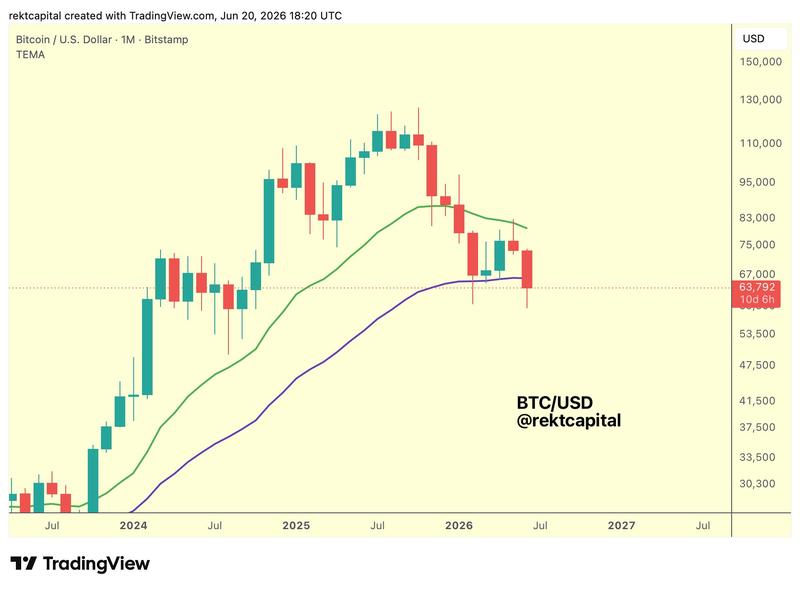
A chart accompanying the analysis displayed BTC/USD trading within a range defined by its 21-month and 50-month exponential moving averages.
"So if June ends the month like this, it will confirm a loss of the 50-Month EMA as support. And so July will likely relief rally to turn the EMA into new resistance," Rekt Capital added.
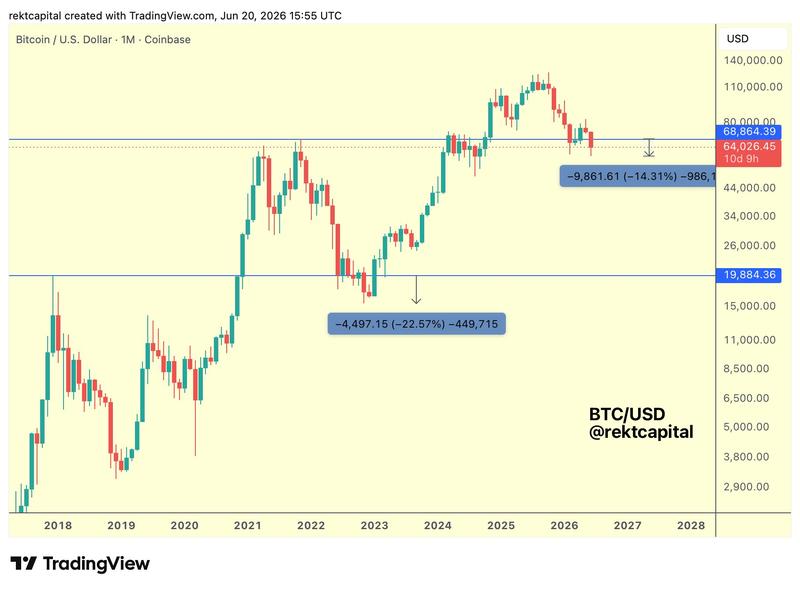
This scenario suggests bulls may need to prepare for another wave of BTC price decline in the future. Previously, Rekt Capital indicated the bear market could persist for additional months, once again relying on historical patterns.
"History suggests there's still time left and a bit more downside to go," he reiterated on X while comparing previous bear markets.
PCE data due with US-Iran peace under pressure
Markets maintain a sharp focus on inflation this week as the US Federal Reserve's "preferred" measurement leads the schedule of macroeconomic data releases.
Thursday will bring the May reading of the Personal Consumption Expenditures (PCE) index.
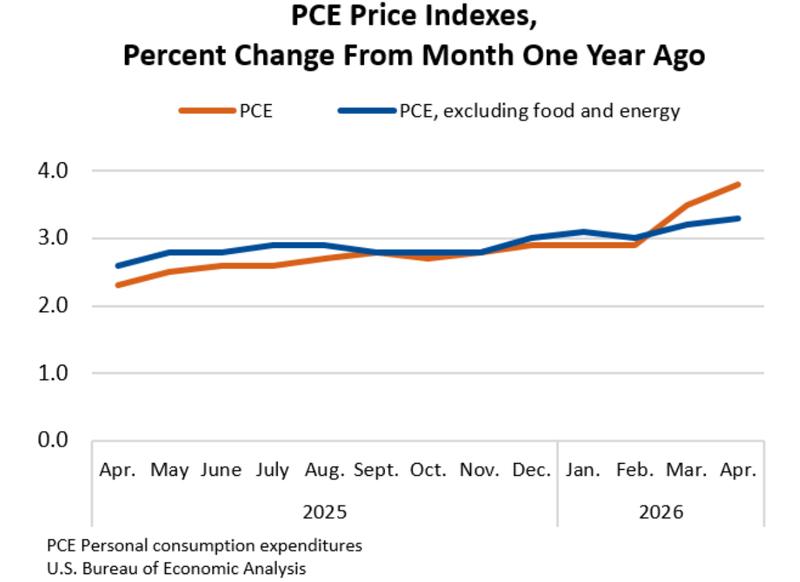
The April PCE reading reached three-year peaks, demonstrating the continuing effects of the US-Iran war on inflationary trends.
"That's because multiple catalysts are coming together at the same time to drive a jump in inflation."
Mosaic pointed to "large" federal budget deficits and disruptions in supply chains as contributors to rising costs.
"Cost increases from energy prices and upheaval following last year's trade war are likely playing a key role," it added alongside a chart of Producer Price Index (PPI) data.
"You can see that supply chain pressures tends to lead changes in producer prices."
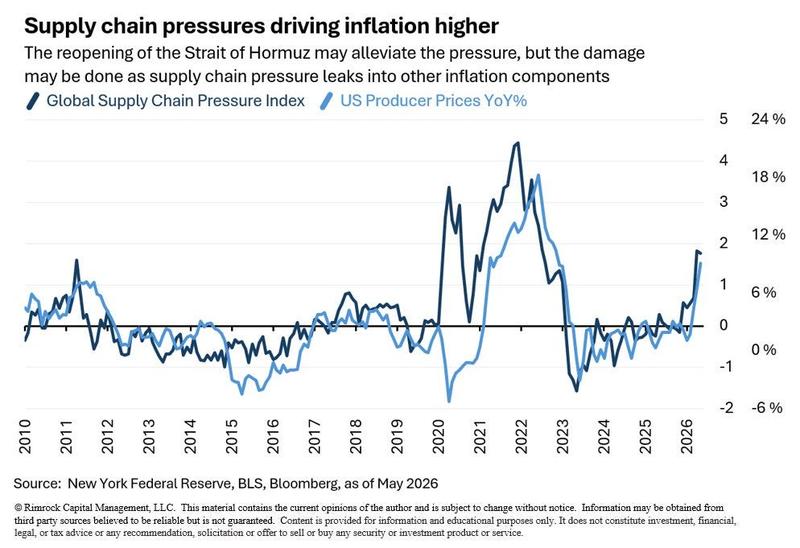
Elevated inflation levels theoretically diminish the probability of Federal Reserve rate reductions, which creates unfavorable conditions for cryptocurrency and other risk assets. According to Cointelegraph reports, markets are even pricing in the possibility of Fed rate increases before year-end.
CME Group's FedWatch Tool currently indicates approximately 36% probability of a rate hike at the Fed's upcoming late July meeting.
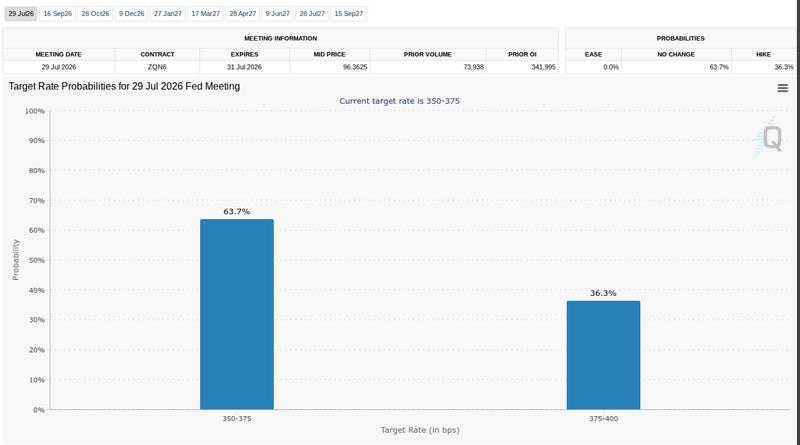
"Concerns over persistently high inflation isn't the only reason for the Fed to consider hiking interest rates. Recent economic data has been surprising to the upside as well," Mosaic noted.
In addition to PCE, Thursday's schedule includes revised first quarter GDP figures and initial jobless claims data.
Oil helps preserve $60,000 support odds
Despite already displaying indications of stress, the US-Iran peace agreement has generated a sustained effect on oil market pricing.
At the moment the two nations signed the agreement, US WTI crude dropped to $73 per barrel, marking its lowest price point since early March and representing nearly 40% decline from its local high.
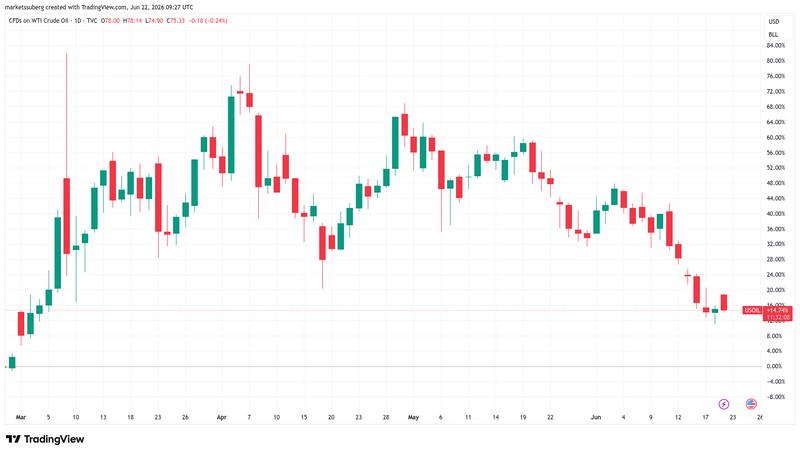
Bitcoin has maintained a generally inverse relationship with oil. Recent weeks have revealed a different dynamic emerging as risk assets appreciate, while the peace agreement continues to support advancement toward the mid-$60,000 range.
According to onchain analytics platform Glassnode, the latest oil price movements suggest Bitcoin bulls have reason for near-term optimism.
"Bitcoin rallied, and also gold rallied," it said in a video analysis late last week, adding that accumulation trends were helping support $60,000 as a local bottom.
Glassnode characterized the buying activity at lower levels as "decent."
"I believe there's a chance that this may be a durable bottom, at least to a certain extent — maybe not the absolute bottom, but I think there's a decent chance that that $60,000 level will be defended by quite a few different cohorts here," it concluded.
Bitcoin speculators turn "emotional"
According to Cointelegraph coverage, the world's largest exchange Binance has attracted attention in recent days due to notable Bitcoin selling activity.
In its most recent analysis, onchain analytics platform CryptoQuant illuminates the magnitude of the selloff, which particularly involves more recent market entrants.
"Once again, it was the STHs who suffered the most from this correction and reacted most sharply," contributor Darkfost wrote on Sunday.
Darkfost was referencing short-term holders (STHs) — market participants holding coins for periods of up to six months. The BTC/USD retreat to February lows, which compared to its May peak signified a decline approaching 30%, triggered an "emotional" reaction from this cohort.
"During the month of June, STH inflows on Binance exceeded 80,000 BTC over 7 days, representing approximately $5B in selling pressure," he reported.
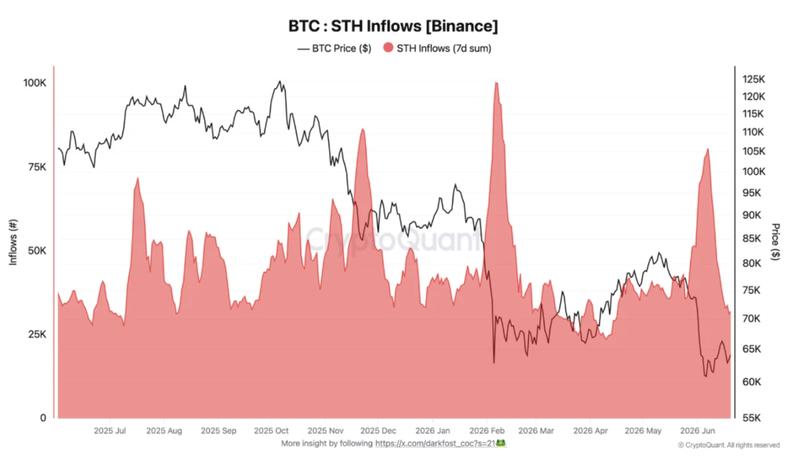
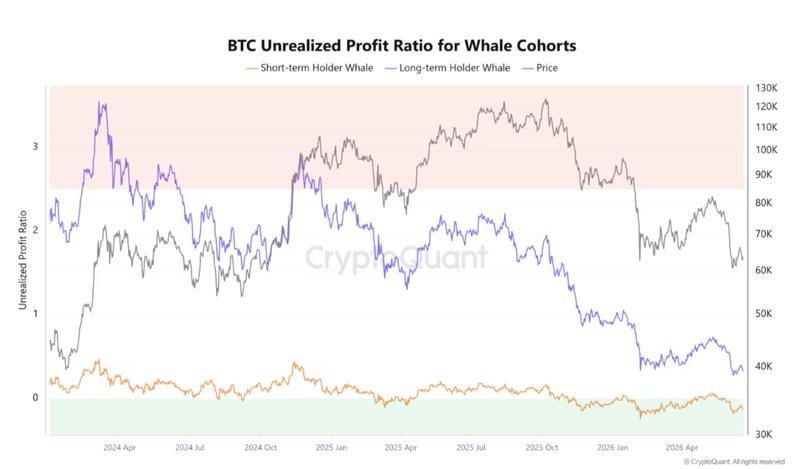
The consequences of this selling activity have not yet manifested in the behavior of high-volume market participants, who maintain an unconcerned stance at current pricing levels. Through analysis of profitability metrics for both established and newer Bitcoin whales, CryptoQuant contributor CryptoZeno proposed that the market has achieved a form of balance.
"The gap between long-term and short-term whale profitability highlights a market transitioning through consolidation rather than capitulation," they summarized.
"Long-term whales continue to hold positions despite reduced gains, while short-term whales remain largely neutral. This combination often reflects a period of market stabilization where speculative excess is gradually removed from the system."