
Europe's MiCA Regulation Targets USDT, Yet Global Tether Demand Remains Unfazed
While MiCA regulations are limiting USDT availability across European platforms, Artemis analytics demonstrate that global Tether demand remains completely unaffected by these restrictions.
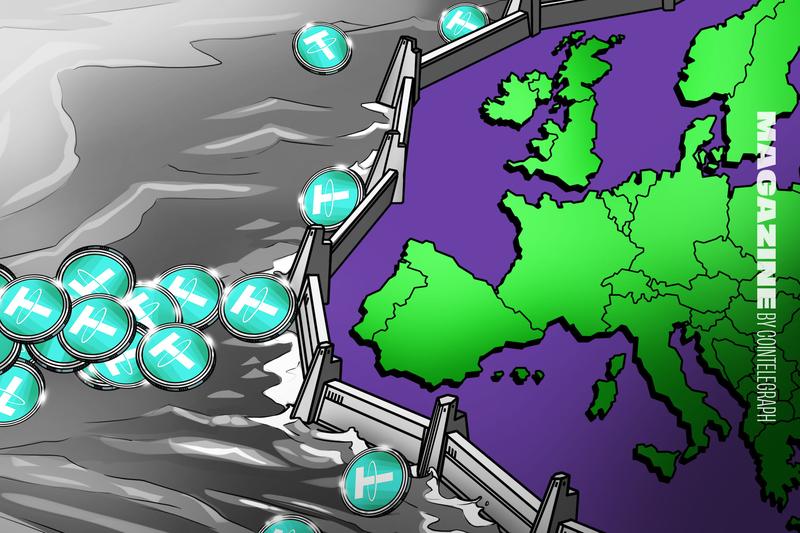
A new chapter in Europe's regulatory action against Tether's USDT is now underway.
Following Revolut's announcement that it would remove USDT for European customers effective Aug. 31, the platform joined a growing list of European exchanges limiting access to the dominant stablecoin globally as companies adjust to comply with the EU's Markets in Crypto-Assets (MiCA) regulatory framework.
Since 2024, MiCA's regulations governing stablecoins have been gradually implemented, with the EU-wide transition window closing on July 1, intensifying pressure on exchanges to discontinue tokens failing to satisfy regulatory standards.
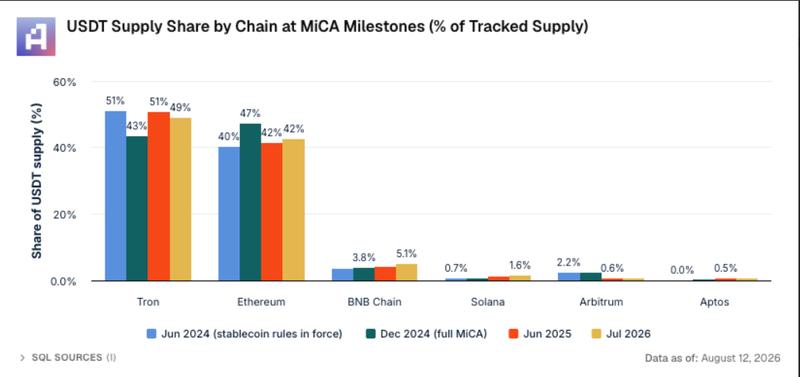
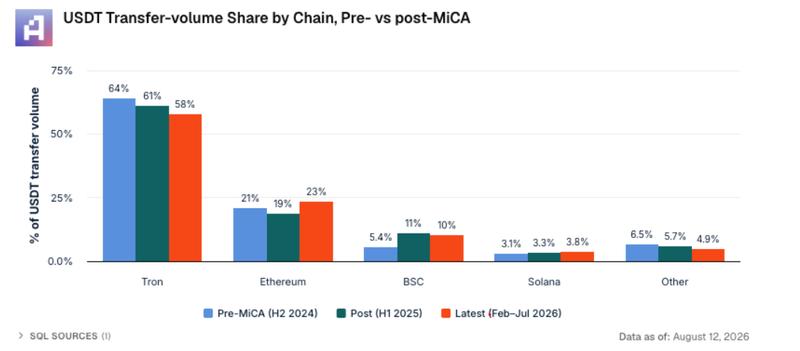
"The data does not indicate any noticeable change in USDT supply or demand attributable directly to MiCA coming into effect in Europe… MiCA didn't trigger a major venue or chain migration."
What explains the continued strength in Tether demand?
Stablecoins become financial infrastructure
A key factor behind USDT's sustained demand is that dollar-based stablecoins serve purposes beyond mere trading or wealth preservation in other global regions.
Take Argentina, for instance—a nation with a historical preference for hoarding physical dollars and maintaining assets outside conventional banking systems—where stablecoin usage has continued its upward trajectory despite the removal of restrictions on accessing physical US dollars.
Argentina-based crypto and financial services provider Lemon handled $9.3 billion in aggregate volume during 2025, representing a 60% increase compared to the year prior. Active transactional participants surged 70% to approach 1.8 million while stablecoin transaction volume climbed 45% on an annual basis.
This data indicates stablecoins are moving beyond merely bridging gaps left by dollar access limitations; they're integrating into how individuals transfer and utilize money in everyday transactions.
"The role of USDT and other dollar stablecoins is evolving. What we're seeing is a shift from stablecoins as a store of value to stablecoins as financial infrastructure."
According to his analysis, stablecoin usage is "increasingly driven by payments, cross-border transfers and global financial services rather than only by savings," noting that users in Argentina can conduct PIX payments in Brazil using pesos, obtain dollars or euros from international sources and receive them as USDC, or transition between traditional bank dollars and digital dollar holdings.
This evolution makes tracking stablecoin demand more complex than merely observing which tokens remain listed on compliant trading platforms.
MiCA is changing the European gateway
The experience of Lemon demonstrates an evolution in consumer behavior within one of Latin America's largest markets, with indications that developing economies are starting to mirror this pattern.
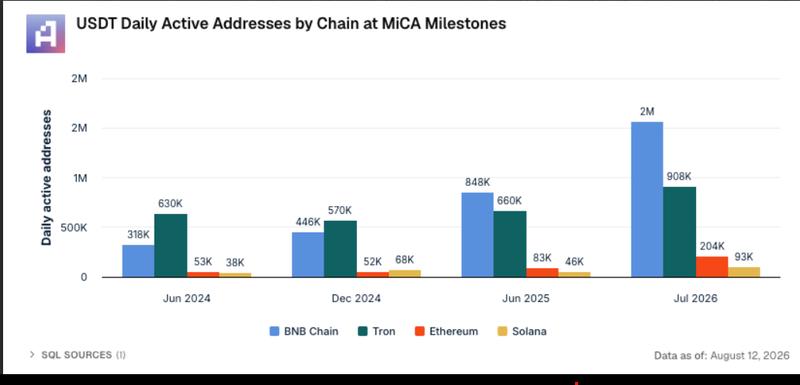
Analytics from Artemis reveal that daily active users on Binance Smart Chain climbed from approximately 318,000 in June 2024 to 1.56 million by July 2026, while Tron's daily user base expanded 44% to roughly 908,000. Users conducting everyday stablecoin transactions prefer these blockchains due to minimal transaction costs. Weseley notes:
"That looks like expanding global and emerging market usage rather than a Europe-specific migration, and there's no clear MiCA-timed break in the chain data."
This shouldn't be interpreted as MiCA having no impact: the regulation is definitively influencing which stablecoins European platforms operating under regulatory oversight can provide, and is restructuring the stablecoin landscape throughout the European Union.
"Users do not choose a stablecoin only because it is available on one regulated platform. They choose it because counterparties use it, liquidity is deep, and it works across many markets."
For certain platforms, this transition commenced considerably before the MiCA compliance deadline. Erald Ghoos, chief executive of OKX Europe, indicates that OKX discontinued offering USDT to its European customer base approximately two years ago, meaning the most recent MiCA deadline had minimal practical impact on their operations.
Europe's alternatives have a dollar problem
The more significant question facing Europe may be which alternatives European consumers will ultimately adopt. Stablecoins denominated in US dollars possess a substantial competitive edge given that cryptocurrency markets have consistently utilized the dollar as their fundamental reference currency.
Though Ghoos doesn't anticipate this dynamic shifting on a global scale in the near term, he observes that institutional attention toward euro-backed stablecoins is intensifying. According to him:
"What we are seeing from institutional players is interest in creating more EUR-denominated stablecoins, which is worth watching as it develops."
For everyday retail participants, stablecoins denominated in euros could offer practical benefits by eliminating additional complications, such as foreign exchange conversions, from their transactions. However, while MiCA possesses the authority to dictate which products become available through European platforms operating under regulatory compliance, it lacks the power to diminish the dollar's dominant position within international cryptocurrency markets.