
European Central Bank endorses blockchain-based capital markets under stringent conditions
According to the European Central Bank, implementing tokenization in EU capital markets shows promise for enhancement, contingent upon utilizing central bank currency, establishing compatible infrastructure, and maintaining strong regulatory frameworks.

The European Central Bank (ECB) has outlined a measured approach for implementing tokenization across Europe's capital markets, indicating that technological advantages can be achieved exclusively when anchored to central bank currency, maintaining infrastructure compatibility, and ensuring regulation remains "robust and supportive."
According to the institution's most recent Macroprudential Bulletin released on Monday, the ECB indicated that distributed ledger technology (DLT) has potential to strengthen the European Union's savings and investments union, though it emphasized that advantages rely heavily on compatible infrastructure and the ability of policymakers to address emerging risks effectively.
The monetary authority's position underscores an effort to upgrade market infrastructure throughout the bloc while maintaining oversight of settlement mechanisms and financial stability controls.
The ECB indicated that tokenization combined with DLT is "moving from concept to early-scale deployment," though the advantages will "only be realised safely if European policy action keeps pace."
ECB maps conditions for tokenized capital markets
A single article within the Bulletin outlines how tokenized assets have the potential to restructure the issuance-to-settlement process, reducing operational inefficiencies and potentially enhancing liquidity in secondary markets. Through transferring securities and currency onto interoperable ledgers and implementing automation for corporate actions, the researchers contend, tokenization has the capacity to optimize procedures that currently depend on numerous intermediaries and outdated systems.
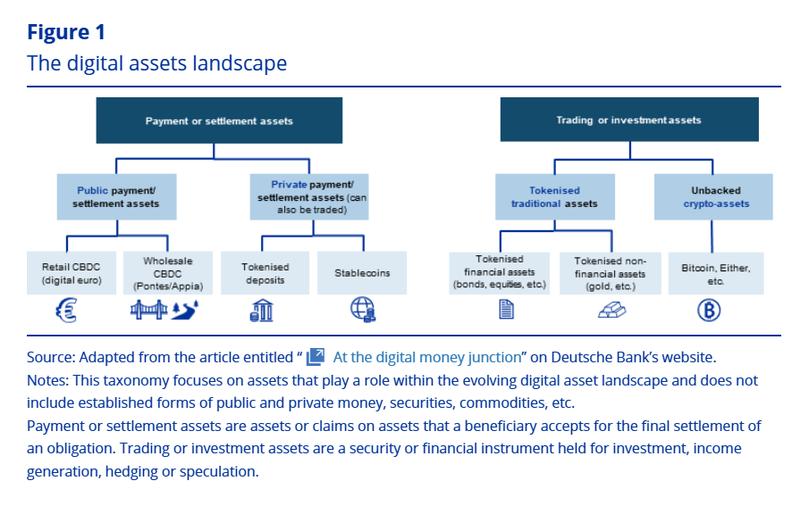
The research emphasizes, nonetheless, that improvements in efficiency depend on preventing a fragmented landscape of non-compatible platforms and guaranteeing that central bank currency, rather than solely commercial bank currency or tokens issued privately, remains available for settlement within tokenized markets.
An additional contribution explores the emerging market for bonds that have been tokenized, discovering preliminary evidence suggesting they may already reduce borrowing expenses and narrow bid-ask spreads when compared with conventional formats.
The researchers credit this phenomenon partially to operational improvements and partially to enhanced transparency and programmable features surrounding settlement and collateral management. Nevertheless, they characterize these advantages as preliminary and subject to conditions, noting that technological, legal and liquidity risks persist and that regulatory authorities must track whether these benefits continue once tokenization expands beyond prominent transactions and carefully selected issuers.
Tokenized MMFs and euro stablecoins under the microscope
The Bulletin additionally provides an intensive examination of tokenized money market funds alongside euro-denominated stablecoins, approaching them as concurrent trials in blockchain-based cash-equivalent instruments.
A single article emphasizes that tokenized money market funds (MMFs) primarily reproduce well-known liquidity and run risks while introducing additional operational weaknesses, prompting inquiries about their performance during periods of stress when considered alongside stablecoins.
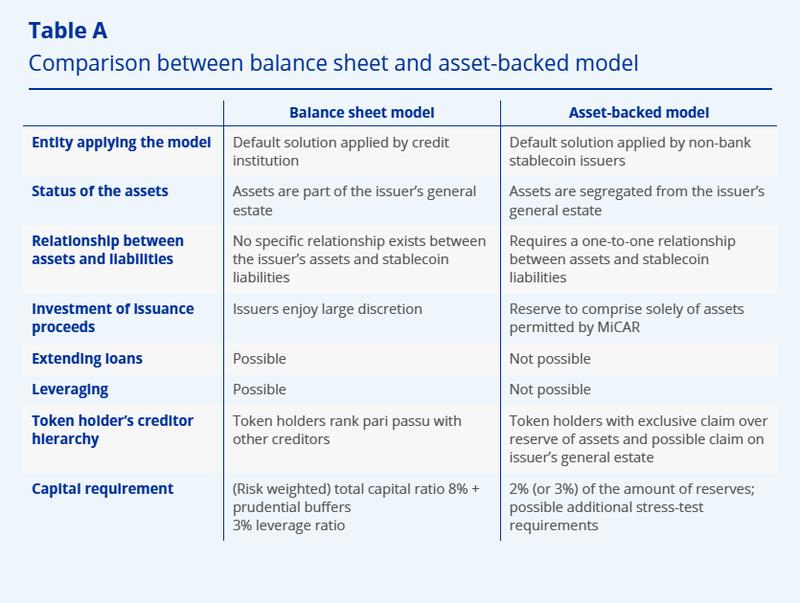
A separate piece suggests that euro stablecoins complying with Markets in Crypto-Assets Regulation (MiCA) have the potential to transform demand for sovereign bonds and function either as a liquidity cushion during volatile market conditions or as an emerging pathway for bank contagion, contingent upon how issuers fulfill deposit and reserve obligations.
Throughout the five contributions featured in the Bulletin, the ECB's position remains unambiguous: Tokenization has the capacity to advance its objective of an integrated capital market, though only when policy frameworks, prudential regulations and central bank infrastructure develop in parallel.
Cointelegraph reached out to the ECB for comment, but had not received a response by publication.