
EU faces pressure from 50,000 citizens to relax MiCA stablecoin reward prohibitions
Brussels confronts a grassroots campaign of 50,000 letters demanding changes to stablecoin reward restrictions, while European central banks push for more extensive MiCA amendments.

Over 50,000 individuals across Europe have submitted appeals to the European Commission requesting the relaxation of current limitations on stablecoin rewards within the ongoing review of the Markets in Crypto-Assets (MiCA) regulatory framework, as reported by cryptocurrency advocacy organization Stand With Crypto EU.
This advocacy effort coincided with the conclusion of the Commission's MiCA review consultation period on Wednesday, during which Stand With Crypto EU advocated for permitting authorized stablecoin issuers to provide various incentive programs such as cashback rewards, customer loyalty perks and reduced transaction fees.
According to the organization, over 50,000 individuals submitted correspondence to the Commission throughout the consultation process, while an additional 126,000 signatories have backed a separate petition advocating for the EU to adopt a more accommodating stance toward stablecoin regulation.

Under MiCA regulations, both issuers and cryptocurrency service providers are barred from distributing interest payments on stablecoins, a limitation that Stand With Crypto contends creates an unfair competitive disadvantage compared to traditional bank deposit accounts and alternative electronic money instruments that are permitted to provide customer benefits.
The advocacy group highlighted that their campaign attracted more than six times the volume of the 8,221 submissions received during the European Central Bank's (ECB) consultation on the digital euro initiative, and substantially surpassed the 198 submissions collected during the Commission's 2020 consultation process regarding cryptocurrency regulations.
Stand With Crypto calls for EU to compete with US
"We are calling on the Commission to use the MiCA review to allow regulated stablecoins to offer rewards to holders," Stand With Crypto EU general manager Harry Pearce Gould told Cointelegraph.
When questioned about whether European regulators should examine regulatory frameworks implemented in jurisdictions beyond the EU, Pearce Gould referenced the United States:
The US has made a clear choice to back stablecoins as the settlement layer for tokenisation. Europe doesn't need to copy that, but it does need to compete with it.
Pearce Gould further emphasized that permitting reward mechanisms could facilitate greater market penetration for euro-backed stablecoins and enhance their competitiveness against stablecoins denominated in US dollars.
"Strong euro stablecoins matter for the euro's global standing and the EU's payment sovereignty," he said.
EU central banks seek changes to stablecoin rules
This grassroots initiative emerges at a time when central banking authorities throughout Europe are advocating for more comprehensive modifications to how MiCA addresses stablecoin regulation.
Through a Sept. 22 submission to the European Commission's MiCA review process, the European System of Central Banks (ESCB) recommended that the current ban on stablecoin interest payments should be expanded to encompass lending activities, borrowing mechanisms and staking programs that produce yields.
Additionally, the ESCB put forward a proposal to replace MiCA's current requirements mandating that stablecoin issuers maintain a specified minimum proportion of their reserve holdings in traditional bank deposits with alternative liquidity threshold requirements. The central banking institutions contended that present regulatory requirements could place excessive strain on financial institutions if a sudden rush on stablecoins compelled an issuer to rapidly withdraw substantial deposit amounts.
The ECB has independently drawn attention to a possible liquidity mismatch concern, pointing out in June that stablecoin transactions process continuously throughout the day and night while their underlying reserve assets may continue to function within conventional settlement timeframes.
These regulatory proposals emerge against the backdrop of wider apprehensions from the ECB regarding the potential consequences stablecoins could have on overall financial system stability.
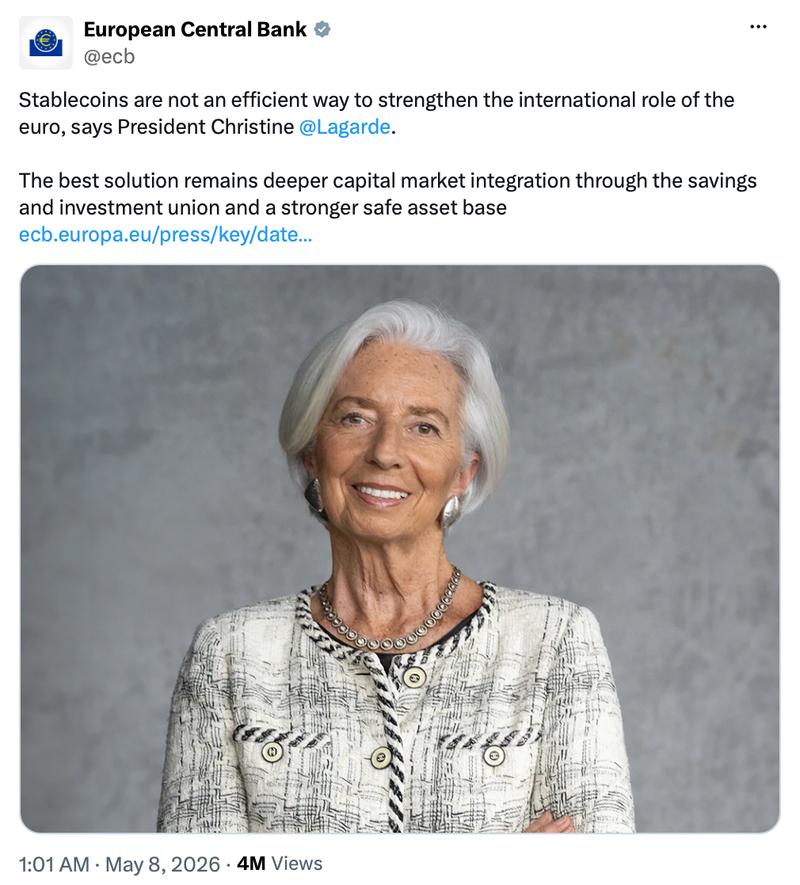
During May, ECB President Christine Lagarde issued a caution that the migration of deposit funds from traditional banking institutions into stablecoin products could undermine banks' capacity to extend credit and diminish the effectiveness of monetary policy mechanisms, while simultaneously contending that European priorities should instead focus on developing tokenized financial infrastructure systems underpinned by central bank-issued digital currency.