
Ethereum maintains institutional dominance over high-speed blockchain alternatives
While high TPS numbers excite blockchain developers, traditional finance focuses on Ethereum's liquidity advantage, according to ETHGas founder Kevin Lepsoe.

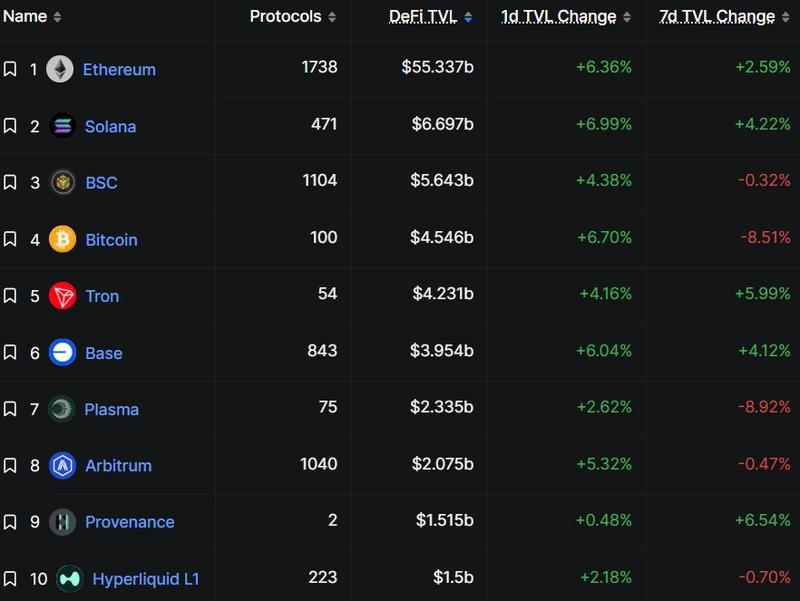
Despite the continuous emergence of faster networks, Ethereum remains the blockchain with the most substantial concentration of stablecoins and decentralized finance (DeFi) capital.
Questions about potential institutional capital migration from Ethereum have surfaced as newer blockchains tout higher throughput and reduced costs.
According to Kevin Lepsoe, founder of ETHGas and former derivatives executive at Morgan Stanley in Asia, Ethereum's dominant position should persist because institutions favor capital depth rather than impressive performance metrics.
"[Transactions per second] is the metric that gets engineers excited, but is that what drives capital to the blockchain?" Lepsoe asked in an interview with Cointelegraph.
"The capital is on Ethereum; the stablecoins are there. TradFi is looking at where the liquidity is," he said.
A blockchain's ecosystem gains scale and stability through institutional capital. Tokenized fund issuers and large asset managers shift capital in quantities that anchor stablecoin supply and deepen liquidity. A network's position can be established by their presence beyond retail activity driven by hype that intensifies during bull markets and diminishes in downturns.
Liquidity keeps Ethereum ahead of faster rivals
Simply creating a faster blockchain won't draw capital away from Ethereum if institutions prefer operating where the majority of money already resides.
Performance has evolved into a tool for attracting users across multiple cycles. As Ethereum's high-speed alternative, Solana has been labeled an "Ethereum killer," though this designation remains controversial. Retail traders joined through the non-fungible token (NFT) boom and the memecoin frenzy, but these heightened activities weren't maintained over the long term.
Solana now faces its own wave of "Solana killers" promoting higher theoretical transactions per second (TPS). However, Ethereum's liquidity provides tighter spreads, reduced slippage for large trades and the ability to process institutional-sized transactions without significantly distorting prices.
"I think of Ethereum as like downtown," Lepsoe said.
"You could build a marketplace uptown somewhere in the suburbs and you could get far off market prices there, maybe it's more convenient or maybe you like the vibe. But if you want the deepest liquidity, you go downtown, and that's Ethereum."
While previous crypto booms featured high-stakes retail speculation, the upcoming phase appears to include greater institutional capital involvement. Currently, institutional players have shown interest in practical use cases including stablecoins and real-world assets (RWAs).
The world's largest asset manager is even embracing RWA products. BlackRock's tokenized Treasury fund, the USD Liquidity Fund (BUIDL), launched on Ethereum before expanding to several blockchains. Over 30% of BUIDL's market capitalization is held on Ethereum.
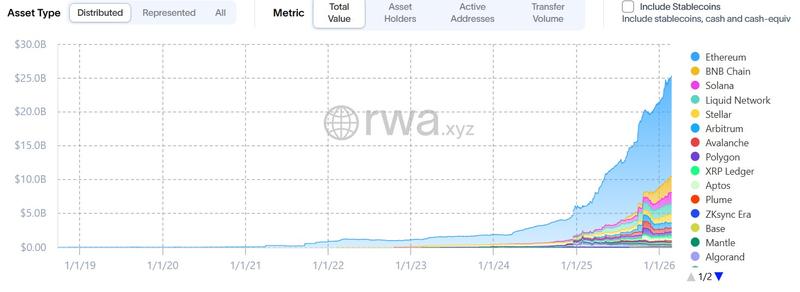
As the largest network for stablecoins, Ethereum benefits from what BlackRock's global head of market development, Samara Cohen, described as "becoming the bridge between traditional finance and digital liquidity."
According to DefiLlama, Ethereum dominates the industry in stablecoin market cap with $160.4 billion.
Ethereum's L2 liquidity is returning to L1
While Lepsoe emphasized that liquidity depth drives institutional preference, a network's efficiency still matters to some degree.
Ethereum has been modifying its technical characteristics. Transaction fees that previously spiked regularly to essentially unusable levels have decreased substantially, as layer-2 rollups reduced pressure on the main chain. New challenges emerged from these solutions. Liquidity became fragmented across multiple environments by rollups.
Lepsoe characterized the liquidity fragmentation as a disguised benefit for Ethereum. He contended that without L2s drawing liquidity from the main chain, capital would have migrated to competing platforms.
"I think it actually saved the liquidity from going to other L1s, where they eventually probably couldn't have brought it back," he said.
Ethereum has recently redirected its attention to scaling the main chain. Co-founder Vitalik Buterin stated that many layer 2s have not achieved decentralization, while the main chain now scales adequately.
"Both of these facts, for their own separate reasons, mean that the original vision of L2s and their role in Ethereum no longer makes sense, and we need a new path," Buterin said in a recent X post.

Scaling upgrades strengthen Ethereum's liquidity advantage
With transaction fees now under control, Ethereum is anticipated to implement the Glamsterdam fork in 2026, increasing the block gas limit from 60 million to 200 million and setting its layer 1 on a path toward 10,000 TPS eventually.
This timing aligns with institutions assessing blockchain infrastructure for the next wave of financial services.
In addition to protocol upgrades, infrastructure providers are testing methods to enhance execution efficiency. Projects such as Lepsoe's ETHGas seek to optimize Ethereum's block construction process through offchain execution and coordination, while Psy Protocol utilizes zero-knowledge technology to consolidate multiple transactions into one.
"They look at Solana, which is getting good traction. Canton is extremely important for them because it gives them privacy, which they value very, very much," Kaźmierczak told Cointelegraph.
Lepsoe stated he perceives "zero threat" from Solana or Canton, maintaining that Ethereum retains the deepest liquidity pool, which serves as the principal attraction for large allocators.
For institutional capital, performance enhancements may increase Ethereum's capacity, but liquidity continues as its defining advantage. In blockchain markets, speed can draw users during booms, but capital generally remains where the deepest markets are already established.