
Digital asset funds experience $1B withdrawal wave amid Middle East geopolitical concerns
Bitcoin and Ethereum investment vehicles saw significant capital withdrawals as geopolitical uncertainties involving Iran and inflationary pressures spooked investors, though XRP and Solana products bucked the trend with continued gains.

Digital currency investment vehicles experienced significant capital withdrawals during the previous week as market participants shifted toward safer assets in response to concerns about inflation and ambiguity surrounding a potential enduring truce between Iran and the United States.
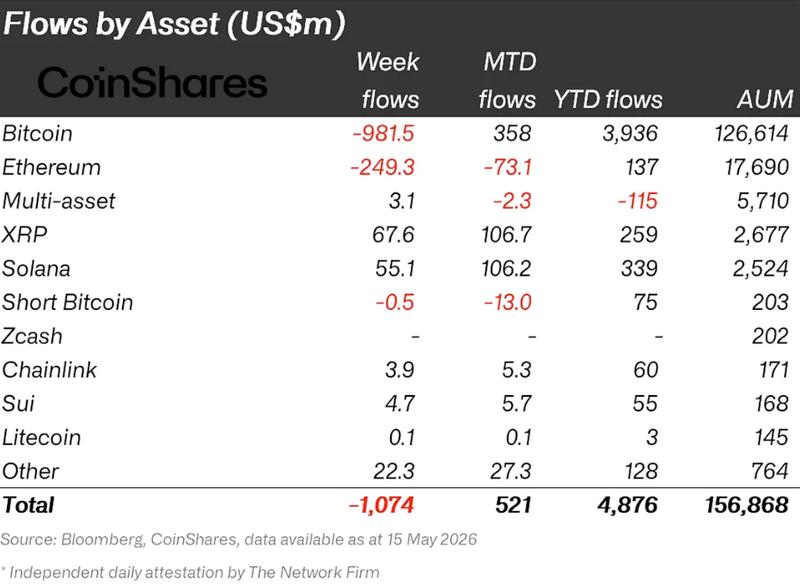
Data from CoinShares' most recent weekly analysis reveals that exchange-traded products (ETPs) focused on digital assets experienced $1.07 billion in total net withdrawals, bringing an end to six consecutive weeks of capital inflows. The figure represents the third-most substantial weekly withdrawal recorded so far this year.
Investment vehicles focused on Bitcoin (BTC) represented the majority of capital exits, recording $982 million in total outflows. Products dedicated to Ether (ETH) experienced withdrawals totaling $249 million, representing their most significant outflow level since the week that concluded on Jan. 30.
Alternative cryptocurrency funds demonstrated resilience against the wider market pattern. Investment products dedicated to XRP (XRP) attracted $67.5 million in new capital, whereas Solana (SOL) funds recorded incoming flows of $55.1 million.
The United States accounted for the lion's share of capital withdrawals, with American investors extracting a net total of $1.14 billion from investment products. Conversely, multiple European jurisdictions, such as Switzerland, Germany and the Netherlands, experienced small but positive capital inflows.
The withdrawal trend in cryptocurrency investment products occurred alongside a wider selloff in risk-oriented assets, as the S&P 500 index declined from record peak levels toward the end of the previous week. Market participants maintained their attention on potential disruptions surrounding the Strait of Hormuz, an essential maritime corridor for worldwide petroleum shipments, which have driven energy costs upward and played a role in pushing US inflation to its most elevated point in over three years.
CLARITY Act remains a source of hope for crypto industry
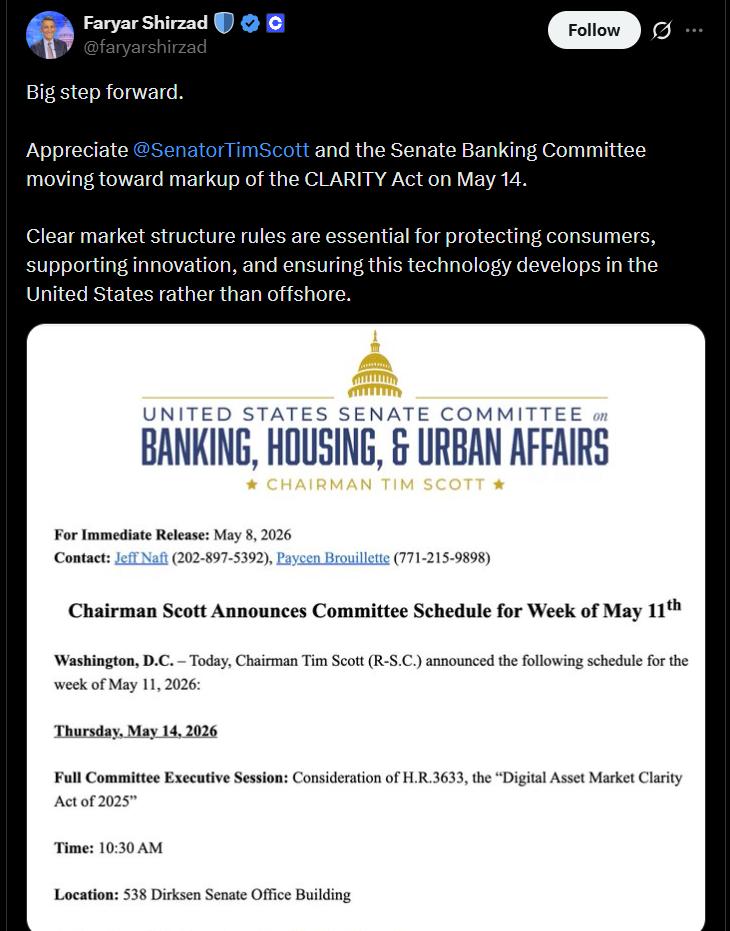
According to James Butterfill, who serves as head of research at CoinShares, certain alternative cryptocurrencies experienced positive effects from enhanced regulatory outlook in the United States after developments on the CLARITY Act.
The proposed legislation, designed to create a more defined regulatory structure for digital assets within the US, successfully moved forward from the Senate Banking Committee during the previous week with backing from both major political parties.
Proponents from the industry argue that the proposed bill has the potential to diminish regulatory ambiguity and establish a more stable legal framework, motivating cryptocurrency enterprises and capital to continue operating within the US.
Ji Hun Kim, who holds the position of CEO at Crypto Council for Innovation, stated
"the momentum and progress are both strong"regarding the legislation's advancement through Congress.
Nevertheless, a number of Democratic senators have advocated for enhanced ethics requirements, with particular emphasis on financial connections between government officials and the cryptocurrency sector.
Thom Tillis, a Republican Senator, commented that
"more work remains in the weeks ahead to make this legislation even better."