
Crypto and equities stumble following Fed's Waller hints at aggressive 50-basis-point rate increase
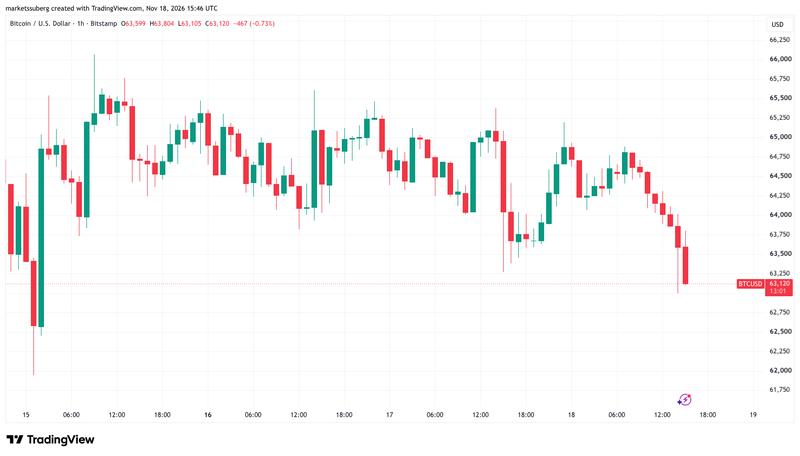
BTC slipped beneath the $63,000 threshold following aggressive monetary policy remarks from Federal Reserve officials while enthusiasm for Nvidia's results waned.

The leading cryptocurrency slid under $63,000 following the opening bell on Wall Street Wednesday as equity markets declined amid mounting inflation worries.
Key points:
- Downward pressure on Bitcoin prices resulted in a decline to the $63,000 level on Wednesday as US stock markets opened weak.
- Christopher Waller, Federal Reserve governor, cautioned that policymakers might "need to shock people" through a 50-basis-point increase in interest rates come December.
- Market analyst David Eng characterized Bitcoin's selling pressure as "extreme," pointing to 30-day net capital outflows totaling $8.7 billion.
Waller: Federal Reserve may implement interest-rate "shock" strategy
Information from TradingView revealed Bitcoin (BTC) experiencing a 3% decline throughout the trading day, with gradual sell-offs occurring in the hours leading up to the US market session.
The downward momentum aligned with remarks regarding upcoming Federal Reserve monetary policy from governor Christopher Waller. In an interview with CNBC, Waller made the argument for increasing interest rates by 50 basis points during the Federal Open Market Committee (FOMC) December meeting — exceeding the prevailing market expectation of 25 basis points.
Given that CPI inflation has remained above the Fed's 2% objective for a five-year period, he cautioned that business entities were growing accustomed to transferring 3% yearly price increases "or higher" onto consumers.
You might need to, like, shock people to say, 'Wait a minute; 3% is not the number you should be thinking about going forward,'
Waller emphasized the necessity for "aggressive actions" to address inflationary patterns, which he observed were expanding into sectors not directly affected by current geopolitical triggers — the US-Iran conflict and the resulting surge in energy prices.
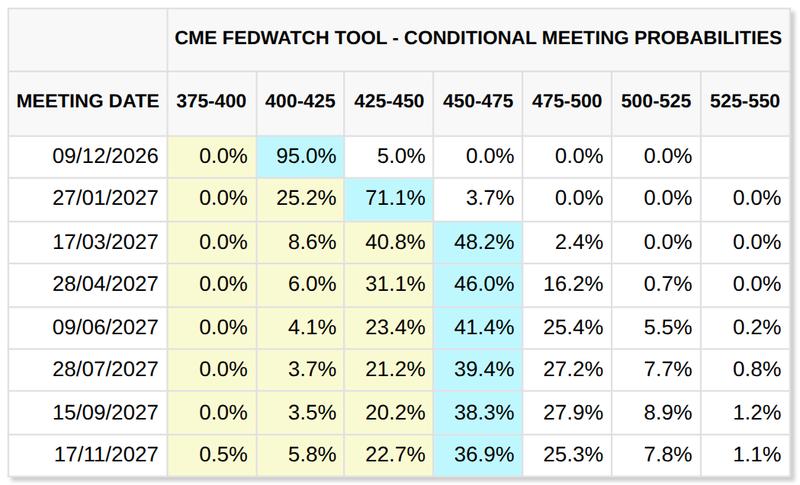
The most recent information from CME Group's FedWatch Tool indicated markets continue to heavily favor a 25-basis-point increase in December, with probabilities for that result exceeding 95%.
Not all observers expressed confidence in the rationale for policy tightening. Responding to the Fed's aggressive stance, economist Robin Brooks contended that the recent decline in oil prices indicated that increasing rate-hike commitments was unwarranted.
I don't think any of the hawks on the FOMC have made a convincing case that underlying inflation - taking supply shocks out - is running hot
Brooks characterized the possibility of additional rate hikes as a "terrible mistake."
Analyst: Bitcoin requires $290 million in daily inflows
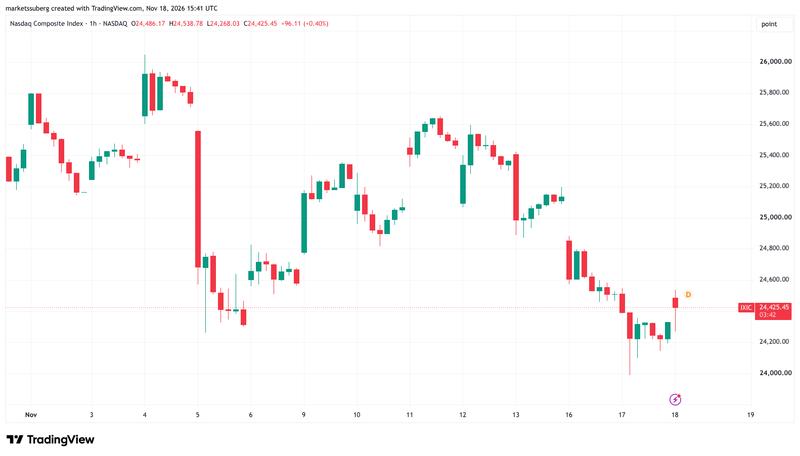
Equity markets in the US started the day on a lower note, making a short-lived recovery attempt before retreating back into negative territory. The S&P 500 experienced a 0.3% decline on the day, while the technology-focused Nasdaq Composite Index oscillated near its daily opening level, dismissing renewed optimism surrounding the AI sector that followed Nvidia's Q3 earnings exceeding expectations.
Bitcoin continued to lack a positive catalyst, attempting to break below a trading corridor between $64,000 and $66,000 that has been established since Nov. 15.
Independent market analyst David Eng issued a warning that selling pressure on the sell-side remains "extreme" at present price levels. Eng referenced $8.7 billion in capital outflows during the previous 30 days, alongside net outflows totaling $2.1 billion from the US spot Bitcoin exchange-traded funds (ETF) on a year-to-date basis.
Bitcoin doesn't need another $8.7 billion of buying every month to recover. It needs the balance between buying and selling to improve. At the current 30-day pace, a $290M/day improvement would eliminate the measured net outflow