
CoinShares Report: Bitcoin Investors Responding to Fed Policy Shifts Rather Than Abandoning Crypto
James Butterfill of CoinShares notes that restrictive monetary policy continues to cap Bitcoin's upside potential, though appetite for digital asset investments persists as interest rate forecasts evolve.
Digital asset fund activity is demonstrating heightened responsiveness to shifts in US monetary policy expectations, with CoinShares maintaining that Federal Reserve decisions continue to represent a significant obstacle preventing Bitcoin (BTC) from surpassing the $80,000 threshold, notwithstanding persistent interest from cryptocurrency investors.
Within his most recent market analysis, James Butterfill, who serves as head of research at CoinShares, contended that "Bitcoin is trading like gold again, but the Fed still sets the ceiling" near the $80,000 mark.
This responsiveness became particularly apparent following Federal Reserve Chair Kevin Warsh's remarks delivered at Jackson Hole. Warsh indicated that advancement on the inflation front had been limited and that pricing pressures were not declining with sufficient speed to provide central bank officials the assurance that inflation was heading back toward its 2% objective. Approximately $100 million withdrew from digital asset investment vehicles in the immediate aftermath of the address, as financial markets drastically elevated the likelihood of an interest rate increase in September.
Capital movements changed direction throughout the subsequent week, climbing to $1 billion by Sept. 4. This reversal aligned with statements from Federal Reserve Governor Christopher Waller, who highlighted recent indicators of "disinflation" and expressed his preference to maintain interest rates at current levels in September should forthcoming inflation statistics demonstrate additional improvement.
"Investors are not exiting the asset class. They are trading the rate path."
James Butterfill, CoinShares head of research
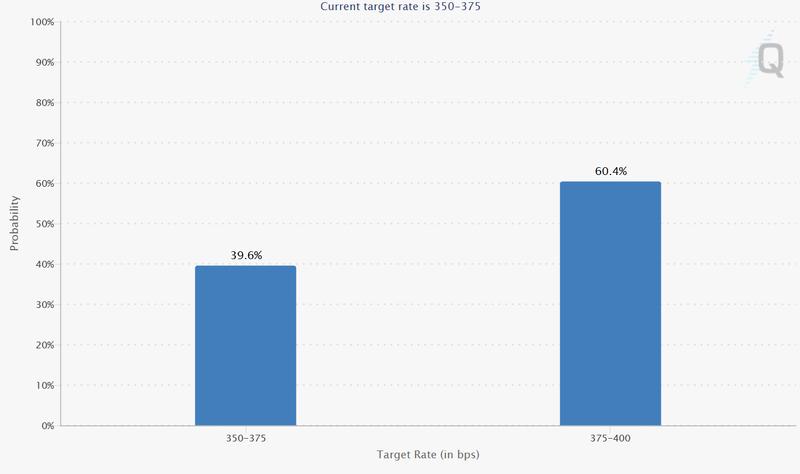
Based on Monday's data, Fed Funds futures pricing suggested approximately a 60% probability of an interest rate increase following the upcoming week's Federal Open Market Committee (FOMC) gathering, as reported by CME Group.
These capital flow patterns indicate that Bitcoin along with wider cryptocurrency markets continue to demonstrate substantial sensitivity to changes in available liquidity and central bank monetary decisions. More accommodative financial environments have traditionally provided support for cryptocurrencies and additional risk-oriented assets.
Treasury buybacks add to liquidity backdrop
The evaluation from CoinShares emerges within the context of a robust recovery in Bitcoin and the wider cryptocurrency asset marketplace during the previous month, coinciding with the US Treasury's disclosure of intentions to expand specific long-maturity bond repurchase operations from $2 billion to $4 billion per transaction. Bitcoin advanced from the lower $60,000 range to levels exceeding $80,000 throughout that period.
The enlarged repurchase initiative is anticipated to operate from Sept. 9 extending through Nov. 4.
"Around the Treasury announcement we also saw equity sell-offs and shifts across the yield curve, layered on top of the ongoing noise from the Iran war — oil and equities swinging depending on whether or not people are feeling optimistic about diplomacy on any given day."
Ophelia Snyder, 21shares co-founder
"Considered collectively, these elements indicate to me that the present Bitcoin price surge may be less connected to cryptocurrency-specific drivers and more related to increasing interest in reducing exposure to the US specifically," she further commented.
This development intensified the market's attention on liquidity dynamics and led Standard Chartered to project that Bitcoin might achieve $100,000 prior to year-end.