
Coinbase Executive Warns EU's DeFi Regulations May Drive Users Toward Less Secure Platforms
The head of EU policy at Coinbase warns that implementing suitability assessments for crypto services beyond lending could restrict user access and split market liquidity.

A senior policy executive at Coinbase has warned that the European Union's push to strengthen regulatory oversight over decentralized finance (DeFi) may inadvertently force cryptocurrency users to migrate toward platforms that provide lower levels of investor protection.
Speaking with Cointelegraph, Roeland Van der Stappen, who serves as Coinbase's head of EU policy, indicated that crypto platforms operating under regulatory frameworks might choose to restrict or completely remove access to DeFi services in response to the new requirements.
Rules designed to protect investors would end up pushing activity towards the places with the least protection
Roeland Van der Stappen
During September, the European Securities and Markets Authority submitted its response to the European Commission's consultation regarding the Markets in Crypto-Assets Regulation (MiCA), proposing the establishment of a fresh category of regulated crypto services specifically for companies that facilitate customer access to DeFi protocols.
EBA lists suitability tests as an option for crypto lending
During the same month of September, the European Banking Authority (EBA) called upon the Commission to examine potential new regulations governing crypto lending and borrowing activities, particularly in cases where regulated platforms provide customers with access to DeFi lending protocols. Among the options outlined in the EBA's consultation response were suitability tests, which evaluate whether a particular service is suitable for an individual customer.
According to Van der Stappen, applying such testing requirements to additional DeFi services could result in treating a straightforward stablecoin swap with the same level of scrutiny as leveraged lending, even though these activities carry vastly different risk profiles.
Activities such as lending, liquidity provision and on-chain swaps would face the greatest exposure to these regulations, according to Van der Stappen. He suggested that some service providers might choose to reduce the scope of their offerings or potentially eliminate DeFi access completely.
A proportionate approach would be to allow CASPs [crypto-asset service providers] to continue offering that access with safeguards matched to the activity
Roeland Van der Stappen
Coinbase warns of fragmented liquidity
According to Van der Stappen, imposing restrictions on access through regulated platforms has the potential to divide DeFi liquidity into multiple smaller pools, ultimately resulting in EU users receiving less favorable pricing on their trades.
The restrictions could promote the development of "walled gardens," which are isolated DeFi services, while simultaneously directing users toward service providers located outside the EU that operate with reduced safeguards, Van der Stappen explained.
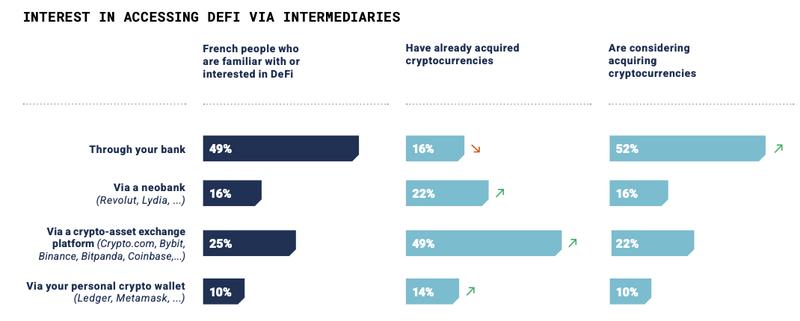
Research conducted by Adan-Ipsos in 2026 revealed that 49% of French cryptocurrency buyers expressed a preference for accessing DeFi through exchanges, while just 14% indicated they favored using personal wallets for this purpose.
Data published by Chainalysis on Monday pointed to a moderate decrease in crypto activity within Germany, attributing this decline primarily to reduced decentralized exchange activity. Throughout the broader EU region, crypto activity experienced growth of 2.2% during the 12-month period ending in June 2026.
An earlier Chainalysis report from 2025 characterized DeFi as representing a small yet expanding segment within Europe's cryptocurrency market. Within the European Economic Area, the month of May 2025 recorded the highest level of DeFi lending activity during the timeframe analyzed by Chainalysis.