
Class action lawsuit targets Kalshi over Iranian leader prediction market controversy
Plaintiffs claim the prediction platform's exclusion of death-related outcomes in the Khamenei market constituted deceptive business practices.
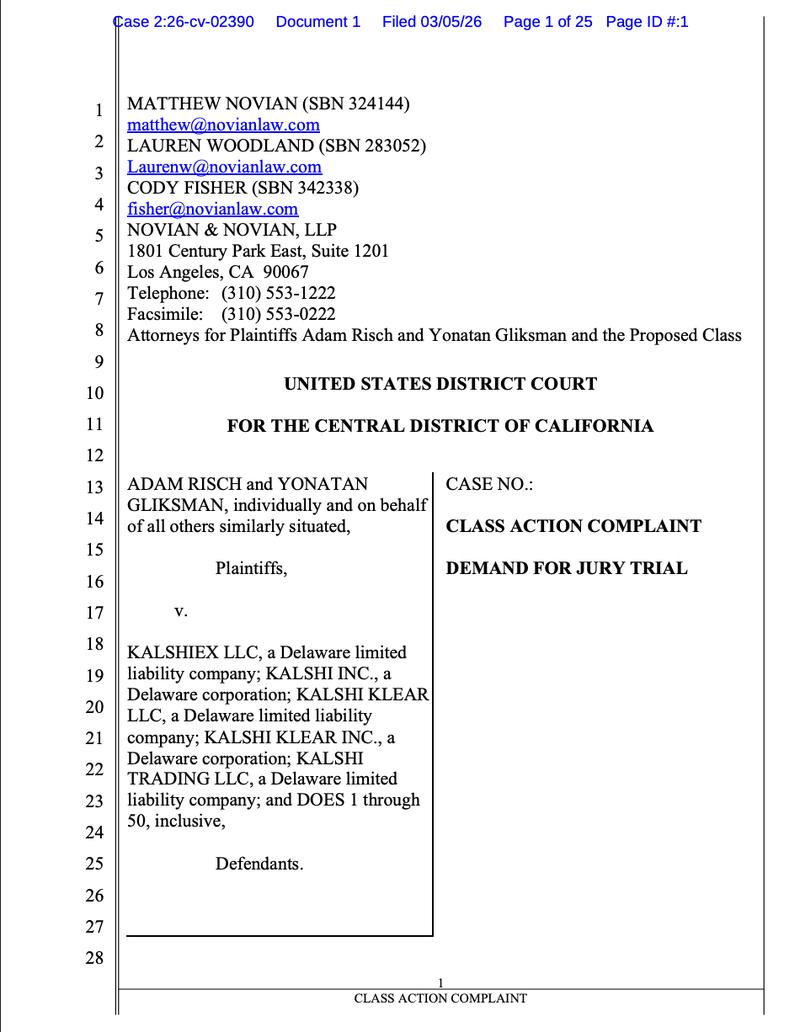
Prediction market platform Kalshi is now facing a class action lawsuit over allegations that it inadequately disclosed a death-related exclusion clause in its "Ali Khamenei out as Supreme Leader" prediction market and subsequently refused to honor winning positions.
According to the plaintiffs, the platform's death exclusion policy was "not incorporated into the user-facing rules summary," and the disclosure method failed to adequately inform a "reasonable consumer" about the policy's existence or potential impact on market outcomes.
"Defendants, themselves, later acknowledged that their prior disclosures were 'grammatically ambiguous,'" the lawsuit filing said.
Following confirmation of the death of Khamenei, who previously served as Iran's Supreme Leader, Kalshi nullified all trading positions associated with the market, resulting in the market failing to resolve as a "yes" outcome.
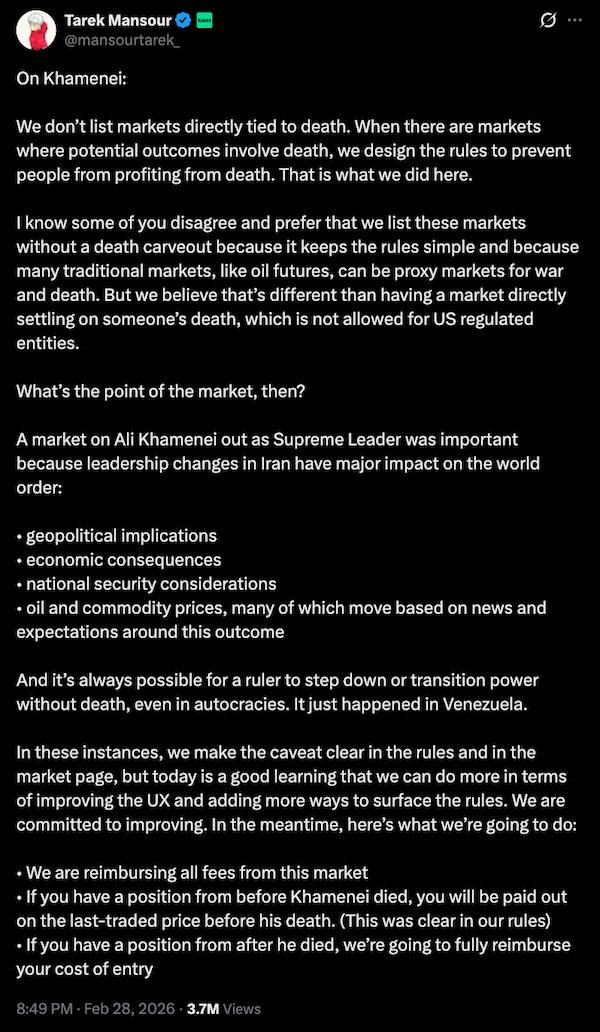
"We don't list markets directly tied to death. When there are markets where potential outcomes involve death, we design the rules to prevent people from profiting from death," Kalshi co-founder Tarek Mansour said.
The lawsuit's plaintiffs described the exclusion policy as "predatory" and characterized it as an "unfair" commercial practice in relation to this particular market. The lawsuit said:
"With an American naval armada amassed on Iran's doorstep and military conflict not merely foreseeable but widely anticipated, consumers understood that the most likely, and in many cases the only realistic, mechanism by which an 85-year-old autocratic leader would 'leave office' was through his death. Defendants understood this as well."
In response to the situation, Mansour announced a reimbursement program for affected users, with compensation amounts determined by the "last traded price" recorded in the market prior to confirmation of Khamenei's death. However, this reimbursement approach also generated substantial criticism from platform users.
The lawsuit's plaintiffs assert that Kalshi failed to provide transparency regarding the methodology employed and the specific timestamps utilized in determining the "last traded price" for calculating reimbursements in the prediction market.
Kalshi co-founder fires back against lawsuit claims
Responding to the allegations, Mansour defended Kalshi's actions, asserting that the platform was merely enforcing its established policy prohibiting "death markets" and emphasized that this policy was explicitly outlined in the market's rules documentation.
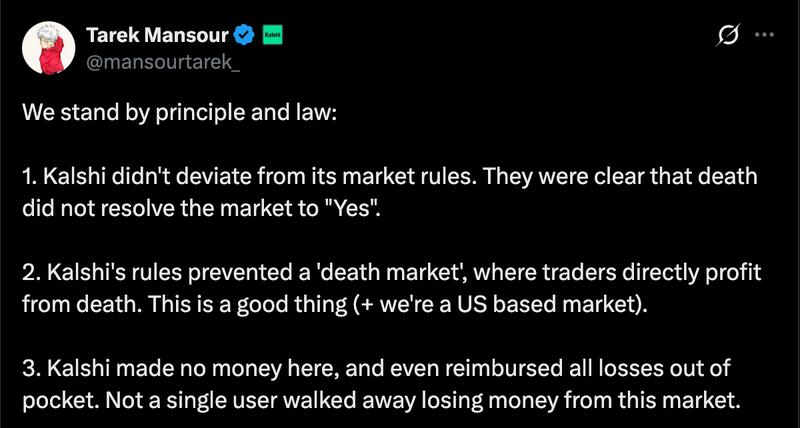
"Kalshi made no money here and even reimbursed all losses out of pocket. Not a single user walked away losing money from this market," he said.
This controversy emerged during a period when prediction market platforms are experiencing unprecedented growth, with trading volumes reaching all-time highs in 2026 as these platforms continue to gain mainstream traction and widespread adoption.