
Canadian Officials Target Cryptocurrency Kiosks in Anti-Fraud Initiative
Federal authorities in Ottawa identify cryptocurrency ATMs as essential infrastructure for fraudulent operations, prompting regulators to intensify supervision of vulnerable segments within the digital currency industry.

Canadian federal authorities have put forward a plan to eliminate Bitcoin and cryptocurrency automated teller machines across the nation, claiming these devices have transformed into a preferred channel for criminal activity and financial crimes instead of serving as an accessible entry point for legitimate consumers.
According to the Spring Economic Update 2026, released by the government on April 28, cryptocurrency ATMs represent a "primary method for scammers to defraud victims and for criminals to place their cash proceeds of crime," with the document clearly indicating that authorities "proposes to ban crypto ATMs."
Under the proposed framework, Canadian citizens will maintain their ability to purchase digital currencies through traditional money services businesses operating physical locations, though the independent kiosks that have spread throughout shopping centers, service stations and small retail outlets would be gradually eliminated from operation.
This initiative represents part of a larger campaign by federal officials in Ottawa to address what they characterize as consumer-facing cryptocurrency dangers amid rising fraud incidents, while simultaneously extending stronger federal regulatory control over additional segments of the digital currency industry. Government officials indicate the measure targets the elimination of a frequently exploited pathway in fraudulent schemes that have progressively affected Canadian residents.
The regulatory action carries special significance considering Canada's pioneering position within the industry. In 2013, the world's inaugural publicly accessible Bitcoin ATM began operations at a coffee establishment in Vancouver, establishing Canada as the originating location for Bitcoin ATM technology.

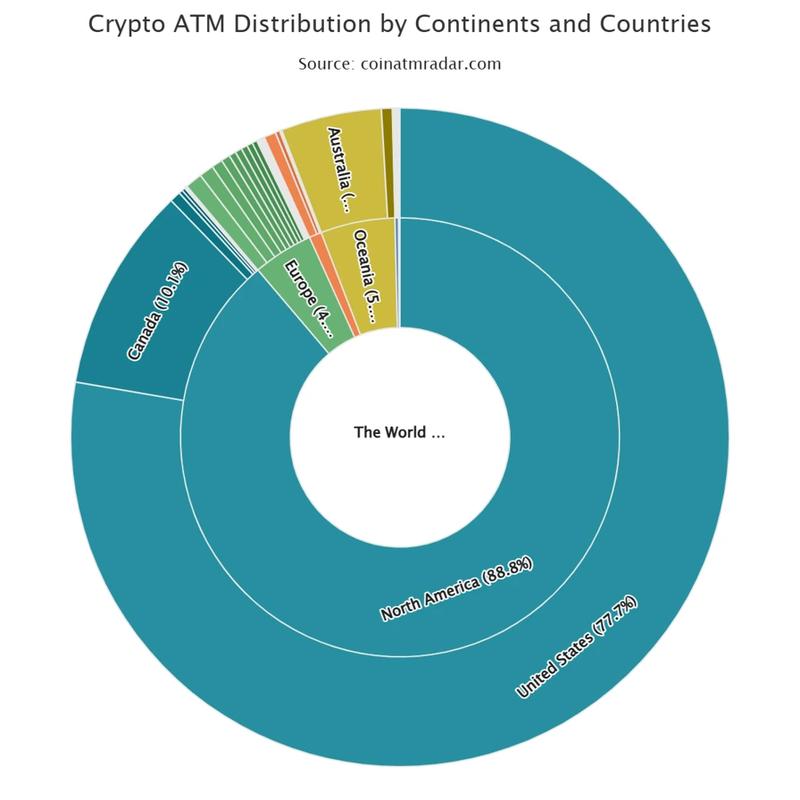
Following that milestone, the nation has developed into among the most concentrated cryptocurrency ATM markets on the planet, a position that regulatory authorities claim has created disproportionate vulnerability to fraudulent activity. According to estimates from Coin ATM Radar data, Canada represents 10.1% of worldwide crypto ATMs, ranking as the second-largest market behind only the United States.
An extended CBC investigation spanning several months alongside internal analysis from the Financial Transactions and Reports Analysis Centre of Canada (FINTRAC) released on April 28 revealed that cryptocurrency ATMs have emerged as the predominant technique employed by criminal fraudsters operating both domestically and internationally to extract funds from Canadian fraud victims and channel those proceeds into the cryptocurrency system.
Representatives from law enforcement organizations informed CBC they have observed a distinct increase in incidents where victims receive instructions to deposit currency into these kiosks under false pretenses including settling tax obligations, maintaining romantic connections or restoring compromised accounts.
Ban forms part of broader crypto regulatory push
The cryptocurrency ATM prohibition proposal exists as a component within a more comprehensive initiative to strengthen regulatory controls surrounding high-risk segments of Canada's digital currency marketplace while incorporating essential infrastructure more decisively into the oversight framework.
The identical Spring Economic Update strengthens a newly established Financial Crimes Agency and provides FINTRAC with enhanced capabilities to deny or cancel registrations for money services businesses failing to meet compliance standards, encompassing cryptocurrency enterprises.
Concurrently, Ottawa has implemented a federal regulatory framework for stablecoins through Bill C-15 that designates the Bank of Canada as the supervisory authority and mandates that fiat-backed issuers complete registration, maintain complete reserve backing and provide redemption at par value, with the majority of provisions taking effect following the completion of regulations in advance of an anticipated 2027 implementation date.
Legislative bodies are additionally progressing Bill C-25 to prohibit cryptocurrency contributions in federal political activities due to concerns regarding transparency and potential foreign influence, as the nation embraces a regulation-prioritized strategy to address consumer-facing misuse vulnerabilities and incorporate fundamental digital asset infrastructure under federal supervisory control.