
BTC Surges Past $80K Mark as Dollar Weakens During Possible Japanese Yen Market Action
BTC experienced a 5% surge, breaking back above the $80,000 threshold following US dollar weakness linked to what appears to be Bank of Japan market intervention, while expert opinions diverge on the significance.

During the course of United States trading sessions, Bitcoin (BTC) experienced a notable 5% upswing, pushing the cryptocurrency to the $81,000 level.
Key points:
- BTC climbs beyond the $81,000 threshold during American market hours, registering gains exceeding 5% in the previous 24-hour period.
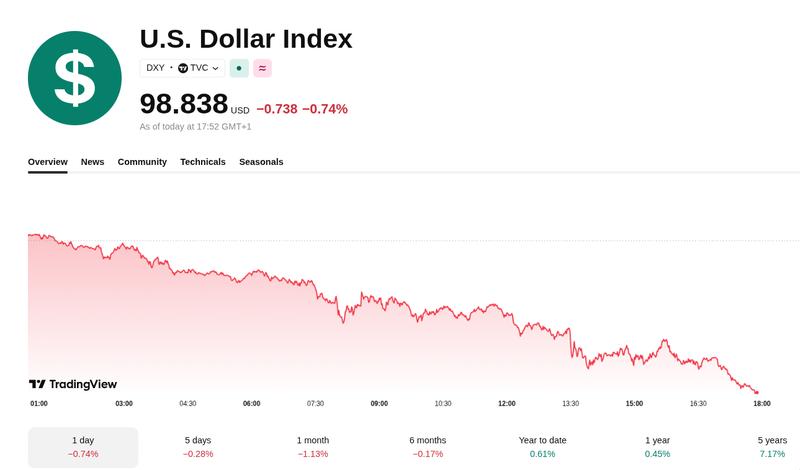
- The USD/JPY currency pair slides to the 155.4 level as suspected intervention by the Bank of Japan (BOJ) takes place, pulling the US Dollar Index (DXY) downward to 99.
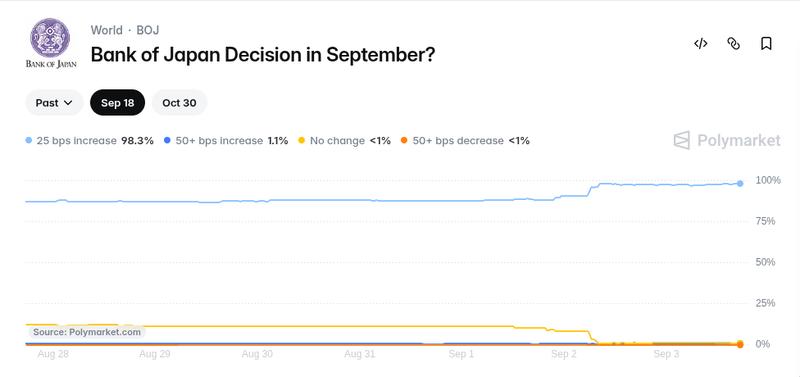
- Prediction market Polymarket shows odds for the BOJ maintaining current rates plunging further from 12% down to just 1%, while a 25-basis-point increase now carries a 98% probability for the Sept. 18 policy meeting.
Dollar weakness propels cryptocurrency markets upward
As of the current moment, BTC is trading at the $81,000 level, approaching the peak levels observed during the previous month's unexpected rally to the upside.
This upward movement arrives as the Japanese yen (JPY) has continued gaining strength in what market observers believe to be a central bank market intervention, an action that Cointelegraph initially covered in its reporting on Wednesday. Following a decline to the 158.5 level on Wednesday, the USD/JPY currency pair experienced additional weakness, falling to 155.4. The decline applied downward pressure on the US dollar index (DXY), which descended to 99. A falling DXY has traditionally correlated positively with Bitcoin price action.
Equity shares of Michael Saylor's Strategy (MSTR) joined in the upward movement and climbed 8.6% during Wednesday's trading session. The equity has gained 70% from the bottom it reached in late June, though it continues to trade approximately 10% below its year-to-date starting point. Strategy's perpetual preferred stock instrument STRC, which market participants had often likened to a money market fund, continues to trade beneath its $100 par value and sits at $97.80 as of this writing.
Market experts show conflicting views on yen market action implications
The most recent suspected market intervention aimed at strengthening the yen, combined with expectations of a Bank of Japan interest rate increase scheduled for later this month, has also rekindled concerns about another potential carry-trade liquidation. The Macro Paper shared their perspective on X:
"In the last 24 hours, USD/JPY has dropped almost 2.5%, which doesn't happen without any major intervention. On top of that, BOJ is most likely expected to hike rates this month, with more rate hikes possible in Q4. This is the exact thing that happened in Q3 2024, when BOJ intervened and hiked rates together."
Polymarket's prediction market probabilities for the BOJ maintaining its current rate policy collapsed from 12% to just 1% on Wednesday, solidifying expectations for an interest rate increase. The probability currently being priced into markets for a 25-basis-point elevation in the policy rate by the BOJ at the forthcoming meeting scheduled for Sept. 18 now stands at 98%.
Certain market observers have also interpreted the currency market intervention as a development positive for global liquidity conditions. Arthur Hayes, serving as CIO of Maelstrom, has maintained for an extended period that the Foreign and International Monetary Authorities' (FIMA) repo facility would supply Japan with dollar liquidity using Treasury collateral as backing, thereby loosening worldwide liquidity conditions. Although no capital appears to have been accessed from this particular facility to date, Treasury Secretary Scott Bessent brought up the possibility in late July.