BTC Stabilizes Near $82K Following Fed Chair Warsh's Non-Committal Stance on Rate Adjustments
The leading cryptocurrency maintained its position above the $80,000 threshold while South Korean technology equities bounced back from recent losses and market participants reduced their projections for Federal Reserve rate increases.
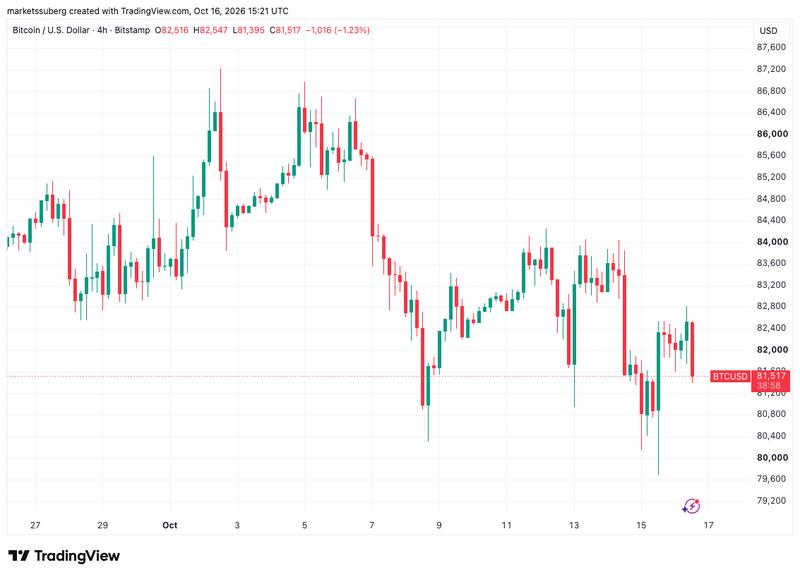
The world's leading cryptocurrency Bitcoin (BTC) maintained its position around the $82,000 level as Friday's Wall Street trading session commenced, with digital asset markets finding equilibrium alongside recovering South Korean equity markets.
Key points:
- Price fluctuations in Bitcoin subsided as equities in South Korea experienced a 2% recovery on Friday, providing market relief following a sharp downturn.
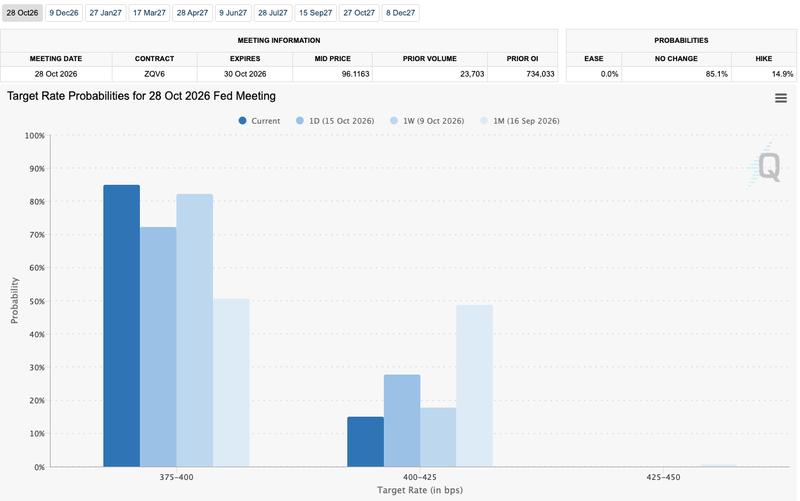
- Kevin Warsh, the Federal Reserve Chair, provided no signals suggesting additional interest-rate increases during a public conversation, while market participants decreased the likelihood of a 25-basis-point hike in October to 15%.
- Market observers cautioned about challenging decisions facing Washington as the yield on the 10-year US Treasury note returned to 5.13% while American equities moved within a limited range.
Market participants interpret Warsh's remarks as dovish signal
Information from TradingView indicated that BTC/USD maintained the majority of its recovered territory following Thursday's bounce at the $80,000 support level.
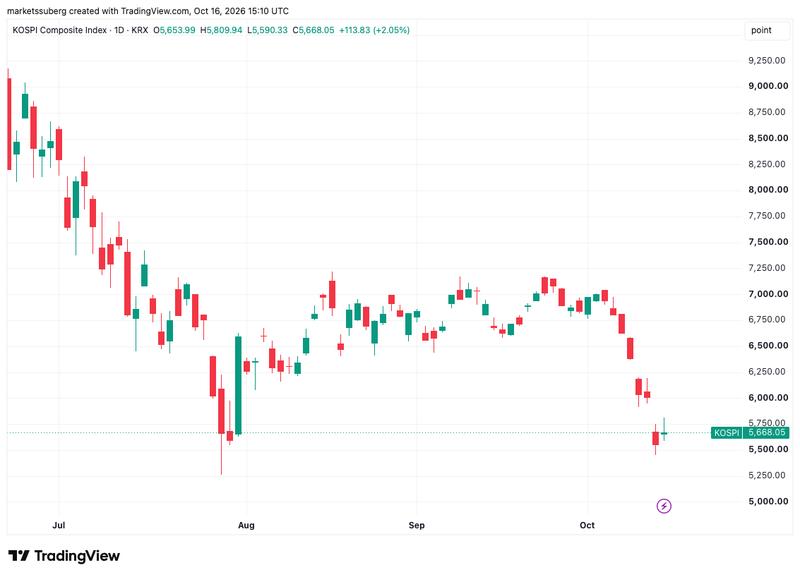
The preceding downturn came after a seven-day period of selling pressure in South Korean technology equities, though Friday's Asian market session delivered some respite. The KOSPI Composite Index concluded trading at 5,668, representing a 2% daily gain while remaining down 8.3% across the weekly timeframe.
American stock markets predominantly escaped the selling wave that affected Asian exchanges but displayed mixed performance on Friday, with the technology-focused Nasdaq Composite Index declining 0.5% while the S&P 500 advanced 0.5%.
During this period, Kevin Warsh, the Federal Reserve Chair, provided some reassurance to market participants by refraining from any discussion of additional interest-rate increases throughout a conversation with Kristalina Georgieva, the Managing Director of the International Monetary Fund (IMF).
"I don't prejudge meetings. I don't believe in saying now what I might do at the meetings that we have in the balance of this year," he said.
Financial markets interpreted Warsh's commentary as suggesting a dovish stance regarding rate increases. Information from CME Group's FedWatch Tool indicated the probability of a 25-basis-point rate increase in October dropped to 15%, declining from the previous day's figure of 27%.
Robin Brooks, an economist, proposed that turbulence within the artificial intelligence industry, which played a central role in the Korean market decline, might explain the Fed chair's more detached positioning.
"Warsh gave no indication the Fed's in any hurry to hike, so the October meeting is now pretty much off the table in terms of a hike," he wrote in a blog post, adding:
"What's helping the Fed is fears of an AI blow-up, which is making markets more receptive to a dovish message."
Treasury yields attempt recovery while equity markets pause gains
In other developments, yields on US government bonds started climbing as equity markets stabilized, leading to speculation that US policymakers may face a difficult decision between controlling the bond market selloff and maintaining positive momentum in stocks.
The yield on the US 10-year Treasury note registered 5.07% on Friday, after making a short-lived attempt at moving higher, touching 5.13%.
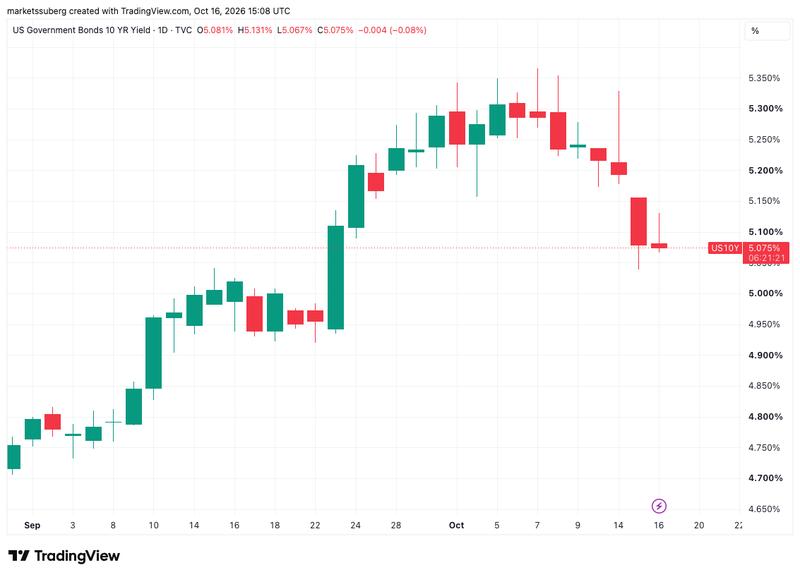
The Kobeissi Letter, a financial markets commentary source, observed that weakness in equities has served as the exclusive catalyst for bond-yield pullbacks since August. In an analysis shared on X platform Thursday, Koebissi put forward the idea that stock markets may currently exist in a contradictory "'bull-bear' market" environment.
In the absence of the US-Iran conflict, equity prices would be substantially elevated, the analysis contended, further noting that ongoing inflationary pressures were fueling investor appetite for asset allocation — despite the Fed embarking on a fresh rate-hike trajectory.
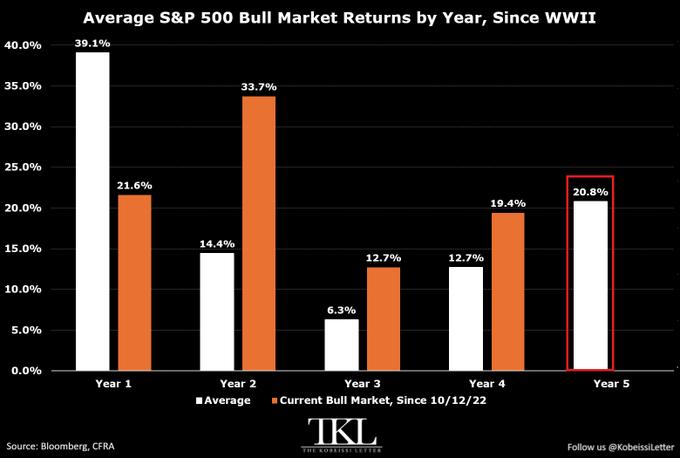
"Even as the S&P 500 hits year #5 of its bull market, we believe a steep discount is currently priced into equities. This discount has functioned as a 'stealth' bear market, suppressing equity valuations in the world's largest and fastest-growing companies," it concluded, adding:
"This backdrop has the ability to catalyze a violent rally in the S&P 500 if and when it is ultimately priced-out."