
BTC Pushes Toward $73K Mark as Troubling Economic Indicators Emerge from US
BTC demonstrates resilience amid mounting concerns over a potential US economic downturn and an unstable Iranian ceasefire agreement that shows signs of deterioration.

Key takeaways:
BTC advanced to the $72,000 threshold as increasing probabilities of a recession and a declining US dollar enhanced the attractiveness of limited-supply financial instruments.
Escalating petroleum prices and an unstable agreement with Iran pose a threat to BTC's recent upward momentum.
Bitcoin (BTC) successfully retook the $72,000 threshold on Thursday in spite of economic indicators revealing elevated inflation and sluggish economic expansion in the United States. Petroleum crude prices surged back to $97 following statements from high-ranking Iranian officials alleging that both the US and Israel had breached the ceasefire agreement. Market participants now harbor concerns that risk-oriented markets might respond unfavorably, which could potentially drive Bitcoin price back beneath the $68,000 mark.
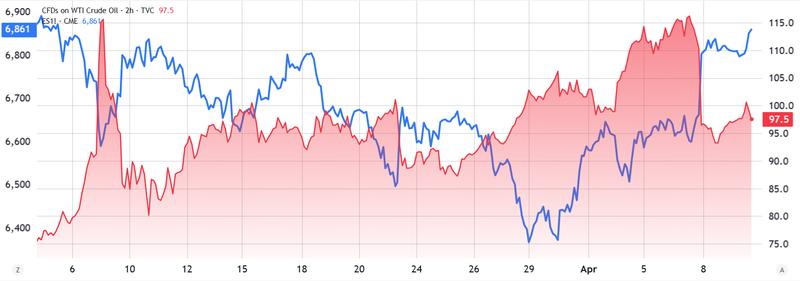
The negative correlation linking oil valuations and risk-oriented markets has become progressively more apparent. Immediately following US President Donald Trump's ceasefire announcement on Wednesday, the S&P 500 index futures rallied to their peak levels witnessed in 30 days, whereas WTI crude oil valuations fell below the $100 threshold. Consequently, Bitcoin market participants express apprehension that the delicate truce established between the US and Iran might result in downward price movements.
Unstable Iranian ceasefire and disappointing US economic indicators cap Bitcoin's upward potential
Mohammad Bagher Ghalibaf, the Iranian parliamentary speaker and a former Islamic Revolutionary Guard Corps (IRGC) general who has positioned himself as a prominent figure within the regime, stated that Israel's ongoing military operations in Lebanon targeting Hezbollah, the unauthorized penetration of military drones into Iranian airspace, and the rejection of uranium enrichment limitations represent violations of the ceasefire negotiations, as reported by Yahoo Finance.
Inflation statistics released by the US Bureau of Economic Analysis on Thursday potentially contributed to elevating market participants' optimism. The core Personal Consumption Expenditures (PCE) index experienced a 0.4% increase in February compared to the preceding month. Simultaneously, the US fourth quarter gross domestic product underwent a downward revision to a 0.5% annualized rate. Taken together, the data indicates heightened recession probabilities.
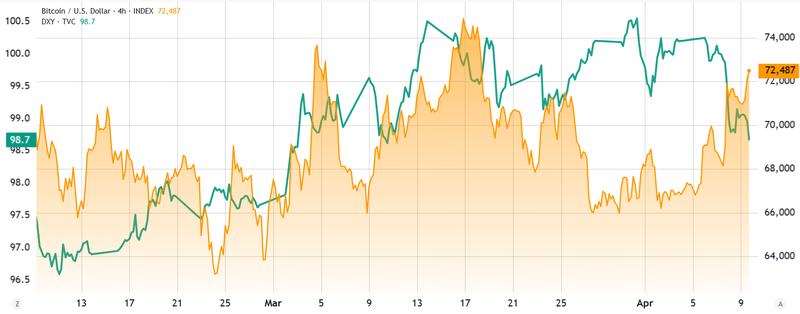
While seemingly paradoxical, the elevated probabilities of economic stagnation combined with persistent inflation have prompted market participants to adopt less risk-averse positions, given that the US government will probably be compelled to introduce liquidity measures to stabilize markets. Diminished faith in the US Federal Reserve's capacity to prevent a recession without triggering inflation has resulted in a depreciated US dollar, when evaluated against a collection of foreign currencies.
Artificial intelligence infrastructure and private credit vulnerabilities are not pressing threats
Although the relationship between Bitcoin and the US equity market is considerably less than perfectly correlated, market participants generally pursue protective measures when fixed income yields relative to inflation projections are weakened. Irrespective of whether Bitcoin remains distant from being recognized as a dependable substitute for fiat currency depreciation, US dollar weakness tends to benefit assets with limited supply.
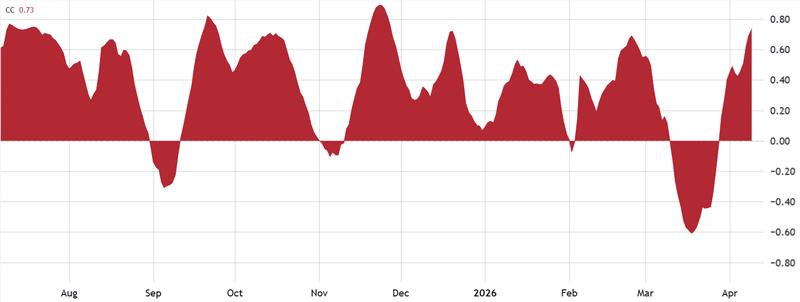
The S&P 500 index was exchanging just 2% below its all-time peak on Thursday, serving as a definitive signal that market participants are not concerned about complications in private credit markets or the increasing debt protection expenses for AI infrastructure corporations.
In the final analysis, Bitcoin appears to have simply tracked investor sentiment concerning the conflict in Iran instead of responding to disappointing US macroeconomic statistics.
At present, recession vulnerabilities provide advantages to scarce assets; therefore, there exists minimal justification to expect that inflation or employment market conditions might serve as a catalyst for a market downturn.