
BTC Maintains $77K Support While Equities Surge and Geopolitical Risks Diminish: Bull Run Incoming?
Market indicators point toward a potential Bitcoin surge to $82,000. Can bullish momentum capitalize on this opportunity?

Key takeaways:
- Falling crude oil valuations provided a boost to equity markets worldwide, pushing Bitcoin upward to $77,000 as concerns over inflation subsided.
- Net outflows of $2.66 billion from spot Bitcoin ETFs have prevented institutional crypto traders from adopting a decisively bullish stance.
Bitcoin (BTC) successfully regained its position above the $77,000 threshold this past Monday as worldwide equity markets staged a comeback. Following US President Donald Trump's announcement on Saturday regarding productive negotiations with Iran to maintain operations through the Strait of Hormuz, crude Brent oil valuations dropped to their lowest point in five weeks, creating favorable conditions for a possible Bitcoin price surge toward $82,000.
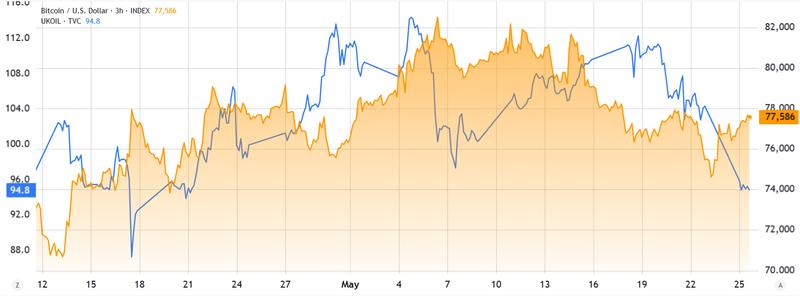
Equity markets around the world displayed positive momentum on Monday, evidenced by Japan's Nikkei 225 Index climbing 2.9% and France's CAC 40 finishing the day with an 1.8% increase. The decreased inflationary pressures stemming from lower oil costs pushed yields on 5-year Eurozone government bonds down to 2.64%, marking their weakest level in five weeks. The diminished geopolitical risk outlook motivated investors to reallocate cash holdings back into both bond and equity investments.
Notwithstanding the general decline in perceived market risk, institutional Bitcoin traders remained hesitant to adopt a bullish posture.
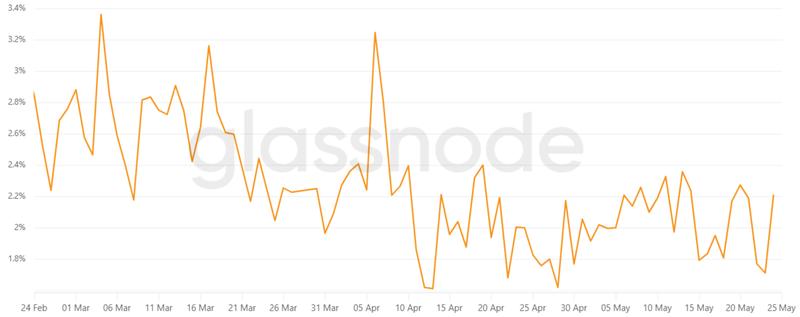
Bitcoin's 3-month futures contracts maintained a 2% annualized premium (basis rate) compared to spot market prices, revealing weak appetite for leveraged bullish positions. In typical neutral market conditions, this metric generally sits within a 5% to 10% range to account for the costs of capital. Nevertheless, it could be contended that minimal leverage usage continues to be favorable provided the $74,000 support level remains intact.
Bitcoin spot ETF outflows and Strategy's focus on reducing debt
The recent withdrawals from spot Bitcoin exchange-traded funds (ETFs) have presumably played a role in undermining bullish confidence.
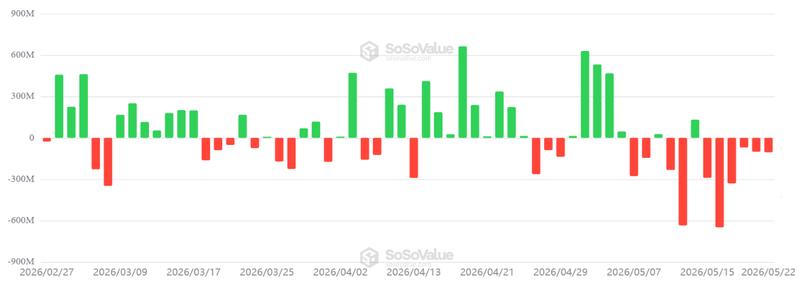
Spot Bitcoin ETFs listed in the United States have recorded $2.66 billion in cumulative net outflows beginning May 7. While this accounts for under 3% of the total assets under management, the directional change indicates weakening interest among institutional investors. The temporary suspension of Bitcoin purchases by Strategy (MSTR) as the company redirects capital toward repurchasing portions of its convertible bonds has additionally sparked investor apprehension.
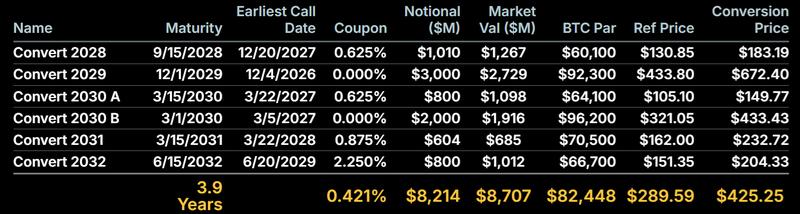
The corporation maintained $8.7 billion in convertible debt instruments with an average time to maturity of under 4 years. Strategy's strategic emphasis on optimizing Bitcoin yield per share could temporarily constrain further additions to its existing 843,738 BTC holdings, though this approach provides advantages to shareholders through decreased financial leverage and minimized potential for share dilution.
What catalyst might shift Bitcoin trader sentiment in a positive direction remains uncertain, particularly given that the stock market—especially the technology sector—continues to capture the majority of investor focus. With corporate earnings trending upward, Nvidia's board of directors authorized an additional $80 billion share repurchase program, enhancing the investment proposition despite the company's market capitalization reaching all-time highs.
Bitcoin's probability of recapturing the $82,000 price level hinges largely on improved clarity surrounding global economic expansion outlooks. A successful agreement between the US and Iran would undoubtedly represent progress in the right direction, though as long as spot Bitcoin ETF flows continue showing negative trends, overall investor sentiment could remain cautious.