
Blockchain-powered business identities roll out in UAE free zone for company registrations
Ras Al Khaimah's Innovation City deploys onchain corporate identities via OPN Chain to enhance verification processes and minimize dependence on traditional centralized systems.

A free zone headquartered in Ras Al Khaimah and specializing in Web3 and artificial intelligence technologies, Innovation City, has introduced what it describes as the inaugural digital business identity system built on blockchain technology.
Based on a statement released Monday and provided to Cointelegraph, each enterprise that completes registration within Innovation City is issued a sovereign, cryptographically authenticated identity on OPN Chain, the public blockchain platform created by IOPn, a United Arab Emirates-based organization.
The statement indicated that this transformation converts the conventional business license from a fixed PDF document or database record into a dynamic asset anchored onchain, designed to diminish dependence on centralized third-party intermediaries and eliminate verification ambiguity.
This development is part of a wider initiative across the UAE to transition away from conventional business registration systems toward blockchain-powered identity infrastructure and artificial intelligence-enhanced operational workflows, which supporters suggest could improve verification efficiency and facilitate more integrated digital business operations. Through the integration of onchain identity directly within the company registration process, Innovation City is piloting an approach that surpasses most current digital identification frameworks, though its effectiveness will ultimately be determined by whether external organizations choose to recognize and adopt it.
How the onchain business IDs work
Jimi Ibrahim, co-founder and chief operating officer of IOPn, told Cointelegraph that at launch, the onchain identity framework is intended to extend across Innovation City's existing client base of over 1,000 companies, with immediate live utility within the free zone's own digital ecosystem.
He said the core value is not simply issuing a digital certificate, but giving each company a cryptographically verifiable business identity to use for access and verification across Innovation City touchpoints, such as the business center and selected ecosystem services, expanding to partners, such as technology, marketing and legal providers, over time.
Ibrahim described OPN Chain as a public network where validator participation is open to institutions, infrastructure partners and governance-approved node operators. He said the network uses a hybrid data model that keeps core transaction data and proofs onchain while handling sensitive or large datasets offchain.
He argued this setup differs from existing digital identity or verifiable credential schemes, such as Estonia's e-residency program, because the onchain identity is established as the native business registration primitive for all companies in the free zone, rather than as an optional overlay on top of a conventional registry.
However, he did not name specific banks, regulators or exchanges that currently accept or verify these onchain identities, leaving questions about external integrations, dispute resolution, and how quickly credentials can be corrected or revoked once third parties are involved.
AI security and geopolitical risks
Recent exploits in which AI agents were socially engineered into authorizing crypto transfers from wallets they controlled have highlighted how autonomous systems can be manipulated, raising questions about the resilience of AI-driven workflows like these.
Ibrahim said that every agentic workflow built on these identities will require "human-in-the-loop authorization for consequential actions," and that the agent layer is designed with adversarial scenarios as "a first principle, not an afterthought."
The launch also comes against the backdrop of regional conflict and fresh attacks involving the UAE on Monday. Recent eToro data cited by Cointelegraph found that UAE investors have been adding to positions in AI infrastructure, software and crypto-linked assets during the conflict rather than cutting exposure, despite the heightened volatility. An April 13 Deutsche Bank report said that the conflict is more likely to sharpen demand for AI rather than derail it.
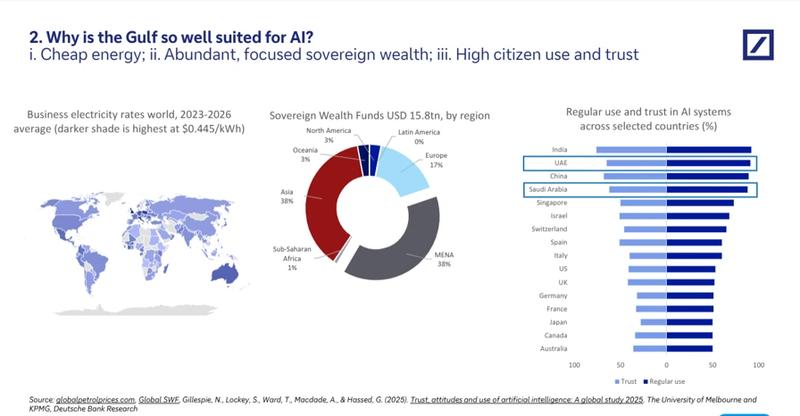
Ibrahim called the UAE one of the most "institutionally stable jurisdictions" and said that OPN Chain's distributed validator network means no single regional event creates a failure point for the identity infrastructure these companies rely on.