
Blockchain and Stablecoin Rivals Emerge as Major Threat, Says JPMorgan CEO Jamie Dimon
In his yearly letter to shareholders, the banking chief cautioned that emerging technologies are transforming the financial landscape, as blockchain-based rivals advance while JPMorgan expands its proprietary network.

Jamie Dimon, the chief executive of JPMorgan, has stated that "new technologies" are driving increased competition throughout the banking and financial industry, with competitors built on blockchain technology appearing alongside conventional market players.
During his yearly letter to shareholders released on Monday, Dimon named artificial intelligence, data analytics and cutting-edge technology as "key to the future," indicating a transition toward financial services that are increasingly automated and driven by data.
Though blockchain technology and digital assets did not occupy a central position in his letter, Dimon recognized that "a whole new set of competitors is emerging based on blockchain, which includes stablecoins, smart contracts and other forms of tokenization."
These remarks arrive as JPMorgan maintains its focus on advancing its proprietary blockchain programs, despite Dimon's emphasis that the institution's sustained success over the long term will rely predominantly on its capability to implement AI throughout its business operations.
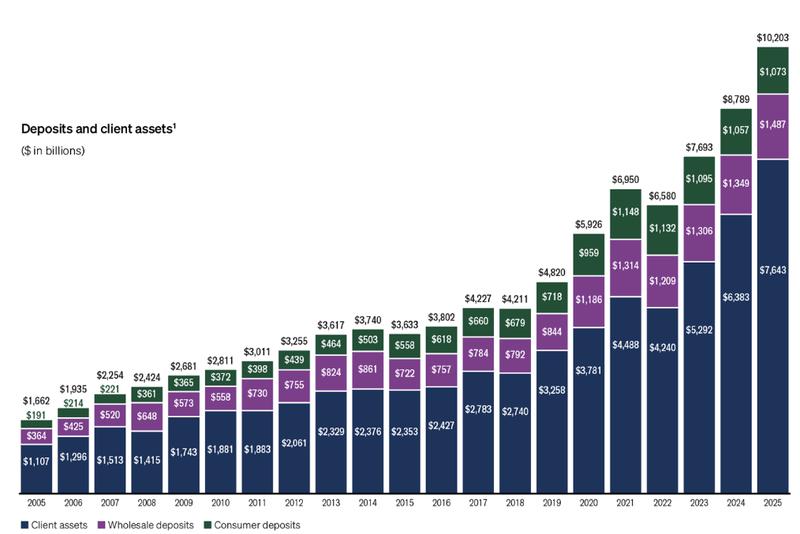
JPMorgan has been growing its internal blockchain technology infrastructure, currently operating under the name Kinexys, which facilitates nearly instantaneous fund transfers while bypassing reliance on traditional intermediaries.
The system has set its sights on processing up to $10 billion in daily transaction volume and recently advanced toward achieving this objective by bringing Japan's Mitsubishi Corporation onto the platform. Additional clients include Qatar National Bank and significant institutional participants such as Siemens and BlackRock.
Kinexys is additionally being developed as a more comprehensive tokenization platform, with JPMorgan planning to extend its reach into markets including private credit and real estate.
Dimon comments come as stablecoin battle heats up in Washington
Dimon's acknowledgment of blockchain and stablecoins arrives during a divisive period for the banking sector, as United States lawmakers persist in debating legislation concerning digital assets.
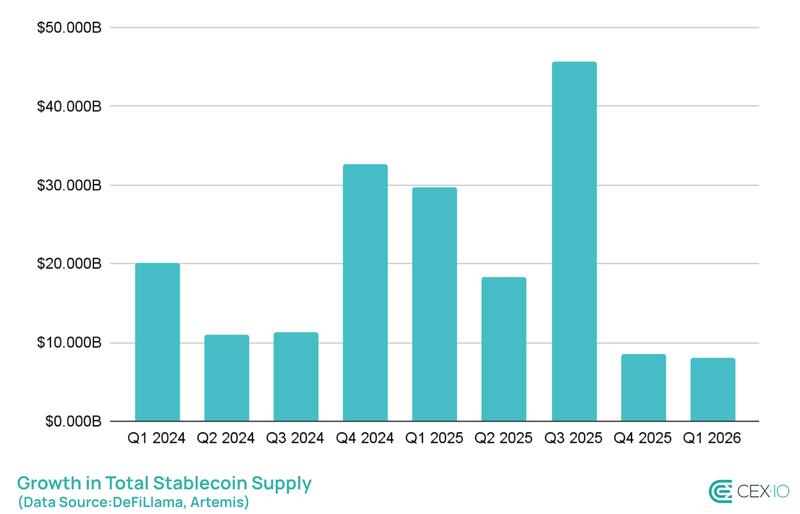
The enactment of the GENIUS Act last year, which created a regulatory framework for stablecoins, is broadly anticipated to speed up adoption by delivering more transparent rules for issuers and financial institutions.
Nevertheless, more comprehensive market structure legislation continues to be deadlocked in Congress. A major source of disagreement centers on yield-bearing stablecoins, which banking industry groups contend could compromise financial stability by permitting issuers to provide interest-like returns while avoiding adherence to the same regulatory standards as banks.
Friction has additionally extended into the public arena. Dimon and Brian Armstrong, the CEO of Coinbase, have exchanged criticisms regarding the trajectory of crypto regulation, with Dimon rejecting assertions that banking institutions are working to obstruct legislative initiatives.
Industry lobbying organizations, including the American Bankers Association, have established opposition to yield-bearing stablecoins as a central policy priority this year.